
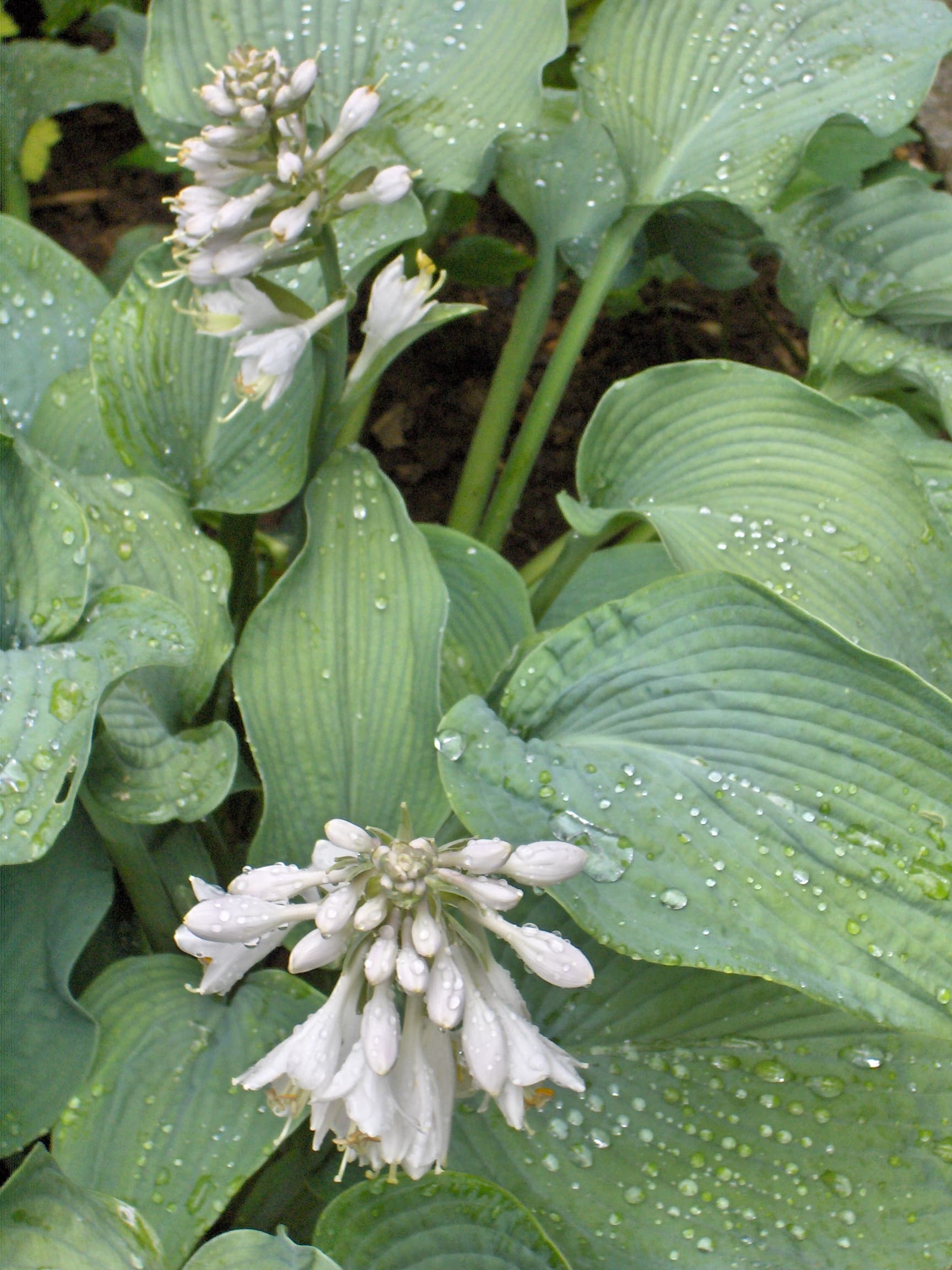
August Lily is a large, clump-forming hosta native to eastern China and one of the very few members of the genus grown as much for its flowers as its foliage. In late summer, tall scapes carry pure-white, trumpet-shaped flowers that are heavily fragrant, particularly in the evening - a trait almost unique in the genus. The leaves are broad, glossy, and bright green, warmer in tone than the blue-green typical of most hostas.
Unlike most hostas, H. plantaginea var. grandiflora requires adequate light to flower reliably; deep shade reduces or eliminates the bloom. It does best in moist, humus-rich, well-drained soil with consistent moisture. A thick layer of organic mulch over the root zone conserves moisture and moderates soil temperature. Plants emerge late in spring, later than almost any other hosta, so avoid disturbing the crown during early-season soil work. In zones 3–5, a light winter mulch prevents freeze-thaw heaving. Slugs are the most persistent pest and target the soft emerging shoots with particular intensity.
In traditional Chinese medicine, the flowers (known as yùzān huā) are used for throat inflammation, carbuncles, and ulcers. The roots, applied externally for carbuncles, contain saponins and are toxic if ingested. The fragrant, evening-opening flowers attract hawk moths and other long-tongued pollinators, giving this plant genuine ecological value in a shade garden context.
Crown Rot
Lower leaves yellow and wilt; the base of the rosette turns brown and soft, sometimes with white fungal threads at the soil line. Plants collapse in wet conditions.
Remove and destroy affected plants. Improve drainage and avoid overhead watering. Do not mulch directly against the crown. Space plants for airflow and avoid replanting in the same wet spot.
Botrytis (grey mould)
Grey fuzzy mould on petals and stems, worst in cool wet conditions.
Remove affected parts immediately. Improve air circulation. Avoid overhead watering. Apply copper fungicide if severe.
Fungal leaf spot
Brown or purplish spots on the leaves, often ringed with a yellow halo, that spread and merge in warm, humid, or wet weather; heavily spotted leaves yellow and drop early.
Pick off spotted leaves and clear fallen debris to remove overwintering spores. Improve air circulation by thinning, and water at the base so foliage dries quickly. If it persists, apply a copper- or sulfur-based fungicide at the first sign.
Root rot
Plants wilt, yellow, and stunt even in moist soil; lower stems and roots turn brown, soft, and mushy and the plant may collapse. Most common in heavy, wet, or poorly drained ground.
Improve drainage and stop overwatering, and never plant too deep. Lift and destroy badly affected plants along with the soil around the roots. Grow in raised or free-draining beds to prevent it returning.
Hosta Foliar Nematode
Yellow to tan or brown streaks develop between leaf veins, sharply bounded by the vein structure, producing a distinctly striped or angular pattern. Affected tissue turns brown and necrotic as the season progresses; severely infected leaves curl and collapse.
Remove and destroy all affected leaves as soon as symptoms appear. Avoid overhead watering and any activity that spreads water across foliage, as nematodes travel in moisture films. Do not divide or transplant infected clumps. No reliable chemical control exists; prompt removal of infected foliage combined with strict avoidance of leaf wetness is the primary management approach.