
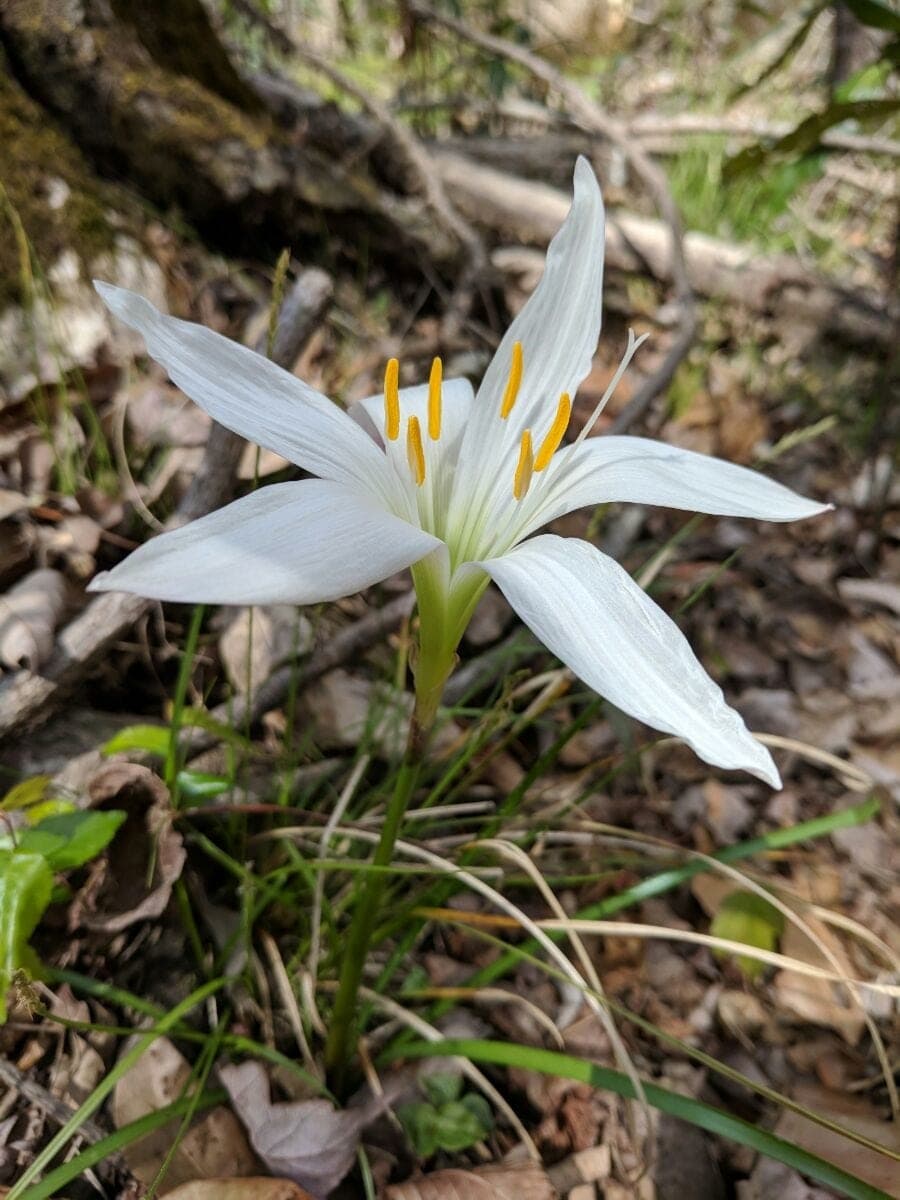
Atamasco lily is a bulbous perennial native to the southeastern United States, occurring naturally in swampy forests, wet meadows, and coastal prairies from Florida north to Maryland and west to Mississippi. It produces solitary white to pale pink funnel-shaped flowers on hollow scapes in March or April. Both leaves and bulbs contain toxic alkaloids and are poisonous to humans and livestock.
Foliage emerges in early winter as narrow, grass-like basal leaves 10–15 inches long. The plant requires acidic, boggy soil rich in leaf mold and tolerates seasonal flooding. In cultivation it is well suited to rain gardens, pond margins, and naturalized woodland understories across the Southeast. It spreads slowly by offsets and self-sown seed, forming low-maintenance colonies with no intervention once established.
Ecoregions:Eastern Temperate Forests
Crown Rot
Lower leaves yellow and wilt; the base of the rosette turns brown and soft, sometimes with white fungal threads at the soil line. Plants collapse in wet conditions.
Remove and destroy affected plants. Improve drainage and avoid overhead watering. Do not mulch directly against the crown. Space plants for airflow and avoid replanting in the same wet spot.
Root rot
Plants wilt, yellow, and stunt even in moist soil; lower stems and roots turn brown, soft, and mushy and the plant may collapse. Most common in heavy, wet, or poorly drained ground.
Improve drainage and stop overwatering, and never plant too deep. Lift and destroy badly affected plants along with the soil around the roots. Grow in raised or free-draining beds to prevent it returning.
Fungal leaf spot
Brown or purplish spots on the leaves, often ringed with a yellow halo, that spread and merge in warm, humid, or wet weather; heavily spotted leaves yellow and drop early.
Pick off spotted leaves and clear fallen debris to remove overwintering spores. Improve air circulation by thinning, and water at the base so foliage dries quickly. If it persists, apply a copper- or sulfur-based fungicide at the first sign.