
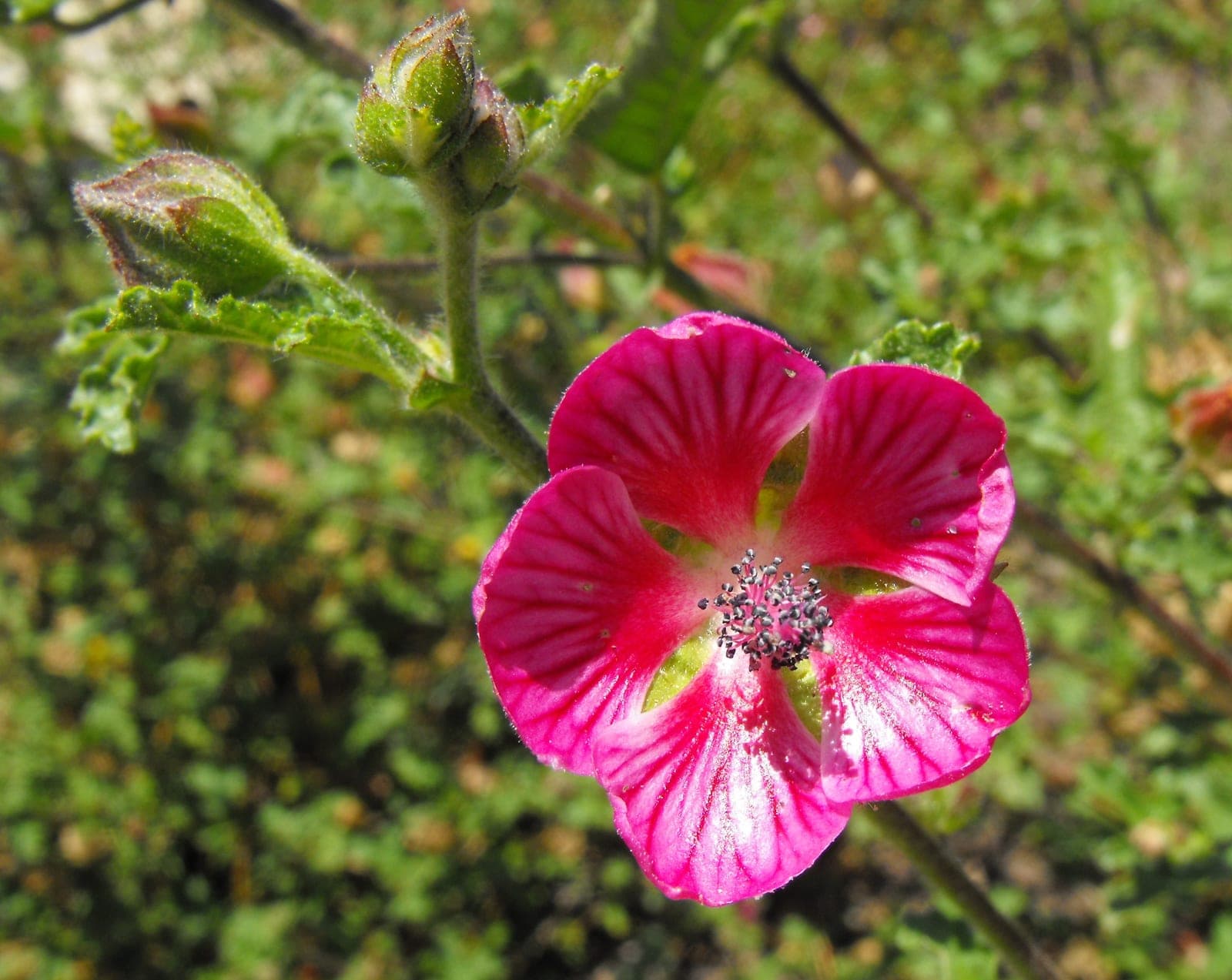
PL. —Anisodontea capensis 'Strybing Beauty'Botanical illustration — drop image
Anisodontea capensis 'Strybing Beauty'

'Strybing Beauty' African Mallow

SummerFall
9a11bHardiness zone
Peak bloom windowZone 6b · frost-offset weeks
Winter
Not in bloom
Spring
Peak bloom
Summer
Peak bloom
Fall
Peak bloom
Peak bloom
In bloom
Background

Anisodontea capensis 'Strybing Beauty' is a compact South African shrub in the mallow family (Malvaceae), selected at Strybing Arboretum — now San Francisco Botanical Garden — in Golden Gate Park. It produces a near-continuous succession of small, five-petaled pink flowers with dark magenta veining from the center across most of the year in frost-free climates, making it among the longest-blooming shrubs available for warm-winter gardens.

It establishes quickly in well-drained soil and tolerates considerable drought once rooted. Without periodic pruning, stems become woody and flowering thins; cutting back by roughly one-third after any heavy flush maintains dense, productive growth. In zone 9, planting against a south-facing wall improves cold survivability. Container growing allows gardeners in cooler climates to overwinter specimens indoors. Hummingbirds and bees are regular visitors throughout the long flowering period.

Care guide
SunFull sun to part shade
WaterLow
SoilWell-drained, dry to moderate moisture
Spacing3–5 ft
Height3–5 ft
Zone9a – 11b
Seasonal tasks
spring
watchCheck new growth for aphid clusters on tender shoot tips; dislodge with a firm spray of water before populations build.
cutCut stems back by one-third in late winter or early spring before new growth emerges to prevent excessive woodiness and encourage dense flowering shoots.
sowPlant container-grown specimens in a sunny, well-drained site after all frost risk has passed.
summer
cutGive a light tidy cut in early fall to remove weak stems and reduce wind-rock damage before cooler temperatures arrive.
cutTrim back flowered stems by a few inches every 4–6 weeks to maintain compact shape and sustain near-continuous flowering through the season.
watchMonitor foliage for powdery mildew, especially during warm days followed by cool humid nights; thin crowded stems to improve air circulation.
fall
watchIn zone 9, watch hard-freeze forecasts and apply a dry mulch layer over the root zone before temperatures drop below 28°F; roots often survive even when top growth is killed back.