
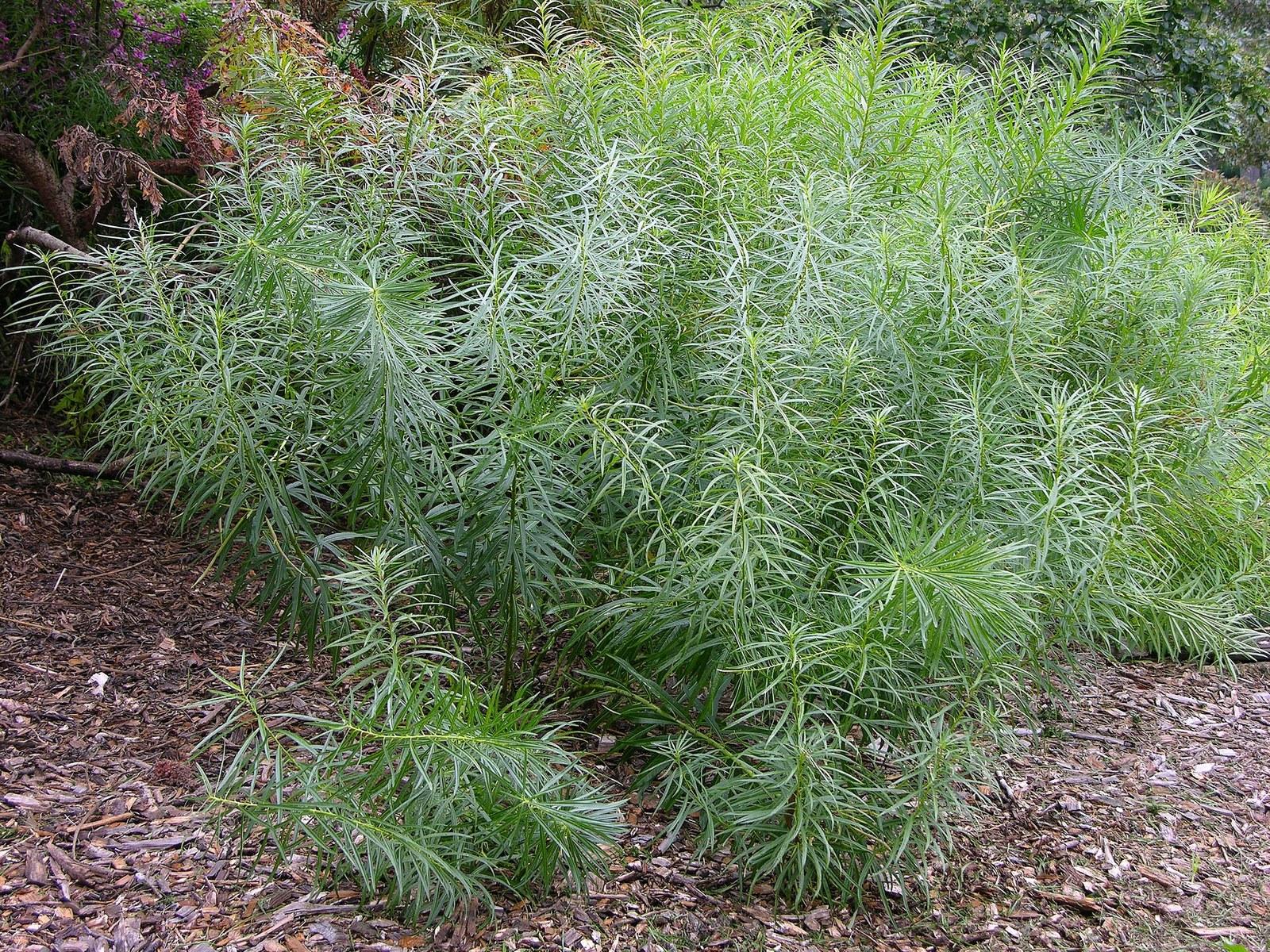
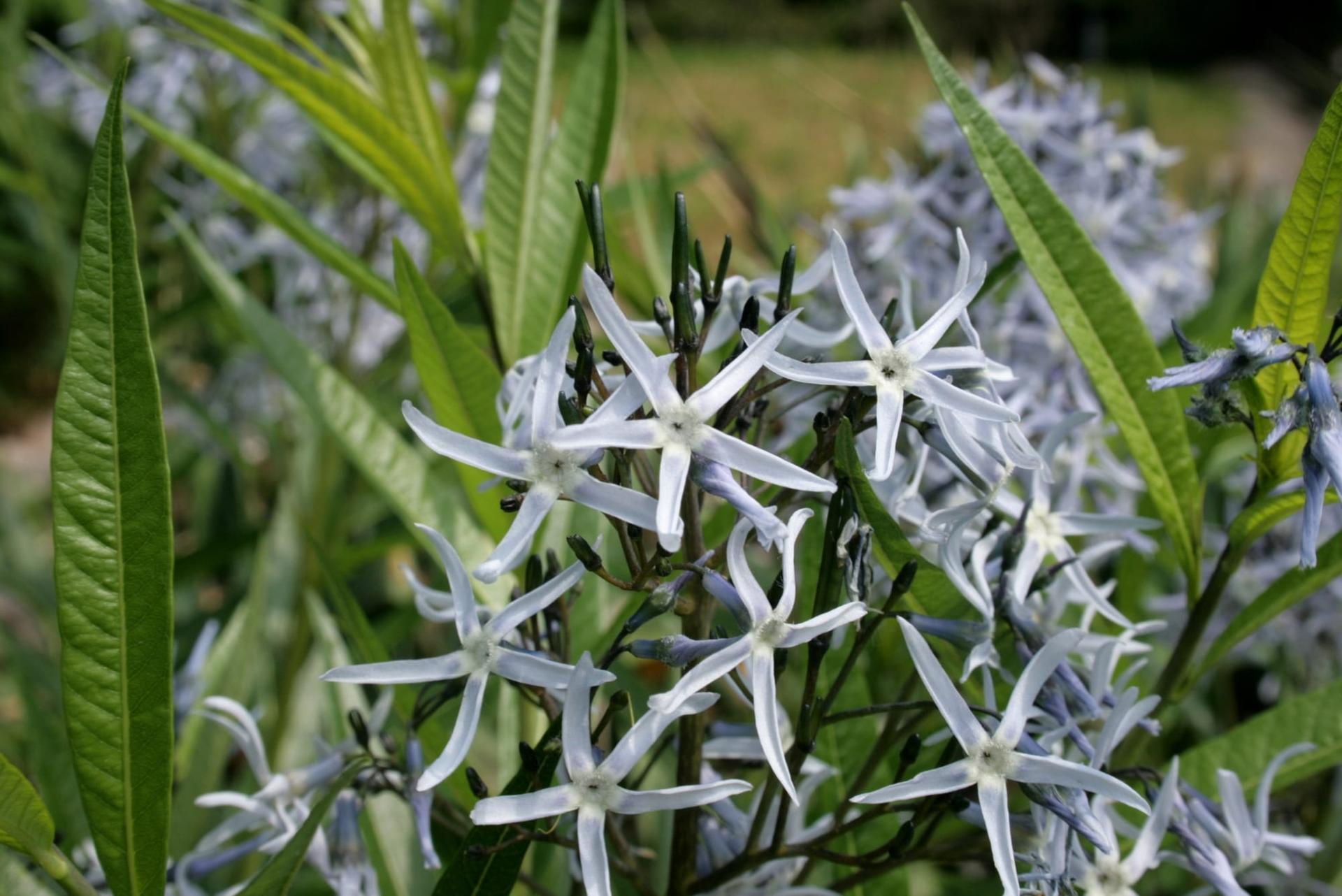
'String Theory' is a compact selection of threadleaf bluestar (Amsonia hubrichtii), developed at Walters Gardens in Michigan and sold under the Proven Winners label. It keeps the fine, needle-like foliage and golden-orange autumn color of the species in a clump about half the size, roughly 18 to 22 inches tall and up to 3 feet wide. Pale periwinkle blue star flowers open in late spring, a little later than most other bluestars, and the foliage stays a healthy dark green through summer instead of fading yellow early.
Like its parent, it is a plant of the Ouachita region that has proved hardy well beyond it. It grows in full sun to part shade, takes average garden soil, and tolerates heat and humidity. Established clumps shrug off dry spells, and the milky sap keeps deer and rabbits away. Growth is slow at first and picks up with age, so give it a few seasons before judging it. A light shearing right after bloom keeps the mound tidy, though the compact habit needs far less of that than the species.
The cultivar is patented (PP34419), so propagate by division only for your own garden and buy new plants rather than propagating to sell. Pair it with the taller species form, see Hubricht's Bluestar, where a bigger fall show is wanted.
Ecoregions:Eastern Temperate Forests
These dates are for Zone 6b. Enter your ZIP to time every job to your own frost dates.
- watch · Any time in fallEnjoy the foliage turning golden-orange. Leave the clump standing for fall interest.
- watch · Jan 16 - Jan 30Order container-grown plants - about two months before planting
- plant · Mar 27Set out container-grown plants in well-drained soil once the ground is workable. Water in well and give the clump 3 feet of room.
- cut · May 29Shear stems back by about one-third once flowering finishes to keep the mound compact and refresh the foliage.
- cut · Oct 23Cut stems back to 4-6 inches once the foliage drops, or leave them through winter and trim before new growth starts.
Problems & troubleshooting
Common problems
Rust
Orange to brown raised pustules on the undersides of leaves, with yellow spotting on the upper surface. Heavy infections cause leaves to yellow and drop.
Remove and destroy infected leaves. Avoid overhead watering and improve air circulation. Apply a sulfur or copper-based fungicide if it spreads. Clear plant debris in fall.
Phytophthora Root Rot
Wilting despite moist soil, yellowing leaves, stunted growth, and dark, decayed roots and crown tissue. Vines may collapse during hot weather.
Plant in well-draining soil and avoid waterlogging. Remove and destroy affected vines. Improve drainage with raised beds or amended soil and avoid overwatering.