
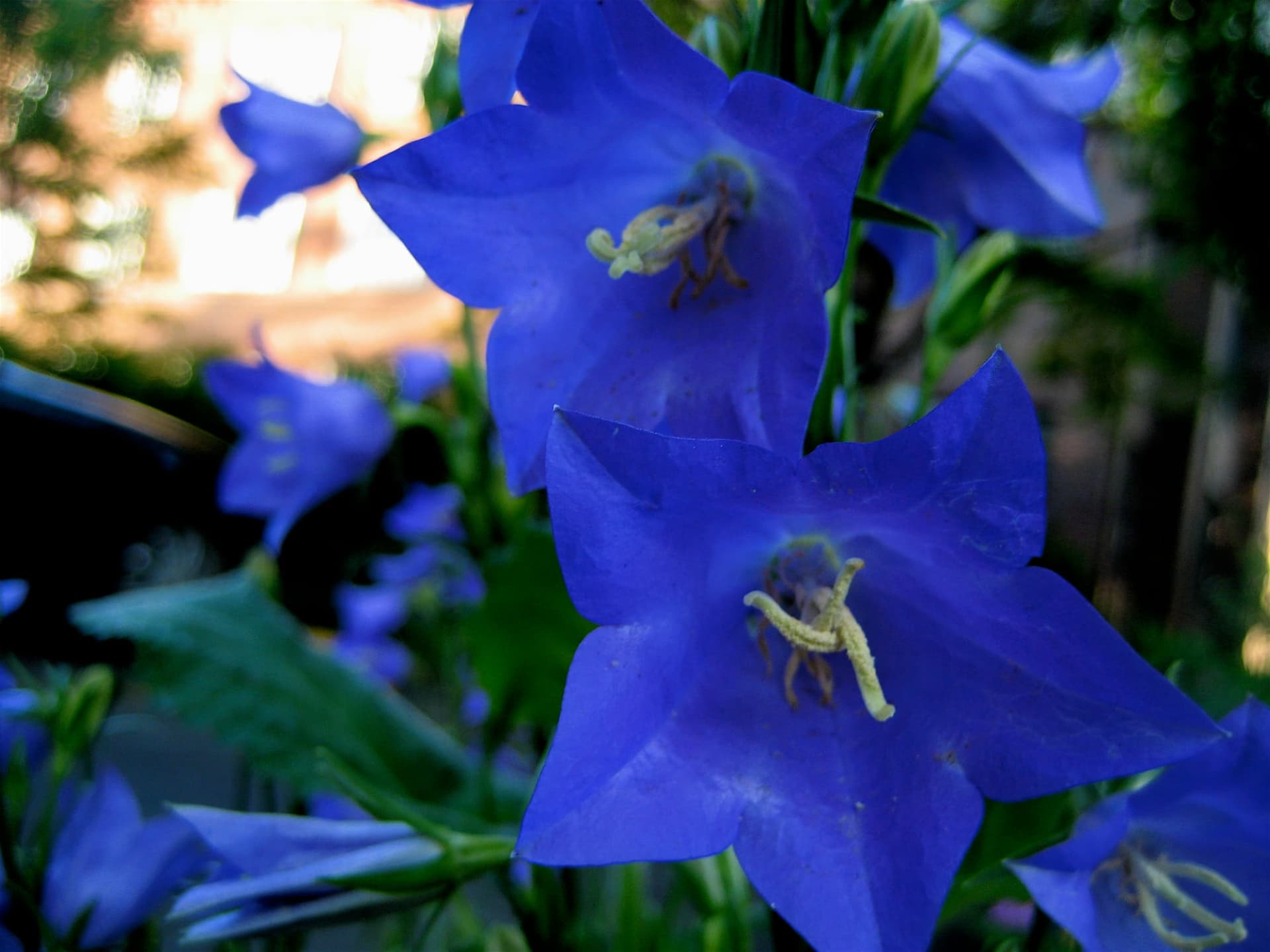
Adenophora takedae is a ladybells from the rocky mountain slopes of central Honshu, in Japan, where it grows in the Kanto and Chubu ranges. Like the rest of the genus it is a close relative of the bellflowers, and it carries nodding blue-purple bells (white and double forms turn up rarely) on a deciduous perennial clump. In its wild form the stems run roughly 12–28 in tall and flower from late summer into autumn. The plant usually sold in the nursery trade is the dwarf alpine variety howozana, which stays under about 6 in tall and 6–12 in wide and is counted among the best of the small ladybells.
It suits a rock garden, trough, scree bed, or the front of a sunny border, anywhere that gives it even moisture and sharp drainage. Sun to part shade works, and the bells are visited by bees. Like many alpine bellflowers it is best left undisturbed once settled, since the roots are fleshy, and young plants should be kept evenly moist until they establish. Because this is a Japanese species and not a North American one, it carries no native-plant value here, but it is a well-behaved small plant that does not spread aggressively.
Powdery mildew
White or grey powdery coating on leaves - usually starting on older growth in humid conditions or when nights cool.
Improve air circulation by thinning plants. Apply neem oil or potassium bicarbonate spray at first sign. Avoid overhead watering.
Root rot
Plants wilt, yellow, and stunt even in moist soil; lower stems and roots turn brown, soft, and mushy and the plant may collapse. Most common in heavy, wet, or poorly drained ground.
Improve drainage and stop overwatering, and never plant too deep. Lift and destroy badly affected plants along with the soil around the roots. Grow in raised or free-draining beds to prevent it returning.
Botrytis (grey mould)
Grey fuzzy mould on petals and stems, worst in cool wet conditions.
Remove affected parts immediately. Improve air circulation. Avoid overhead watering. Apply copper fungicide if severe.