

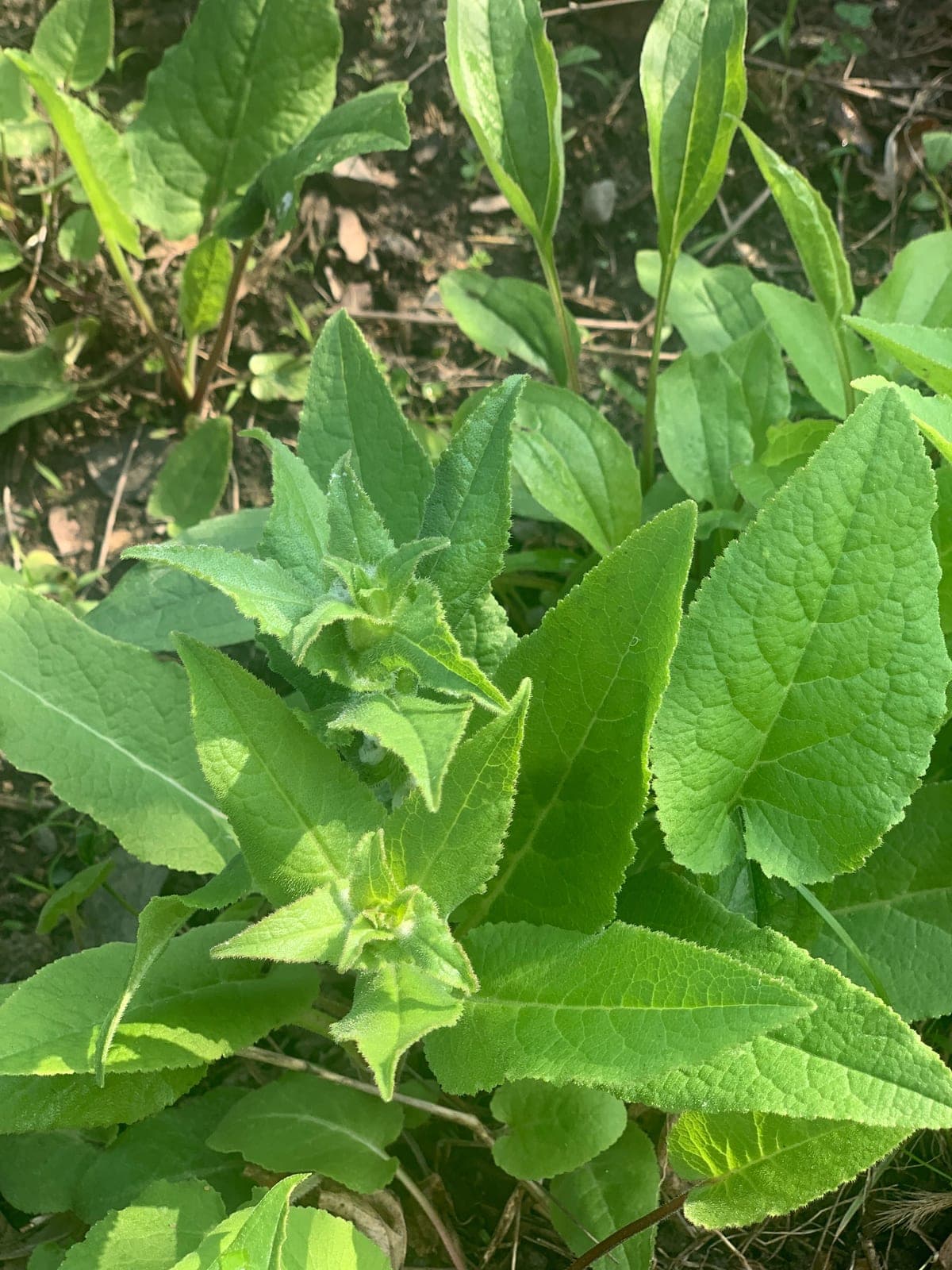
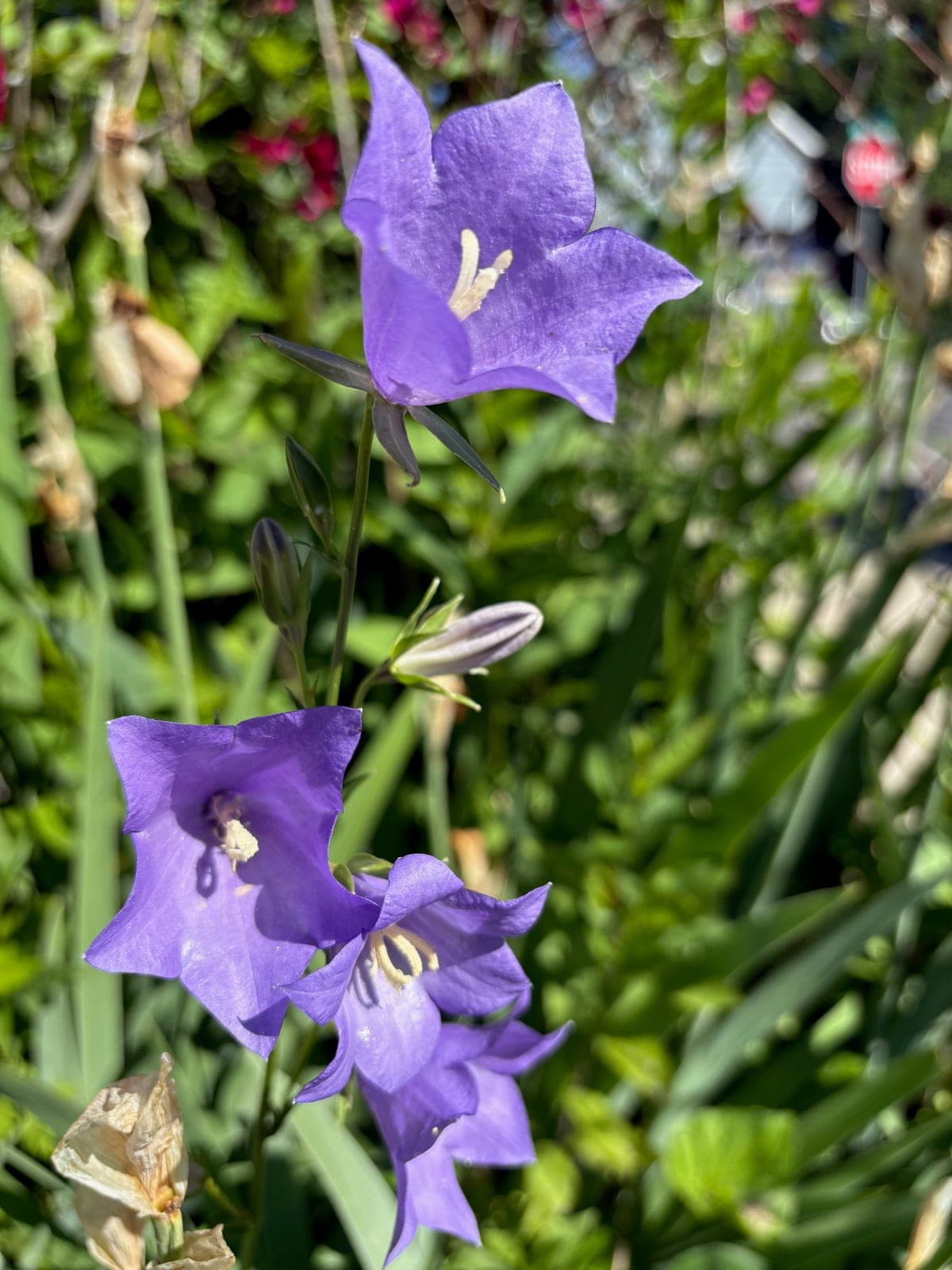
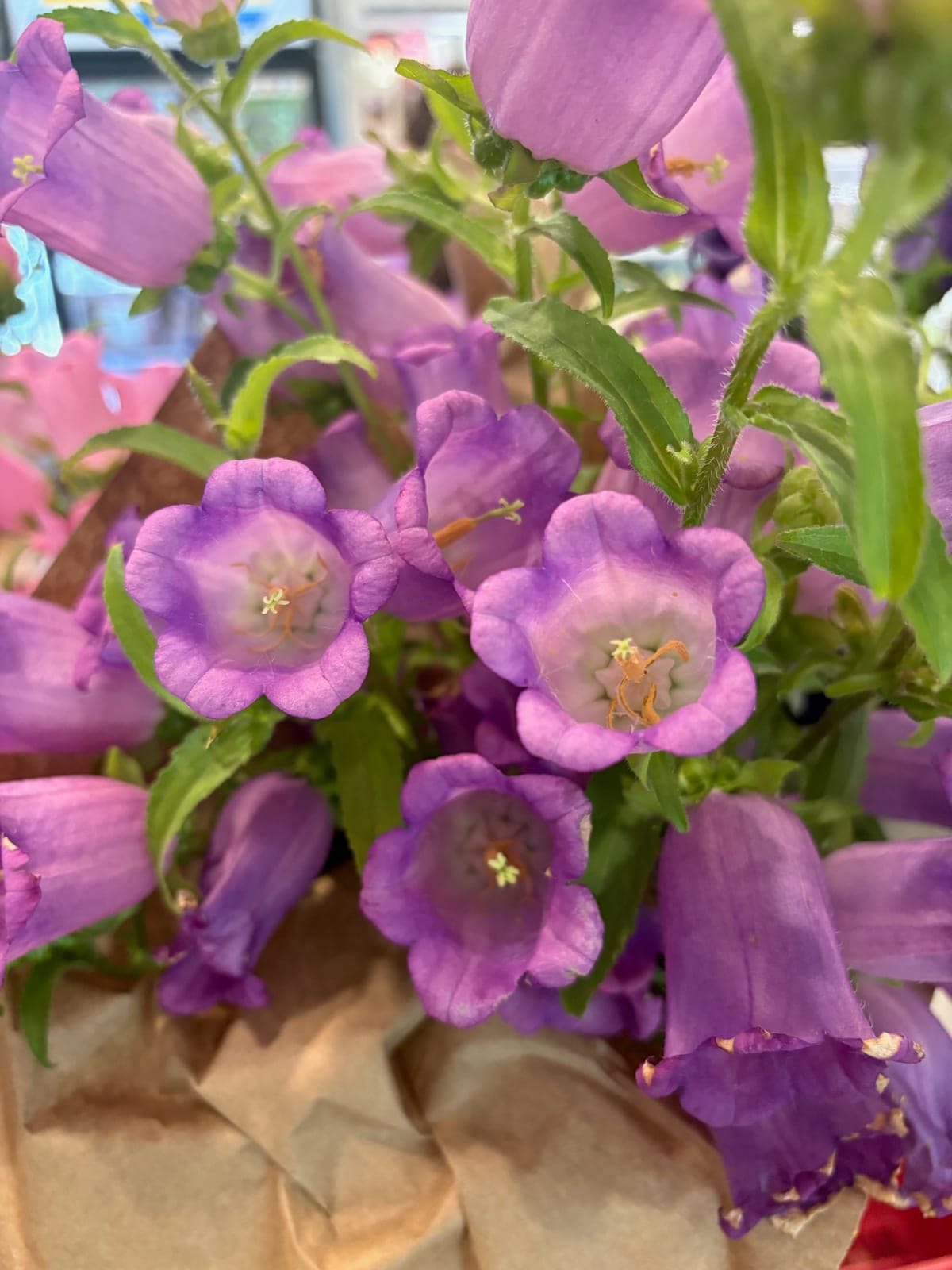
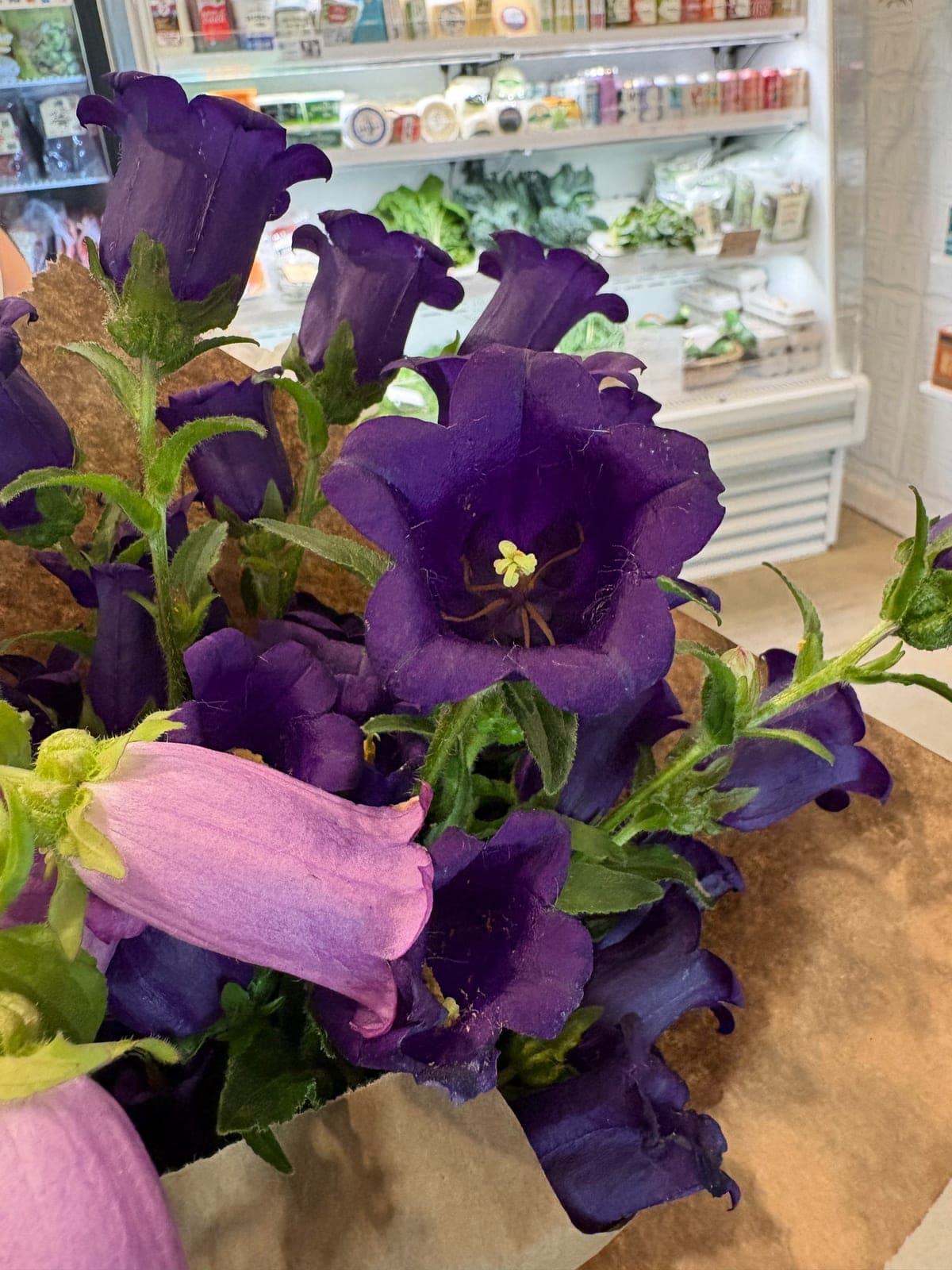
Canterbury bells are the defining flower of the early summer cutting garden: tall spikes, 18 to 36 inches, of large open bells in blue, purple, pink and white, sometimes with a saucer behind the bell in the cup-and-saucer forms. They are biennial: sow in early summer, plant out in fall, and they flower the next year, then compost them after bloom.
Sow in trays in late spring or early summer and set the plants out in early fall, 12 to 18 inches apart in rich soil that drains, in full sun or part shade; they need the cold of winter to flower. Keep them watered in dry spells and stake the tallest spikes in a windy spot. Once you are in a rhythm of annual sowings there are always plants at the flowering stage. Self-seeding is unreliable, so a fresh sowing each year gives more consistent results.
Cut when the lower quarter of the spike is open and the stems last a week or more in water; the upper buds keep opening. Bumblebees crawl into the bells. Slugs and snails take the young rosettes, so protect them over winter. Rabbits and deer will graze them. The plant is native to southern Europe.
Powdery mildew
White or grey powdery coating on leaves - usually starting on older growth in humid conditions or when nights cool.
Improve air circulation by thinning plants. Apply neem oil or potassium bicarbonate spray at first sign. Avoid overhead watering.