
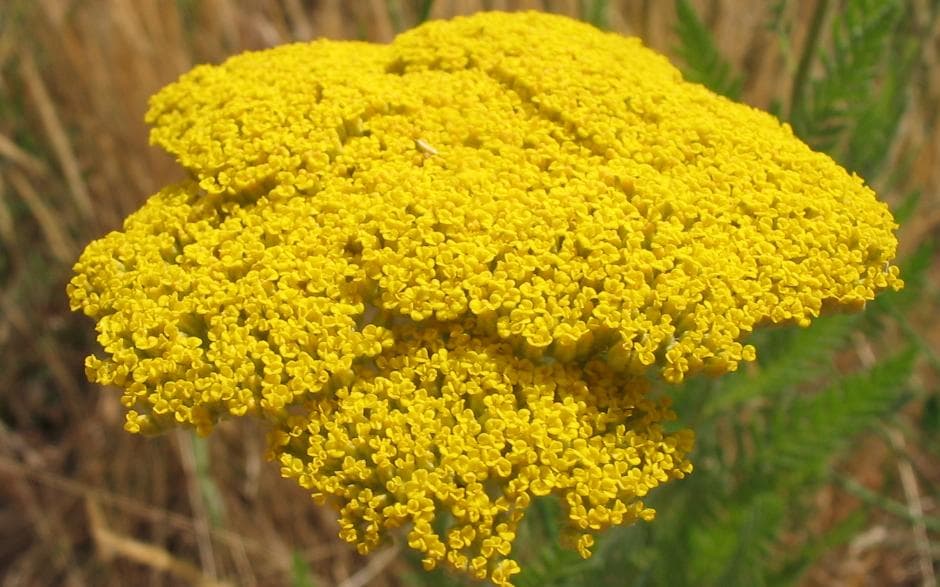
Fernleaf yarrow is the tall, bold cousin of common yarrow - sturdy upright stems topped with flat, mustard-gold flower heads over ferny gray-green foliage. It holds its color well into a dry summer and dries beautifully for arrangements, keeping its flat plate shape and color for months.
It shares common yarrow's dislike of rich, wet soil - lean and sharply drained ground keeps the stems from flopping and the plant free of rot. Divide congested clumps every few years in spring to keep them vigorous.
Powdery mildew
White or grey powdery coating on leaves - usually starting on older growth in humid conditions or when nights cool.
Improve air circulation by thinning plants. Apply neem oil or potassium bicarbonate spray at first sign. Avoid overhead watering.
Rust
Orange to brown raised pustules on the undersides of leaves, with yellow spotting on the upper surface. Heavy infections cause leaves to yellow and drop.
Remove and destroy infected leaves. Avoid overhead watering and improve air circulation. Apply a sulfur or copper-based fungicide if it spreads. Clear plant debris in fall.
Crown Rot
Lower leaves yellow and wilt; the base of the rosette turns brown and soft, sometimes with white fungal threads at the soil line. Plants collapse in wet conditions.
Remove and destroy affected plants. Improve drainage and avoid overhead watering. Do not mulch directly against the crown. Space plants for airflow and avoid replanting in the same wet spot.