
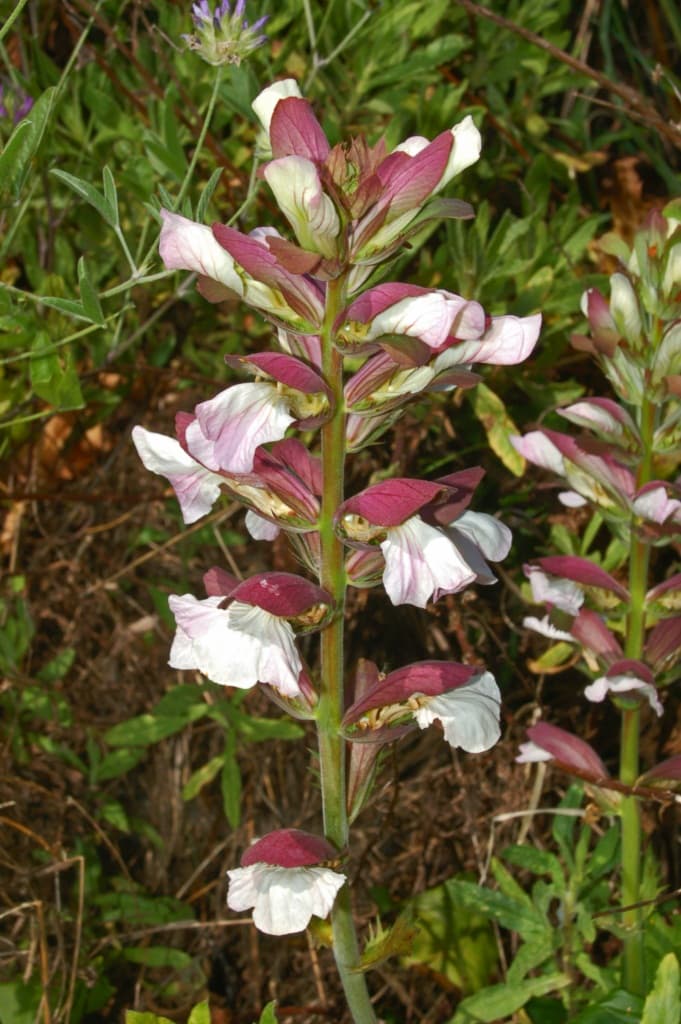
Bear's Breeches is one of the great architectural perennials - huge, glossy, deeply cut leaves at the base, from which tall spikes of hooded white-and-purple flowers rise in early summer over spiny purple bracts. A single mature clump anchors a border on its own.
Roots are hardy into the low end of its range even where top growth is cut down by frost, and it resents disturbance once settled - a taproot-forming plant that regrows readily from even small root fragments left behind. That toughness is also the catch: it spreads by rhizome and self-seeds freely in mild climates, and can be genuinely difficult to eradicate once established. Give it room to be permanent, not a spot you'll want to reclaim later. All parts can cause mild stomach upset in pets if chewed.
Root rot
Plants wilt, yellow, and stunt even in moist soil; lower stems and roots turn brown, soft, and mushy and the plant may collapse. Most common in heavy, wet, or poorly drained ground.
Improve drainage and stop overwatering, and never plant too deep. Lift and destroy badly affected plants along with the soil around the roots. Grow in raised or free-draining beds to prevent it returning.
Powdery mildew
White or grey powdery coating on leaves - usually starting on older growth in humid conditions or when nights cool.
Improve air circulation by thinning plants. Apply neem oil or potassium bicarbonate spray at first sign. Avoid overhead watering.
Grey Field Slug
Deroceras reticulatum →Large irregular holes chewed in leaves, with slime trails on foliage and soil.
Hand-pick at night, set beer traps, or apply iron phosphate bait. Remove debris and mulch where they hide.