
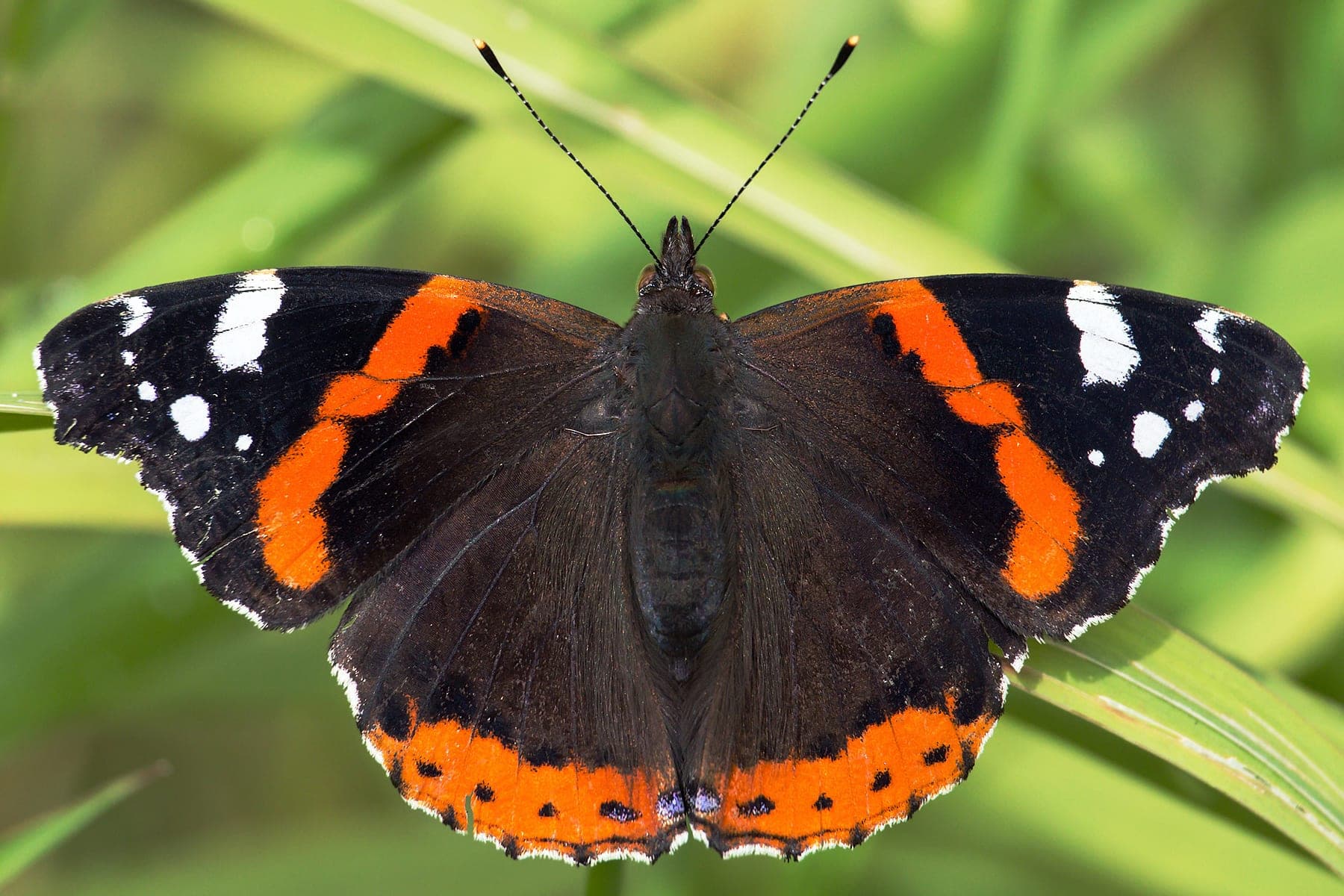
Red Admiral
The red admiral is a medium-sized migratory butterfly with black wings crossed by red-orange bands and white spots near the wingtips. It overwinters in warmer southern regions and migrates north in spring, reaching upstate New York by late spring and remaining through fall. It is one of the more reliably seen butterflies in eastern gardens and is worth supporting as both a pollinator and a sign of a healthy, plant-diverse yard.
Adults feed on nectar from a wide range of flowering plants and are also drawn to overripe or fermenting fruit. Caterpillars depend almost entirely on stinging nettle and false nettle as host plants, so a garden or yard edge with a patch of nettles is one of the most direct ways to support a local breeding population. Males are territorial and defend sunlit perches to court females. The species is notably tolerant of human presence and will often land on people, making it one of the easier butterflies to observe closely.
The red admiral is a pollinator that visits a broad range of flowering plants while feeding on nectar as an adult.
Plant stinging nettle or false nettle in an undisturbed corner of the property to provide caterpillar host plants. Include nectar sources such as buddleja, coneflower, aster, goldenrod, and sedum for adults. Leaving some overripe or fallen fruit accessible in late summer and fall will also draw adults into the garden. Heart-leaf stinging nettle is the host in the Southeast.
Red admirals do best in gardens that combine open sunny areas for perching, a moist spot with nettles for larval development, and a succession of flowering plants from spring through fall. Avoid broad-spectrum insecticides and leave unmowed patches or leaf litter at garden edges to reduce disturbance to resting and overwintering adults. Plant hosts and nectar perennials in clumps of several rather than singly, so the butterflies can find them. A few flat stones in full sun give them a place to warm up, and a shallow dish of damp sand or mud gives them water and minerals. Avoid insecticides, organic ones included, because they kill caterpillars along with the pests. Buy by botanical name so you get the native species and not a lookalike.