
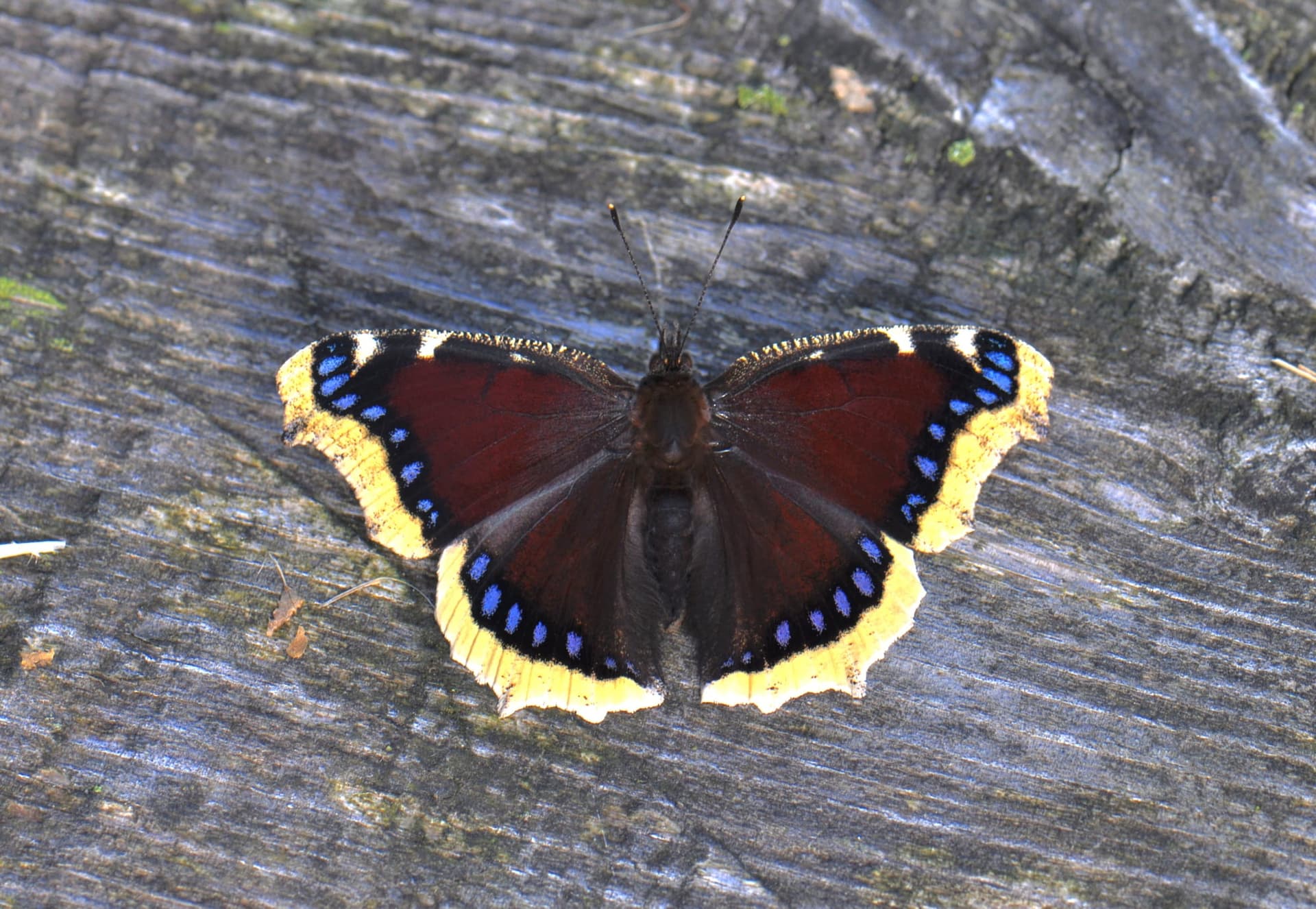
Mourning Cloak
The mourning cloak is one of the largest and most recognizable butterflies in eastern North America, with deep maroon wings edged in pale yellow and lined with a row of blue spots. Gardeners in upstate New York value it as one of the earliest butterflies to appear each year, often flying on warm days in late February or March before most other species are active. Its larvae are sometimes called the spiny elm caterpillar, and older common names for the species include grand surprise and white petticoat.
Unlike most butterflies, the mourning cloak overwinters as an adult, sheltering under loose bark or in wood piles through the coldest months and re-emerging during winter thaws. Adults feed primarily on tree sap and rotting fruit rather than nectar, so they visit flowers less reliably than bees or many other butterflies. Larvae are gregarious and feed in groups on the foliage of willows, elms, cottonwoods, birches, and hackberries. The species is a powerful flier and occasionally appears far outside its usual range during migration.
The mourning cloak has one of the longest lifespans of any butterfly in North America, with adults surviving up to ten or eleven months. That longevity combined with early spring emergence means it is present as a pollinator before most other insects have become active.
An early-season pollinator that visits tree sap, rotting fruit, and occasionally flowers during a window when few other pollinating insects are yet active.
Plant host trees such as weeping willow, paper birch, American elm, or cottonwood to support larval populations. Maintain brush piles, log stacks, or sections of rough bark on the property to give overwintering adults a place to shelter from late fall through early spring. Prairie willow or sandbar willow are the best native hosts in the East, and Geyer willow or western pussy willow in the West.
Gardens adjacent to woodland edges or properties with mature willows, elms, or birches are most likely to attract and retain mourning cloaks. Avoid clearing brush piles and deadwood in fall, as these provide the overwintering cover adults depend on. Plant hosts and nectar perennials in clumps of several rather than singly, so the butterflies can find them. A few flat stones in full sun give them a place to warm up, and a shallow dish of damp sand or mud gives them water and minerals. Avoid insecticides, organic ones included, because they kill caterpillars along with the pests. Buy by botanical name so you get the native species and not a lookalike.