
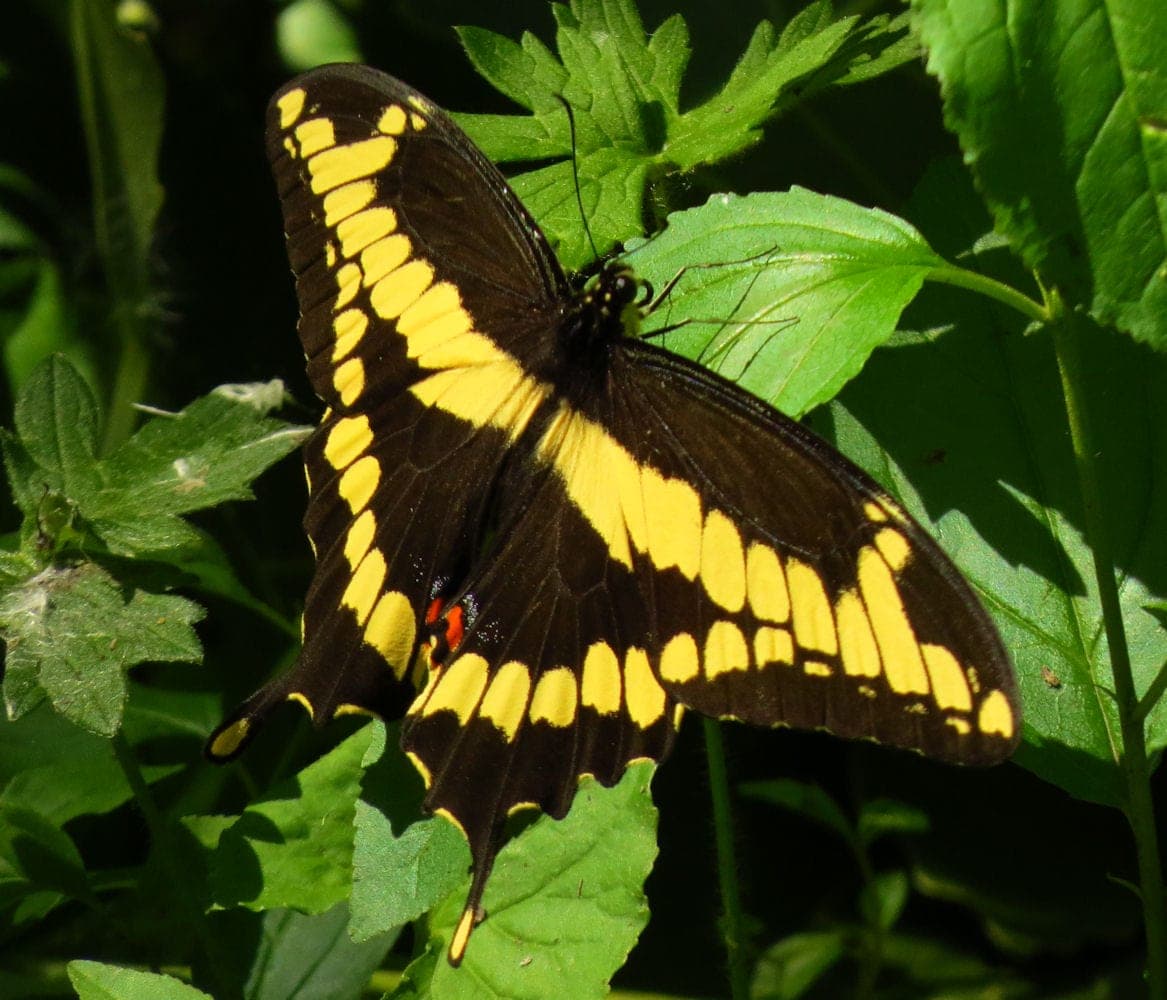
Giant Swallowtail
The Giant Swallowtail is the largest butterfly in North America, with a wingspan that can reach 7 inches. It is common across eastern North America and visits upstate New York gardens from late spring through early fall. Gardeners notice it mainly on nectar plants, where its size and contrasting yellow-and-black patterning make it hard to miss.
Adults are generalist foragers that take nectar from a wide variety of flowers, including milkweed, zinnias, phlox, and lantana. Females lay eggs on plants in the rue family, including common rue, hoptree, and prickly ash, both of which are native to Zone 6b. The larvae, sometimes called orange dogs, are camouflaged to look like bird droppings and will evert a forked gland called an osmeterium when disturbed, releasing a sharp odor that deters wasps, flies, and other predators.
The caterpillar's bird-dropping mimicry is one of the more studied examples of defensive camouflage among North American insects. In citrus-growing regions the larvae can cause real crop damage, but in Zone 6b, where citrus is not grown outdoors, there is no practical pest concern. Native host plants like hoptree and prickly ash support the species without any crop risk.
The Giant Swallowtail is a pollinator that visits a broad range of flowering plants as an adult.
Plant nectar-rich species such as common milkweed, garden phlox, zinnias, and Joe-Pye weed to bring adults into the garden. Add at least one rue-family host plant, such as hoptree or prickly ash, to encourage females to lay eggs and support a breeding population. Avoid applying broad-spectrum or systemic insecticides, particularly during summer. Common hoptree is the standard host in the East and California hoptree in the West.
Sunny, open garden beds with a variety of tall nectar plants and at least one rue-family host plant nearby. The butterfly is more likely to stay and breed where pesticide use is minimal and some natural or semi-wild edge habitat is present. Dense shade and heavily manicured landscapes with no host plants will not retain it. Plant hosts and nectar perennials in clumps of several rather than singly, so the butterflies can find them. A few flat stones in full sun give them a place to warm up, and a shallow dish of damp sand or mud gives them water and minerals. Avoid insecticides, organic ones included, because they kill caterpillars along with the pests. Buy by botanical name so you get the native species and not a lookalike.