
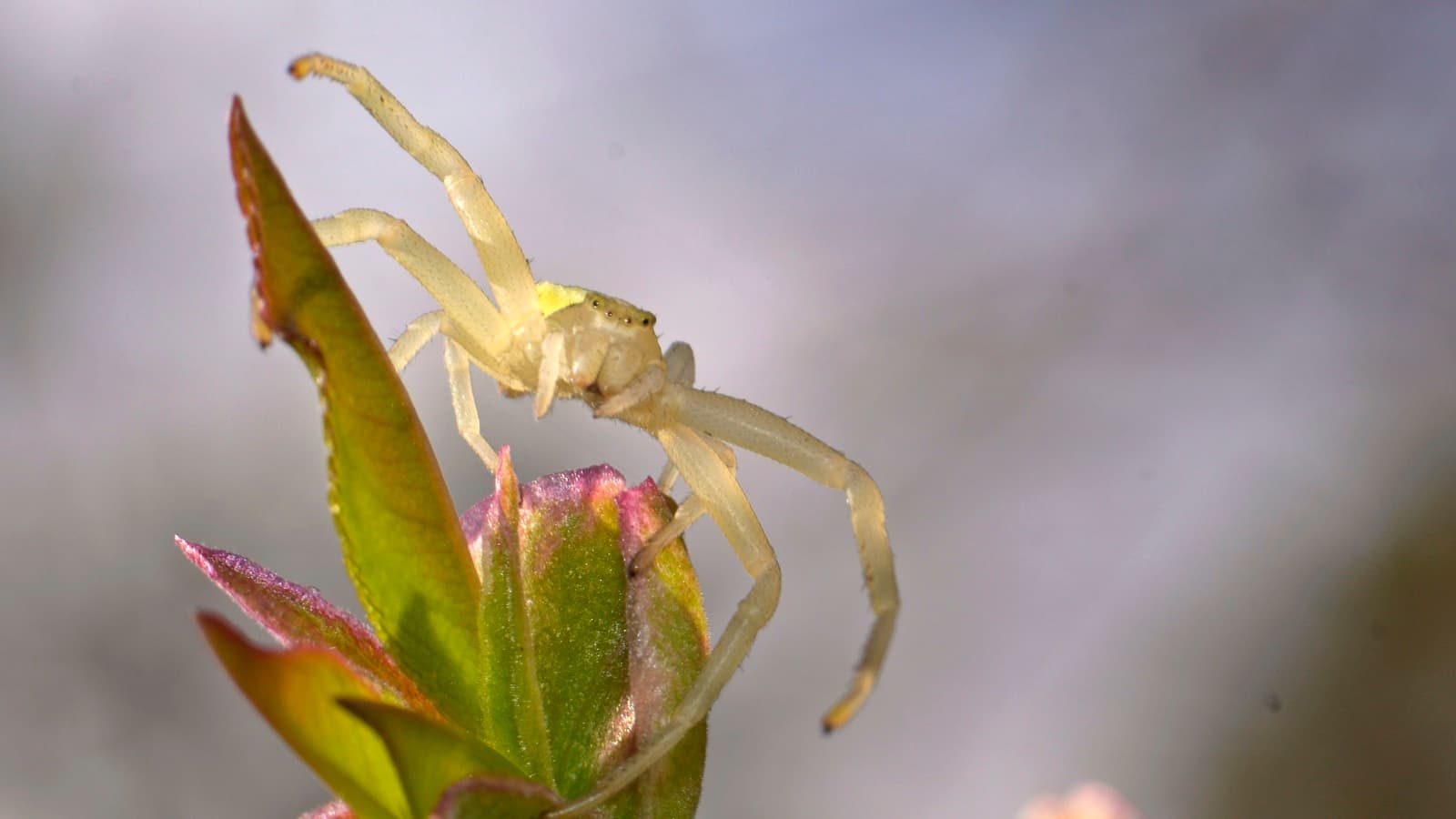
Goldenrod Crab Spider
The goldenrod crab spider is the small, squat, crab-like spider that lies in wait inside flowers with its front two pairs of legs held open like pincers. Females are white or yellow and can slowly shift between the two over a few days to match the bloom they are sitting on — one of the few spiders able to change color — while the smaller males are darker and often go unnoticed.
It spins no capture web. Instead it ambushes: it sits camouflaged in a flower and seizes visitors with its strong front legs, subduing prey much larger than itself, including bees, hoverflies, butterflies, and flies drawn to the bloom. This makes it an unusual case among garden spiders — it does take some pollinators, so it is a genuine predator rather than a pure pest-eater, but it also captures many flies and small pest insects and is a natural, harmless part of the flower-visiting community.
Females lay eggs in a folded leaf near the end of summer and guard the sac until they die at frost. The spider poses no threat to people — it is tiny, retiring, and its bite (essentially impossible to provoke) is negligible. It needs no encouragement beyond a garden with plenty of open flowers and no broad-spectrum insecticides.
Beneficial ambush predator that waits inside flowers and seizes visiting flies, small pests, and some pollinators.
Cannot be introduced or bought; it colonizes gardens with abundant open flowers on its own.
Grow a long succession of open, nectar-rich flowers and skip broad-spectrum sprays; it will find the blooms and settle in.