
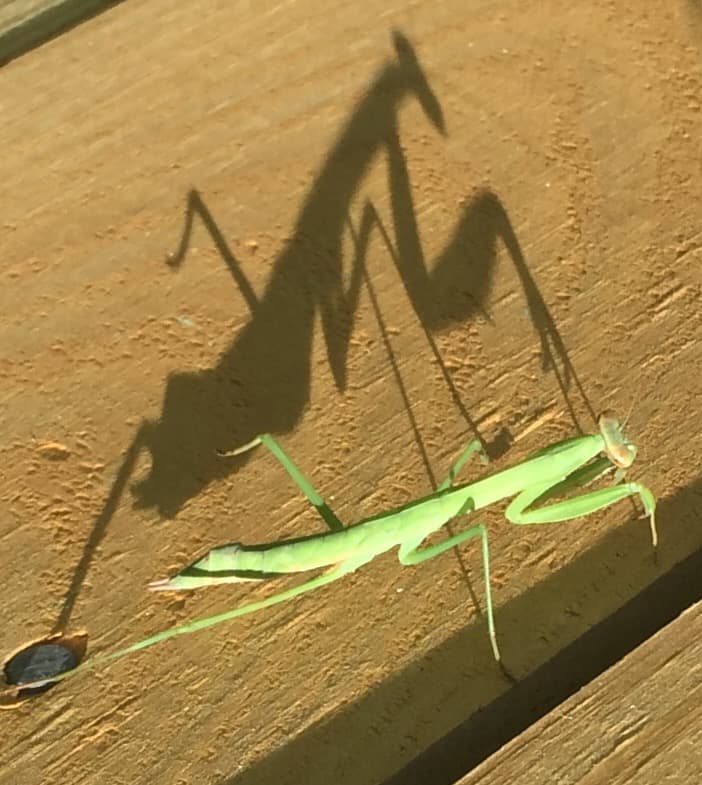
Praying Mantis
The praying mantis is among the most arresting insects in the garden — a creature that looks designed, not evolved. Its forelegs fold in that famous prayer posture not out of reverence but because they are spring-loaded weapons: raptorial limbs that can seize prey faster than the human eye can follow, in under 50 milliseconds. The mantis doesn't hunt by searching; it waits. It picks a position with good sight lines, rotates its triangular head — the only insect capable of looking over its own shoulder — and stays motionless until something moves within striking distance.
The lifecycle is inseparable from the garden calendar. In late summer and fall, mated females produce oothecae: papery, foam-hardened egg cases attached to plant stems, fence rails, or any stable surface. Each ootheca holds 50 to 200 eggs, which overwinter in diapause and hatch in a synchronized emergence in late May or early June. The nymphs emerge looking like tiny perfect mantises, immediately scatter, and begin hunting. They grow through six to nine molts across the summer, reaching adult size by late July or August — just as the garden's pest pressure peaks.
A detail worth knowing: the female occasionally eats the male during or after mating. This is not universal behavior, but it is well-documented, and it matters to the female — the protein from the male measurably increases egg production. The mantis is not sentimental about resources.
As a garden predator, the mantis is a generalist. It takes what it can catch: caterpillars, beetles, grasshoppers, aphid-feeding flies, stink bugs, Japanese beetles. It will also take beneficial insects if they are the available prey, so a single mantis doesn't replace a diverse predator community — it supplements it. One or two per bed is the right scale.
Broad-spectrum ambush predator of caterpillars, beetles, and soft-bodied insects throughout summer and fall.
Purchase oothecae (egg cases) from reputable suppliers in late winter or early spring. Do not refrigerate them — keep at cool room temperature until late May. Attach to a sturdy plant stem 12 to 18 inches off the ground in a sheltered, south-facing spot. One ootheca per raised bed or 100 square feet is enough. Nymphs hatch in a single event and immediately disperse, so placement matters.
Maintain tall perennials, ornamental grasses, and unpruned shrub borders for perching and ambush positions. Leave plant stems standing through winter — oothecae are laid on them and overwinter in place. Avoid broad-spectrum insecticides, which kill nymphs on contact. Reduce bare ground at bed edges, which offers no structure for hunting.