
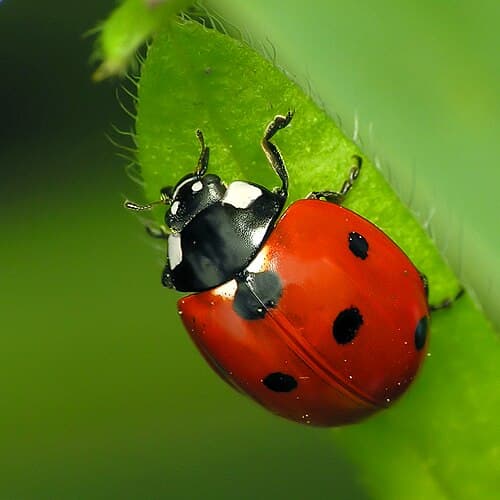
Seven-spot Ladybug
The seven-spot ladybug has an undeserved reputation as a simple aphid-eater. The adult is easy to recognize — scarlet with seven black dots — but the larva is the more effective predator and almost nobody knows what it looks like. It is black and orange, elongated like a tiny alligator, covered in bristles, and utterly alien-looking compared to the familiar adult. Before it pupates, a single larva will consume 400 to 500 aphids. Two or three larvae working through a rose bush will do more damage control in a week than most interventions a gardener could apply.
Adults locate aphid colonies not by sight but by chemical signals. Plants under aphid attack release specific volatile compounds as a distress call, and ladybugs orient to those signals from downwind. This is why planting diversity matters — a garden that has some level of aphid pressure will attract and hold predators, while a garden sprayed clean has nothing to offer them and remains vulnerable.
In fall, adults aggregate in large numbers in sheltered spots before overwintering. They do not feed during winter, surviving on fat reserves. They emerge in early spring, feed briefly, and begin laying eggs on plant stems near aphid colonies — a placement the female apparently judges carefully, positioning eggs close to the prey her larvae will need within hours of hatching.
One important warning: the seven-spot is a European species, now naturalized in North America, and it coexists with native ladybug species. The multicolored Asian lady beetle (Harmonia axyridis) is a distinct invasive species — larger, more variable in color, and the one responsible for the fall invasions into houses. They are not the same insect.
Primary aphid predator from early spring through fall; larvae are more voracious than adults.
Do not purchase ladybugs from mail-order suppliers — nearly all are harvested from wild aggregations in the American West, arrive stressed, and disperse immediately on release. They cannot be established by purchase. Instead, create conditions that attract and retain resident populations: eliminate broad-spectrum sprays, provide nectar sources for adults, and tolerate low-level aphid presence as a food source.
Plant flat-topped flowers — yarrow, dill, fennel, calendula, sweet alyssum — which provide accessible nectar and pollen for adults between aphid cycles. Leave a section of leaf litter or low brush at bed edges for overwintering. Avoid any broad-spectrum insecticide, including pyrethrin-based organic sprays, which kill ladybug larvae as readily as aphids.