
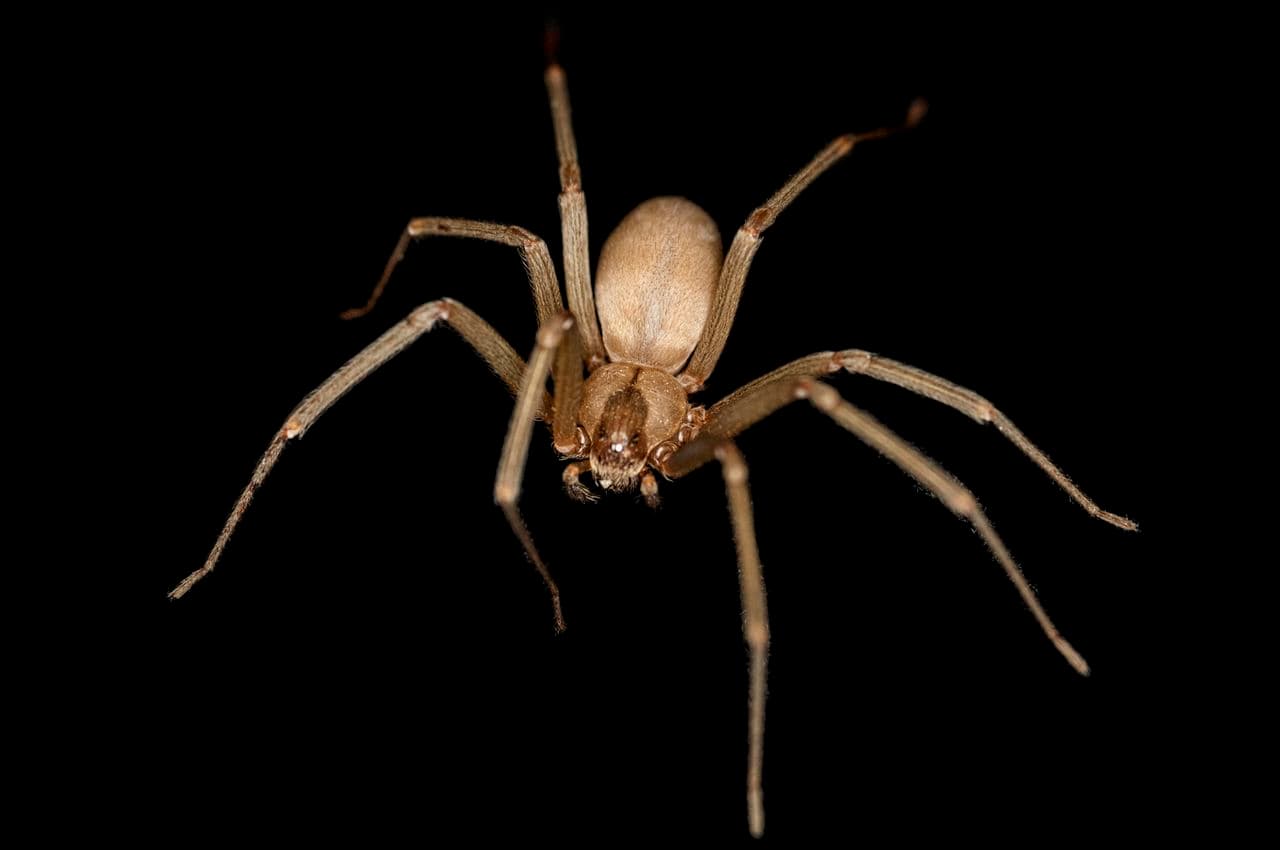
Brown Recluse
The brown recluse is a small, uniformly sandy-to-brown spider best known for the faint darker violin-shaped mark on the top of its front body section — the source of the nickname 'fiddleback.' It has six eyes arranged in three pairs (most spiders have eight), a subtle feature that is one of the more reliable ways to distinguish it. As its name says, it is reclusive: it hides in dry, dark, undisturbed places and bites only when trapped against skin, typically in clothing, bedding, or stored items.
Range is the single most important thing for a Northeast gardener to understand. The brown recluse is native to the south-central United States — roughly Kansas and Missouri down through Oklahoma, Arkansas, Texas, and the mid-South. It is not established in New York or the wider Northeast, and the overwhelming majority of 'brown recluse' reports here are misidentifications of harmless native spiders (cellar spiders, sac spiders, and various brown orb-weavers and wolf spiders). Verified recluses this far north are rare strays carried in with shipped goods, not a local population.
Where it does occur, the bite can occasionally cause a slow-healing ulcerating wound (loxoscelism), though many bites are mild and heal on their own. It is included here so it can be recognized and, crucially, not confused with the ordinary brown spiders of a Northeast garden, which are harmless. Within its native range, the same sensible caution applies as for any hidden spider: shake out gloves, shoes, and stored clothing; wear gloves when moving boxes, wood, and debris; and reduce indoor clutter. Do not handle one, and seek medical advice for a suspected bite.
A venomous spider of dry, undisturbed clutter within its south-central range — essentially absent from the Northeast, where look-alike brown spiders are harmless. Recognize it; don't assume it.