
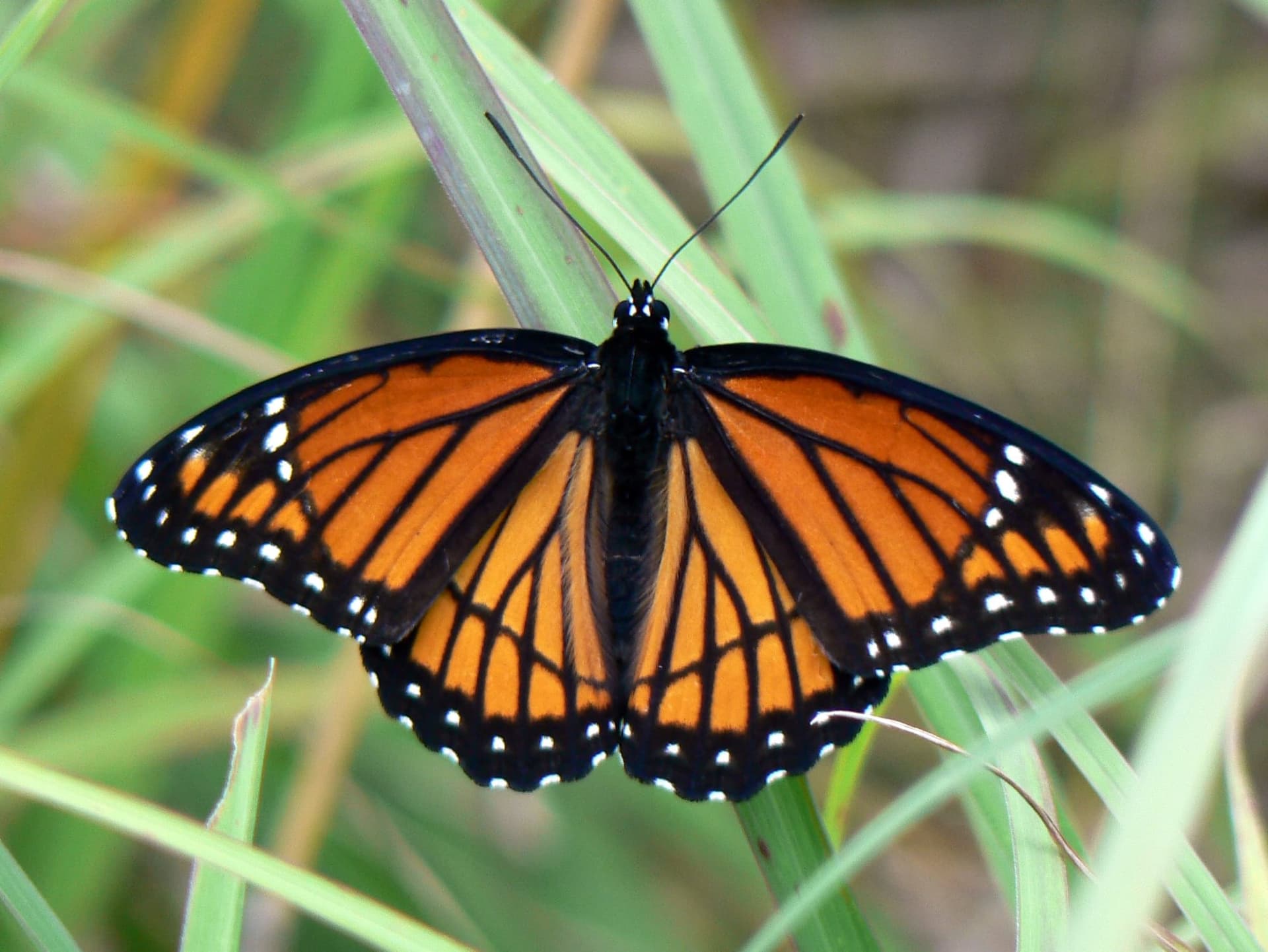
Viceroy
The viceroy is a medium-sized North American butterfly that closely resembles the monarch in color and pattern. Gardeners in upstate New York will encounter it from late spring through early fall, most often near wet areas or wherever its larval host trees grow. Adults visit a range of flowering plants for nectar, making the viceroy a consistent, if understated, garden pollinator.
For most of the twentieth century, the viceroy was described as a Batesian mimic — a palatable species benefiting from the monarch's bad reputation with birds. Research in the 1990s overturned that. Viceroys are themselves unpalatable, accumulating bitter compounds from their larval diet of willow and poplar leaves. The relationship is Müllerian mimicry: two genuinely defended species that reinforce each other's warning signal, so both benefit from shared recognition by predators. Larvae spend the winter rolled tightly inside a leaf shelter attached to a twig, emerging in spring to resume feeding before pupating.
The viceroy-monarch relationship is one of the most studied examples of Müllerian mimicry in North American insects and has influenced how ecologists understand the evolution of warning coloration. Planting willows or cottonwoods for viceroys alongside milkweeds for monarchs supports both species in the same landscape and strengthens a shared predator-deterrence system.
Adult viceroys act as pollinators, visiting a variety of flowering plants for nectar as they move through the landscape.
Plant native willows (Salix spp.) or cottonwoods (Populus deltoides) to provide larval habitat. Add late-season nectar sources such as goldenrod, Joe-Pye weed, and ironweed to support adults during their peak late-summer flight.
Gardens near streams or low wet spots with established willows or poplars are the most reliable habitat. Open, sunny areas with a mix of native flowering plants attract foraging adults. Avoid broad-spectrum insecticides, especially in late summer when caterpillars are actively feeding and overwintering shelters are being constructed.