
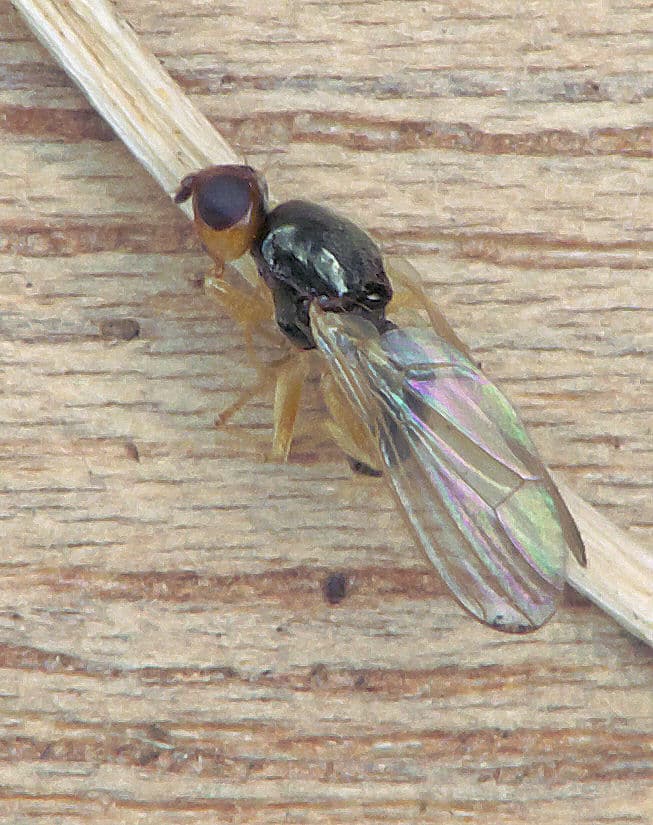
Carrot Rust Fly
The carrot rust fly is a small fly in the family Psilidae whose larvae are the primary cause of rust-brown tunneling in carrot roots. It is one of the more damaging pests affecting the Apiaceae family, targeting carrots, parsnips, parsley, and celery. In Zone 6b, a moderate infestation can render an entire carrot bed inedible.
Adults are shiny, dark green-black flies roughly 6 to 8mm long that emerge in spring and again in late summer. Females lay eggs in the soil near host plant stems. Larvae hatch and work downward, first feeding on fine root hairs before tunneling into the main taproot and leaving rust-colored galleries that invite rot. There are typically two generations per year in upstate New York — the first peaks in late spring around carrot germination time, the second in late summer. Larvae from the second generation overwinter in the soil as pupae, setting up the following year's pressure.
Root-feeding pest whose larvae tunnel into and destroy the taproots of carrots and related crops.
Rust-colored tunnels and brown scarring through the outer root. Foliage may yellow or wilt. Larvae are small white maggots in the root surface.
Cover beds with insect netting at sowing. Delay sowing past the first generation and avoid leaving thinnings in the bed, since their scent attracts flies. Rotate crops yearly.