
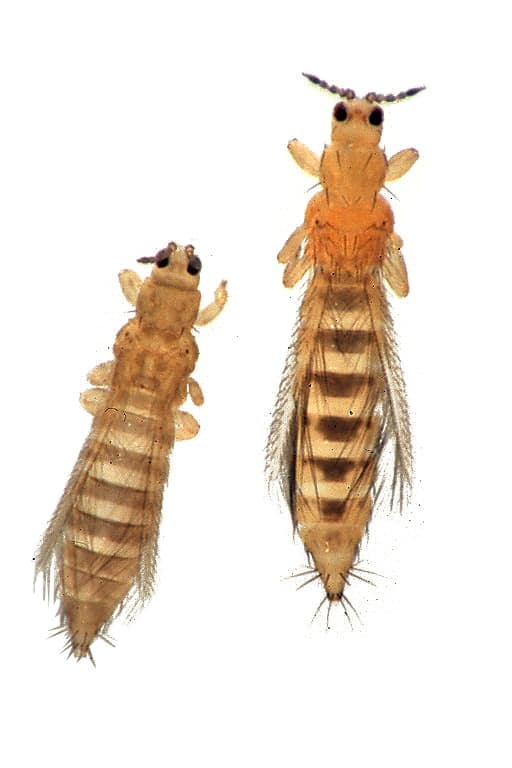
Onion Thrips
Onion thrips is a tiny rasping insect, barely visible to the naked eye, that feeds on onions, leeks, garlic, and a wide range of other crops including potatoes, cabbage, and cucumbers. Gardeners in upstate New York often notice its damage before they ever see the insect itself — silvery-white streaking or stippling on onion leaves is the first sign of a problem.
Both nymphs and adults feed by puncturing plant cells and consuming the contents, leaving behind a characteristic silver-scarred tissue. They hide deep inside leaf folds and in the tight neck of developing onion bulbs, which makes them difficult to reach with sprays. Populations build quickly in hot, dry weather, and a single generation can run from egg to reproducing adult in about two weeks. Females can also reproduce without mating, which accelerates population growth.
Beyond direct feeding damage, onion thrips is a confirmed vector of Iris Yellow Spot Virus, which is particularly destructive to allium crops, and Tomato Spotted Wilt Virus. A heavy thrips infestation combined with virus transmission can wipe out an onion bed entirely, so population monitoring matters even when feeding damage alone appears manageable.
Onion thrips is a direct feeding pest and plant virus vector that damages alliums and other vegetable crops throughout the growing season.
Silvery streaks and stippling on leaves, distorted growth, and tiny pale insects hiding in leaf bases during hot, dry weather.
Spray plants with water to dislodge thrips, encourage predatory insects, and apply insecticidal soap if populations build. Keep plants watered to reduce stress.