
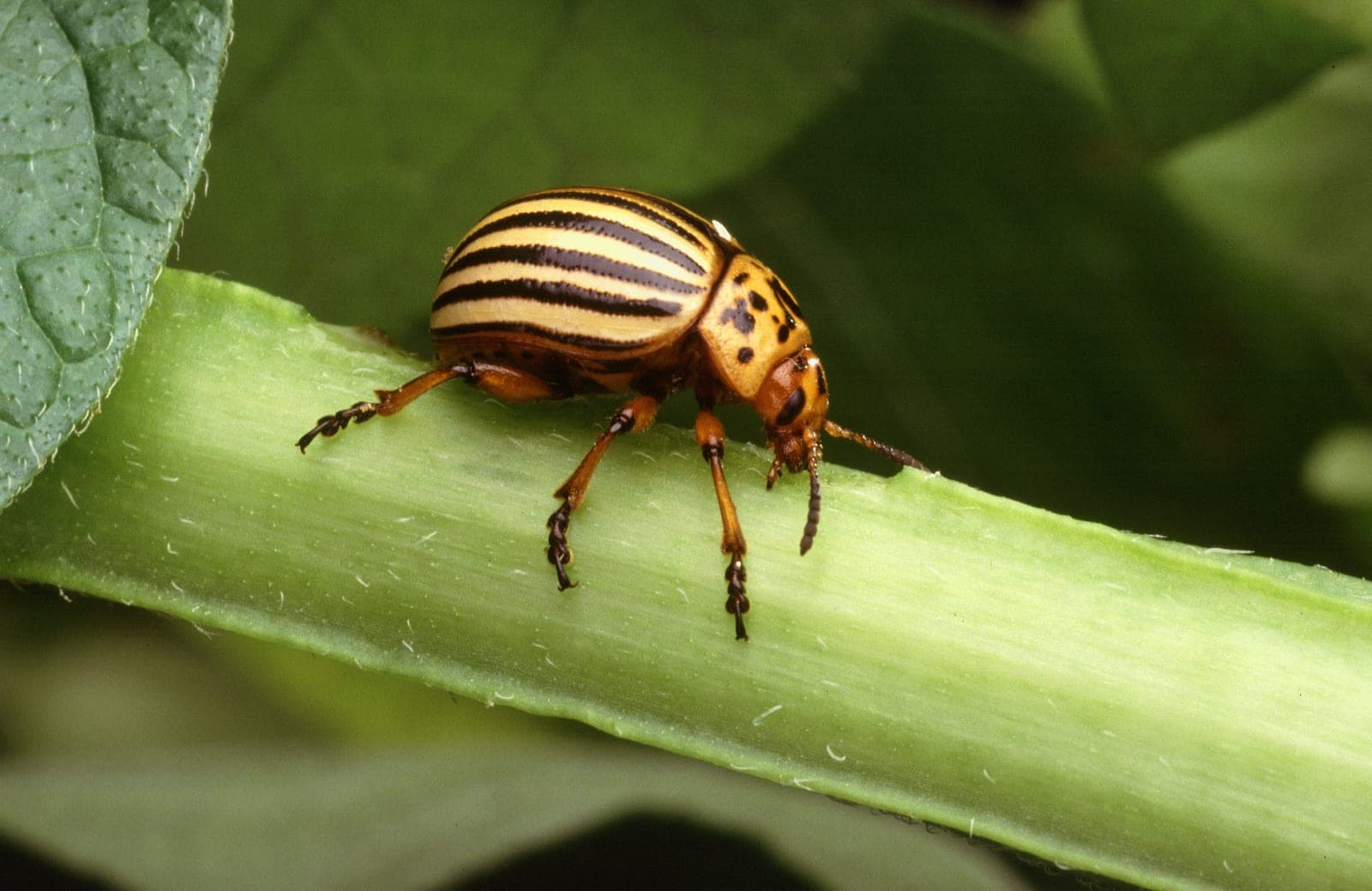
Colorado Potato Beetle
The Colorado potato beetle is one of the most destructive insect pests a vegetable gardener will encounter. Originally native to the Rocky Mountains, where it fed on wild buffalo bur, it made the jump to cultivated potatoes in the mid-1800s and spread across the United States and into Europe with remarkable speed. Today it is present throughout most of North America and is a serious annual threat to any garden growing potatoes, eggplant, tomatoes, or peppers.
Adults overwinter in the soil and emerge in spring just as potato plants begin to push through the ground. Females lay clusters of bright orange-yellow eggs on the undersides of leaves, and a single female can deposit several hundred eggs over a few weeks. Larvae feed heavily for several weeks, drop into the soil to pupate, and produce a second generation in midsummer. Both the adults and larvae consume leaf tissue, and a large population can strip a plant to bare stems quickly enough to eliminate the harvest. The beetle has evolved resistance to dozens of insecticides, making chemical control progressively less reliable and rotating control strategies more important than ever.
Defoliating pest of nightshade-family crops, capable of causing complete crop loss when populations go unmanaged.
Yellow-orange eggs in clusters on leaf undersides. Orange larvae with black spots and adult yellow-and-black-striped beetles feed heavily on foliage, rapidly skeletonizing leaves and stunting young plants. Defoliation can be severe enough to eliminate fruit production.
Hand-pick egg masses, larvae, and adults into soapy water daily during peak emergence. Apply spinosad or Bacillus thuringiensis var. tenebrionis (Bt-t) targeting early larval instars. Use row cover over transplants until flowering. Rotate nightshade crops to new locations each year to disrupt overwintering beetle populations.