
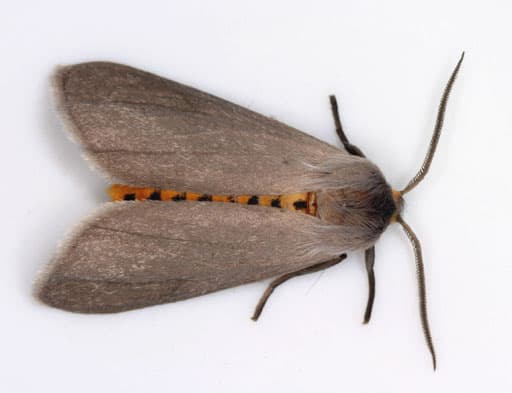
Milkweed Tussock Moth
The milkweed tussock moth is a native moth whose caterpillars are a routine mid- to late-summer presence on milkweed and dogbane. Gardeners growing milkweed for monarch butterflies need to know this species because large larval groups can strip plants before monarch caterpillars have a chance to use them.
Larvae hatch in tight clusters and feed gregariously, meaning a single egg mass can produce enough caterpillars to defoliate a plant within days. Early instars are pale and covered in fine hair; later instars develop the dense tufts of black, white, and orange hair that give the species its common name. Adults fly at night from July through early September across most of their range.
This species sequesters cardiac glycosides from its milkweed host and retains them into adulthood. When bats approach, adults produce ultrasonic clicks from specialized organs called tymbals, advertising their toxicity. Only very high glycoside concentrations reliably deter bat predation. Caterpillars lack this defense and are vulnerable to parasitoid wasps and flies, which can act as meaningful natural controls in undisturbed garden settings.
Defoliating pest of milkweed and dogbane, competing directly with monarch butterfly caterpillars for host plant material.
Dense clusters of tufted caterpillars with black, white, and orange hairs feed gregariously on leaf tissue, skeletonizing leaves from the margins inward. Heavy infestations can strip multiple stems bare by late summer.
Handpick early-instar clusters before they disperse across the planting. Plants reliably rebound from defoliation and larvae do not threaten root survival. Avoid Bt sprays and other insecticides - they are non-selective and will kill monarch caterpillars feeding on the same plants.