
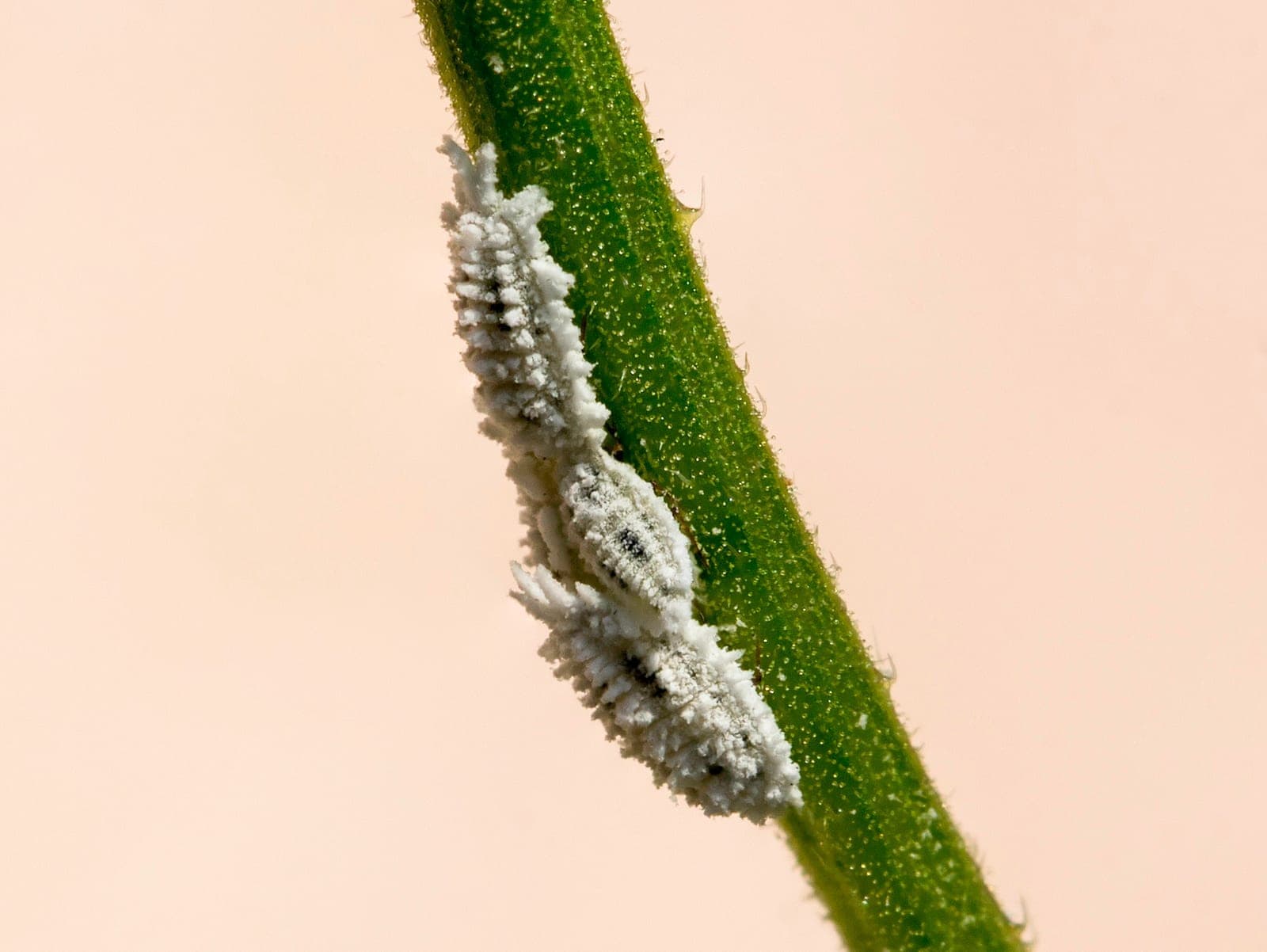
Mealybug and Scale Infestation
Mealybugs are soft-bodied, sap-sucking insects in the family Pseudococcidae, with more than 2,000 described species worldwide. In Zone 6b, they are most commonly a problem on greenhouse plants, houseplants moved outdoors for summer, and container-grown ornamentals. Their waxy white coating makes them easy to spot, but by the time a colony is visible, the infestation is often well established.
Mealybugs feed on plant juices and excrete a sticky substance called honeydew, which coats leaves and stems. Sooty mold fungus colonizes the honeydew, reducing photosynthesis and making plants look blackened and dirty. Certain ant species actively farm mealybugs, carrying them to new plants and protecting them from predators in exchange for honeydew — if you see ants swarming a plant, look for mealybugs underneath. Mealybugs can also act as vectors for plant viruses, making early control important.
Some mealybug species attack roots rather than shoots, making them especially hard to detect on container plants. Root-feeding species are a common cause of mysterious decline in potted citrus, succulents, and tropical plants overwintered indoors.
Mealybugs are sap-feeding pests that weaken host plants directly and promote secondary sooty mold infections through honeydew deposits.
White, cottony masses or small brown bumps on stems and leaf undersides, often with sticky residue and sooty mold.
Wipe off light infestations with alcohol-dipped swabs or a strong water spray. Treat heavier cases with horticultural oil or insecticidal soap, and remove badly infested stems.