
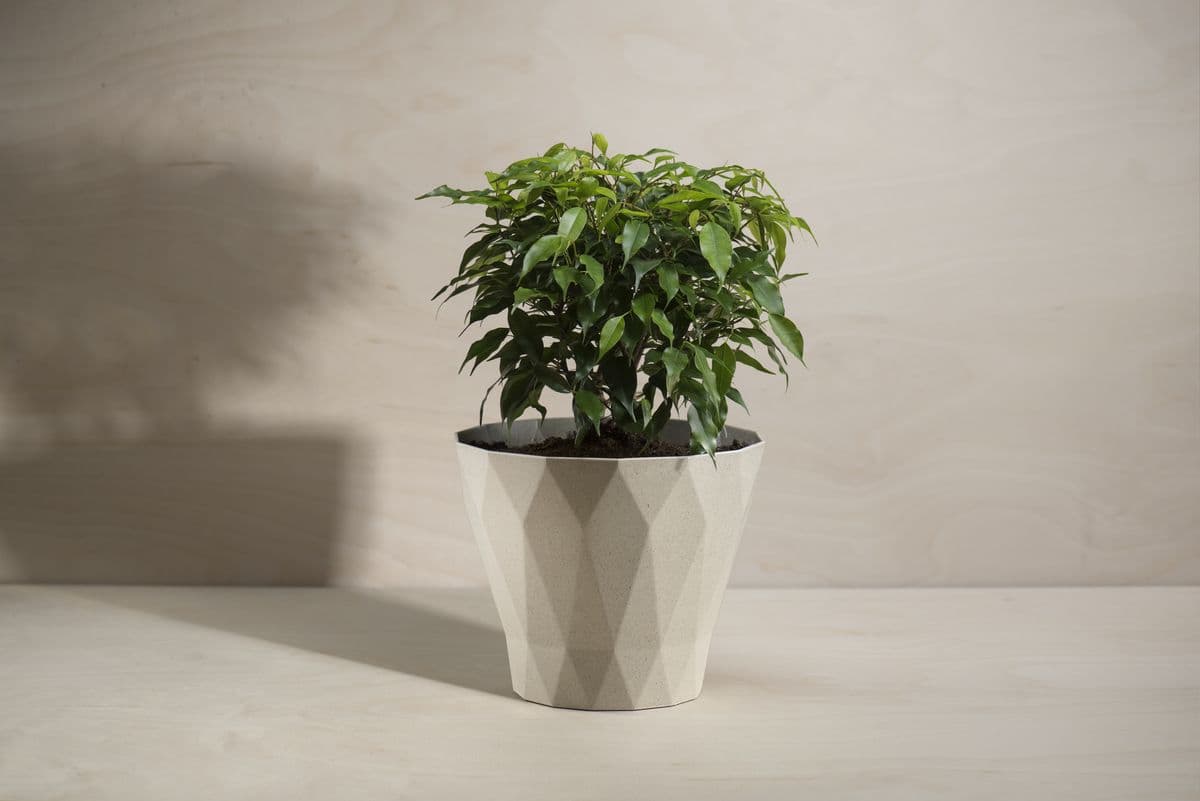
Ficus benjamina is a tropical fig native to Asia and Australia, where it grows into a substantial canopy tree. Indoors it is one of the most recognizable houseplants, valued for its woody trunk, arching branches, and small glossy leaves that create a genuine tree-like silhouette. People grow it to add vertical structure and a sense of permanence to interior spaces, and braided-trunk specimens - made by weaving several young stems together as the plant grows - are especially popular.
This plant does best in consistent bright indirect light and steady temperatures between 60 and 75°F. The most common mistake is moving it. Ficus benjamina is notoriously reactive to environmental change and will shed large quantities of leaves in response to relocation, cold drafts, a nearby heating or cooling vent, or a significant shift in light level. Once you find a spot where it settles and holds its leaves, keep it there and allow it to adapt. Watering errors also cause problems: overwatering leads to root rot, while allowing the soil to dry completely stresses the plant and triggers more leaf drop.
The stems exude a milky white latex sap when cut, so wearing gloves during pruning is practical. The plant responds well to light shaping and can be kept compact with occasional trimming. New growth appears quickly in good conditions, and the plant is propagated at home by stem cuttings.
Bright indirect light in practice means a spot within a few feet of a south- or east-facing window where the plant receives strong ambient brightness without harsh afternoon sun hitting the leaves directly. Too little light accelerates leaf drop and gradually weakens the plant; too much direct sun scorches the foliage and can bleach newer leaves.
Water once the top inch of soil is dry
Feed with a balanced houseplant fertiliser
Wipe the leaves to remove dust and check them over
Check leaf undersides for spider mites and mealybugs
Repot when roots crowd the pot
Keep it in one spot: moving it or a draft often makes it drop leaves