
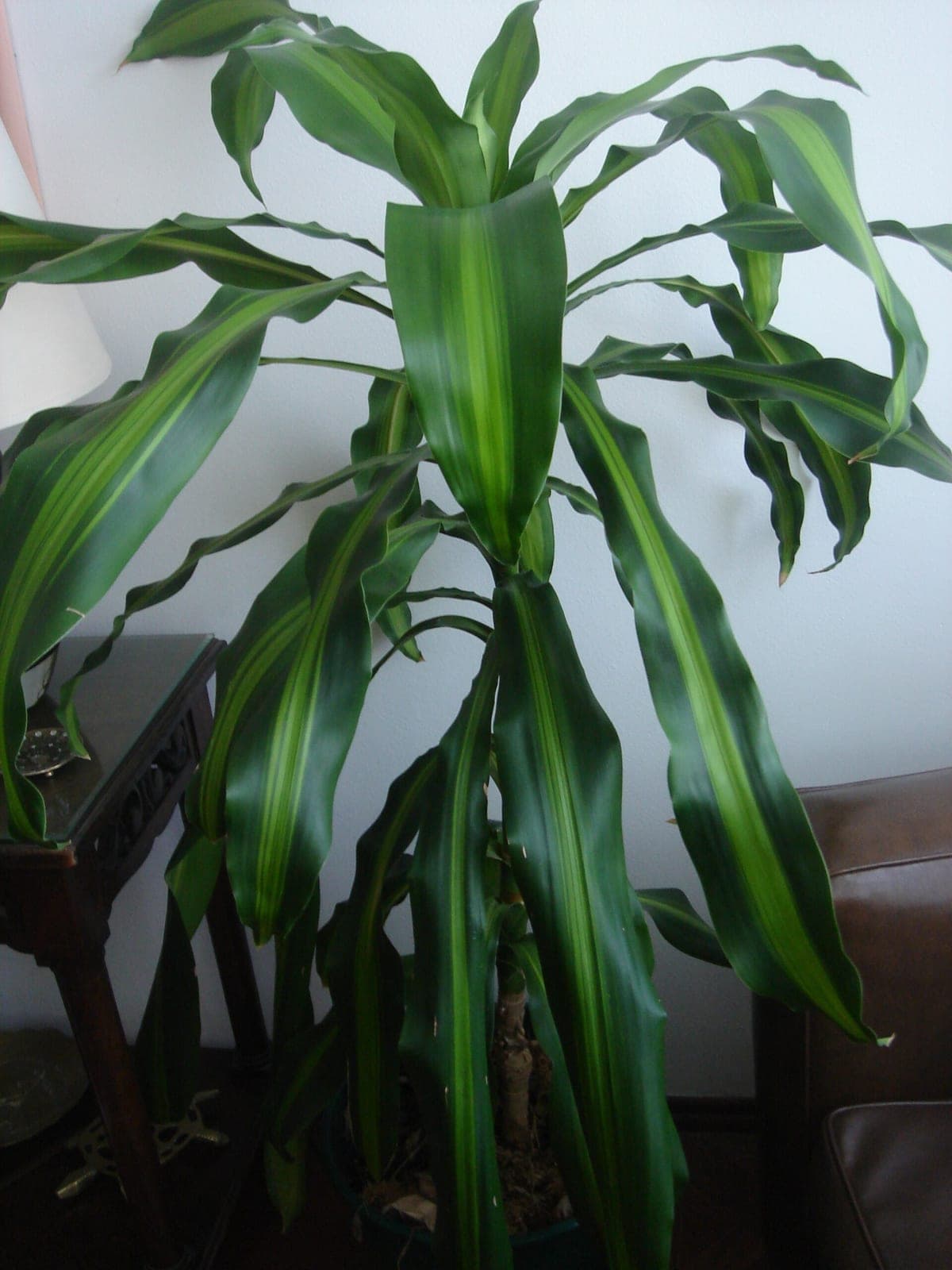
Corn Plant
Dracaena fragrans, commonly called corn plant, is native to tropical upland Africa, where it grows at elevations between 600 and 2,250 meters across a range stretching from Sudan to Angola. Indoors, it forms a bold, upright silhouette with long, arching strap leaves that typically carry a pale yellow-green stripe along the center. It is widely kept as a houseplant because it tolerates the moderate light and average humidity found in most homes and offices, and it requires little hands-on attention to stay healthy.
The most important thing to get right with corn plant is watering. Allow the top half of the soil to dry out before watering again, and always tip out water that collects in the saucer. Overwatering is by far the most common problem - it leads to root rot and soft, mushy stems at the base that are difficult to reverse. Brown leaf tips are a separate and much less serious issue, usually caused by fluoride in tap water or dry air from heating vents; switching to filtered or distilled water and keeping the plant away from drafts addresses it in most cases.
Corn plant develops a woody cane over time as it matures, shedding its lower leaves and exposing bare stem beneath the foliage crown. This is normal. If the plant gets too tall or leggy, the cane can be cut back and the stump will push out new shoots. The cut-off top can be rooted as a new plant, making propagation straightforward.
Medium light in practice means a position a few feet from a bright window, behind a sheer curtain, or in front of a north-facing window. Too little light causes the variegation to fade and new leaves to emerge narrower and paler than normal; direct sun burns the leaves, leaving bleached or papery patches that do not recover.
Water once the top inch of soil is dry
Feed with a balanced houseplant fertiliser
Wipe the leaves to remove dust and check them over
Check leaf undersides for spider mites and mealybugs
Repot when roots crowd the pot
Water with filtered or rainwater if the leaf tips brown: it is sensitive to fluoride