
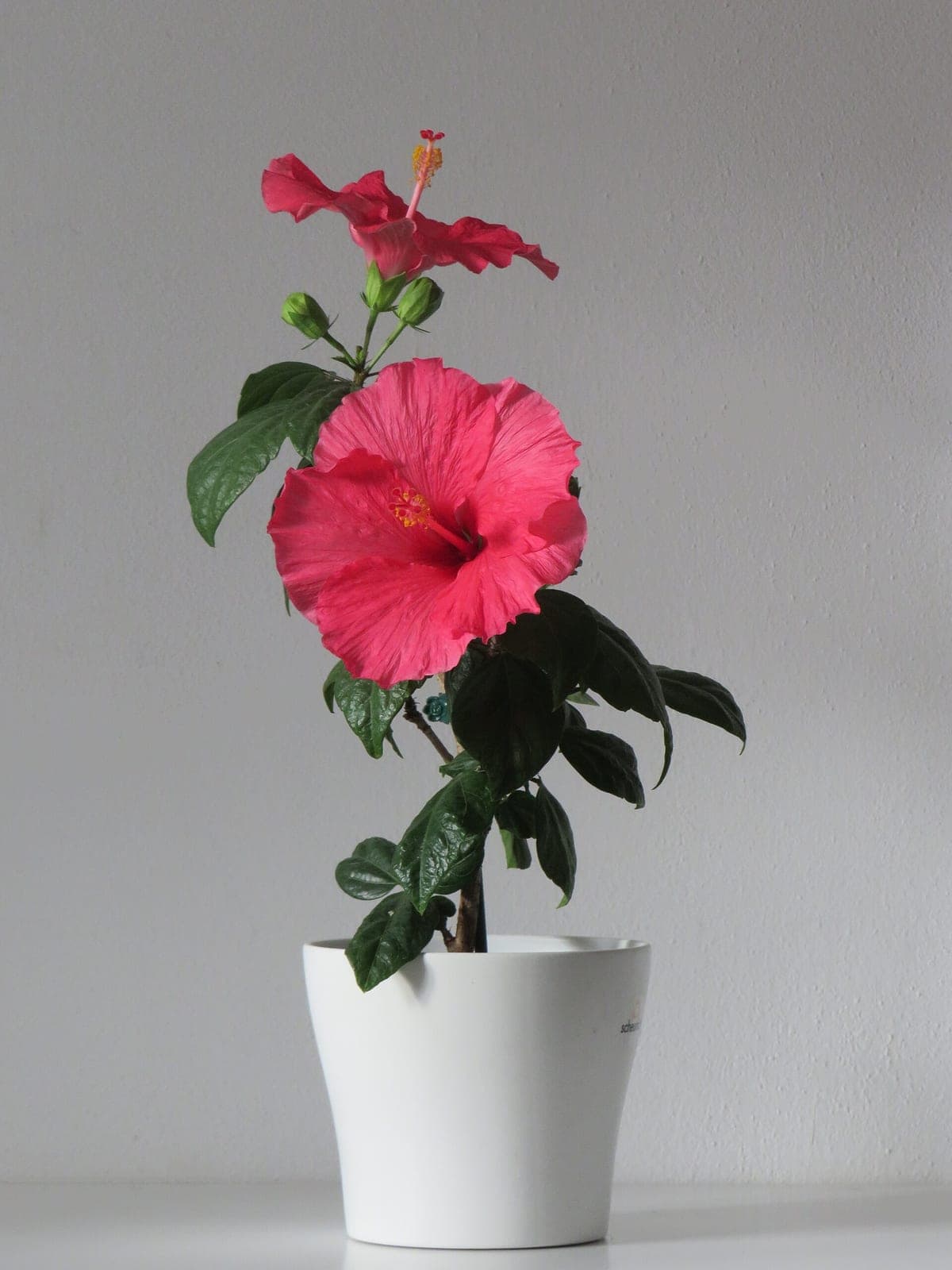
Tropical Hibiscus
Flowers on new growth with direct sun; each bloom lasts a day or two, so keep it fed and growing.
Hibiscus rosa-sinensis is a tropical flowering shrub that has been cultivated so extensively its exact wild origin is uncertain - it is technically a cultigen rather than a species found in the wild. Indoors, it is grown for its large, funnel-shaped flowers that come in shades of red, pink, orange, yellow, and white, often with contrasting centers. When its light and temperature requirements are met consistently, it can flower repeatedly throughout the year, making it one of the more rewarding flowering shrubs a person can keep in a bright room.
The single most important factor for tropical hibiscus indoors is light. It needs several hours of direct sun each day, and a south- or west-facing window with unobstructed exposure is the minimum. Without adequate light, the plant drops buds before they open and gradually declines. Watering should keep the soil evenly moist but never saturated, as the roots rot easily in standing water; letting the soil go completely dry also triggers bud drop. Temperatures should stay above 60°F and ideally between 65 and 85°F year-round. The plant tolerates average indoor humidity but is a frequent target of spider mites and whiteflies, particularly in warm, dry indoor conditions - checking the undersides of leaves regularly catches infestations early.
Tropical hibiscus grows upright and can reach several feet tall indoors, but it responds well to pruning, which keeps it compact and encourages branching. Moving or even rotating the plant can cause bud drop as it adjusts to its new light angle, so consistency in placement matters more than it does with most other houseplants.
Direct light indoors means a south- or west-facing window where the plant receives unobstructed sun for at least four to six hours daily. Insufficient light leads to bud drop and sparse growth, while intense summer sun focused through glass can scorch the leaves.
Water once the top inch of soil is dry
Feed with a balanced houseplant fertiliser
Wipe the leaves to remove dust and check them over
Check leaf undersides for spider mites and mealybugs
Repot when roots crowd the pot
Cut back by about a third to keep it bushy and flowering on new wood