
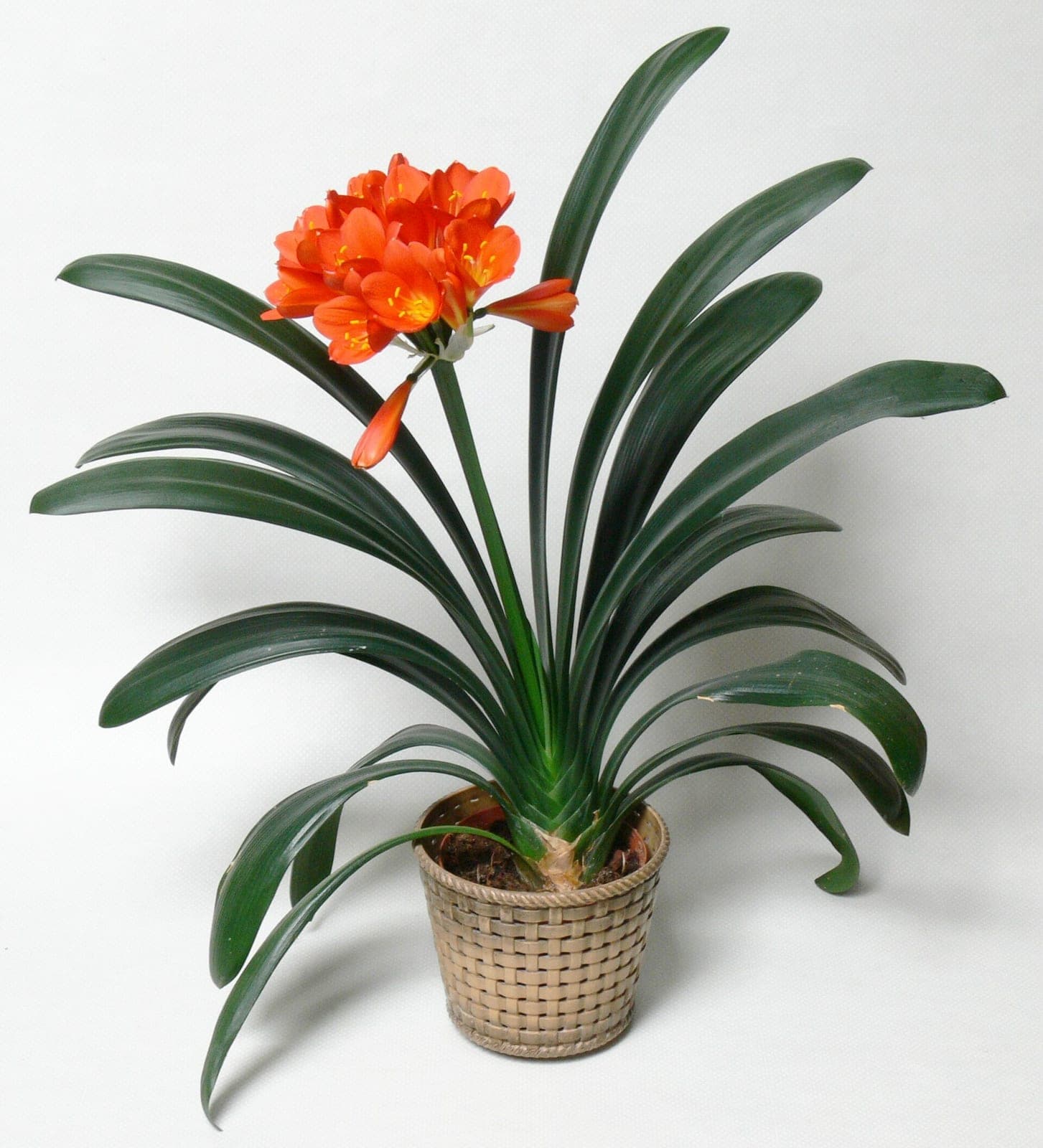
To encourage bloom: A cool (50 to 55°F), nearly dry rest of 6 to 8 weeks in late autumn and early winter is what makes it flower.
Keep it root-bound; it flowers better crowded.
Clivia miniata, known as Natal lily or bush lily, is a clumping, evergreen plant native to the shaded woodland floors of South Africa and Eswatini. Indoors it is grown for its bold, strap-shaped leaves and clusters of trumpet-shaped orange flowers that emerge on stout stalks above the foliage. Its tolerance of filtered light conditions and relatively compact footprint make it well suited to bright indoor rooms where direct sun is limited.
The most critical element of indoor Clivia care is restraint with water. The plant has thick, fleshy roots that store moisture, and it needs the soil to dry out meaningfully between waterings. Overwatering is the leading cause of failure; root rot can advance quickly and is often severe before any visible symptoms appear on the leaves. Bright indirect light maintains healthy, dark green foliage and supports flowering. A period at cooler indoor temperatures, around 50–55°F, sustained for several weeks will prompt the plant to initiate blooms. Average household humidity is adequate, and Clivia is not demanding about air moisture.
Clivia resents frequent repotting and actually performs best when somewhat root-bound; move it to a container only one size larger when roots are clearly escaping the drainage holes. The plant offsets readily over time, sending up daughter plants from the base that can be separated and established in their own pots once large enough.
Bright indirect light means a position near a window where the plant receives consistent, filtered brightness throughout the day but no direct midday sun, which will bleach or scorch the broad leaves. In too little light the foliage stays healthy but growth slows considerably and the plant is unlikely to flower.
Water once the top inch of soil is dry
Feed with a balanced houseplant fertiliser
Wipe the leaves to remove dust and check them over
Check leaf undersides for spider mites and mealybugs
Repot when roots crowd the pot
For flowers, keep it cool (about 50°F) and nearly dry for 6–8 weeks