
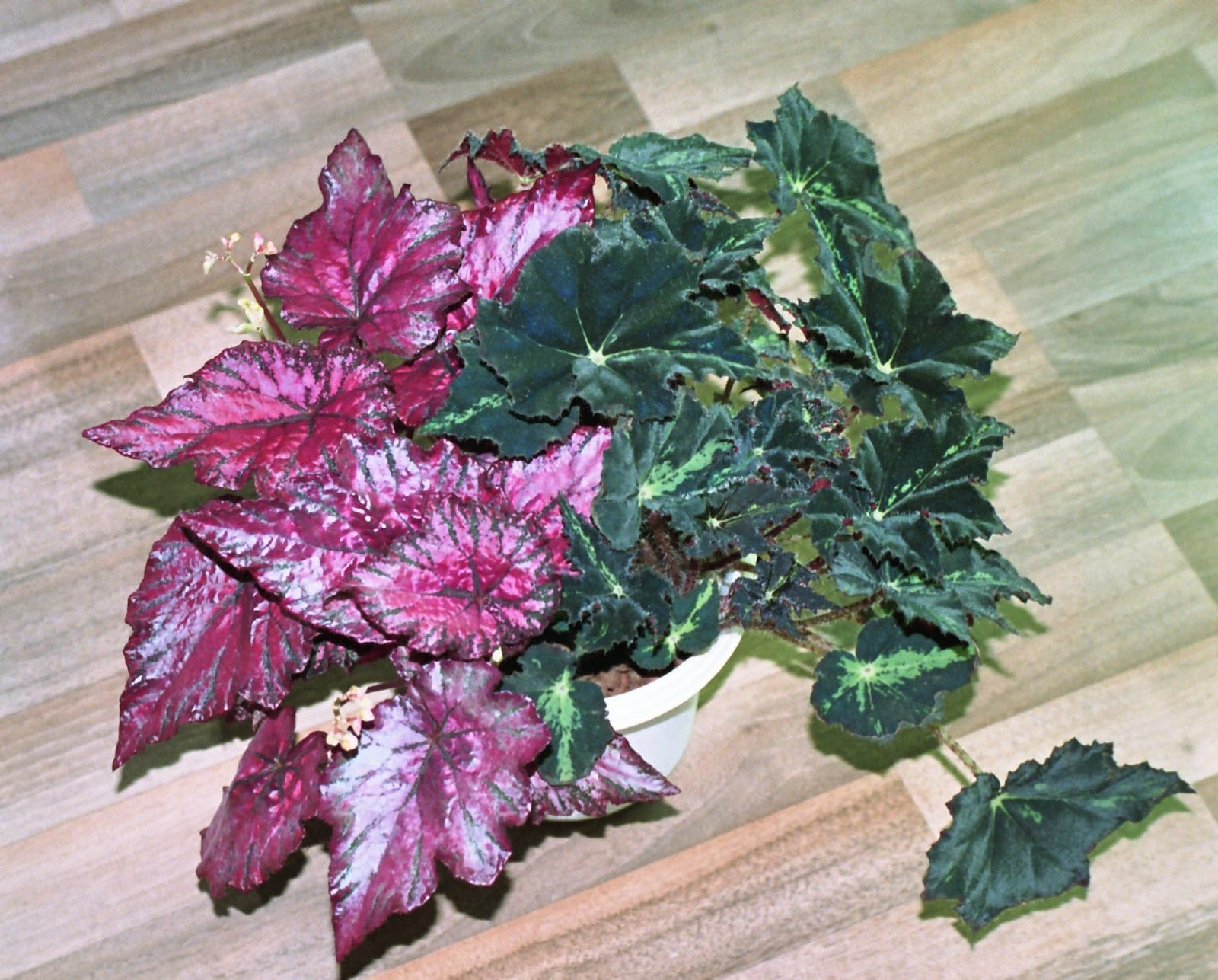
Rex begonias (Begonia rex-cultorum) are hybrid cultivars grown almost entirely for their foliage. The leaves are large, asymmetrical, and marked with swirling or banded patterns in combinations of silver, deep purple, burgundy, green, and pink. That visual complexity, packed into a compact clumping plant, is what makes them a consistent favorite for tabletops and shelves where the detail can be appreciated at close range.
Indoors, rex begonias need bright indirect light, soil that is kept lightly moist but never saturated, and humidity consistently above 50 percent. The most common way people go wrong is overwatering: the fine, shallow roots rot quickly in soggy conditions, and by the time the plant shows distress the damage is already advanced. A close second is low humidity, which causes leaf edges to brown and curl even when light and water are managed correctly. A humidity tray, a nearby humidifier, or grouping plants together all help.
Rex begonias stay relatively compact indoors, rarely exceeding 18 inches in height or spread, and they do not require much vertical space. They prefer temperatures between 60 and 75 degrees Fahrenheit and are sensitive to cold drafts from windows or air conditioning vents, which can trigger rapid leaf drop or browning overnight.
Bright indirect light means a spot close to a window where direct sun never touches the leaves - a few feet back from a south- or west-facing window, or directly in front of an east- or north-facing one. Too little light drains the foliage of its color and produces weak, leggy growth; direct sun scorches and bleaches the patterned leaves within days.
Water when the top inch of soil is dry; never let it sit in water
Feed with a diluted balanced houseplant fertiliser
Raise the humidity with a pebble tray or humidifier, or group plants together
Check leaf undersides for spider mites and mealybugs
Repot when roots crowd the pot
Water the soil, not the leaves: wet foliage invites powdery mildew