
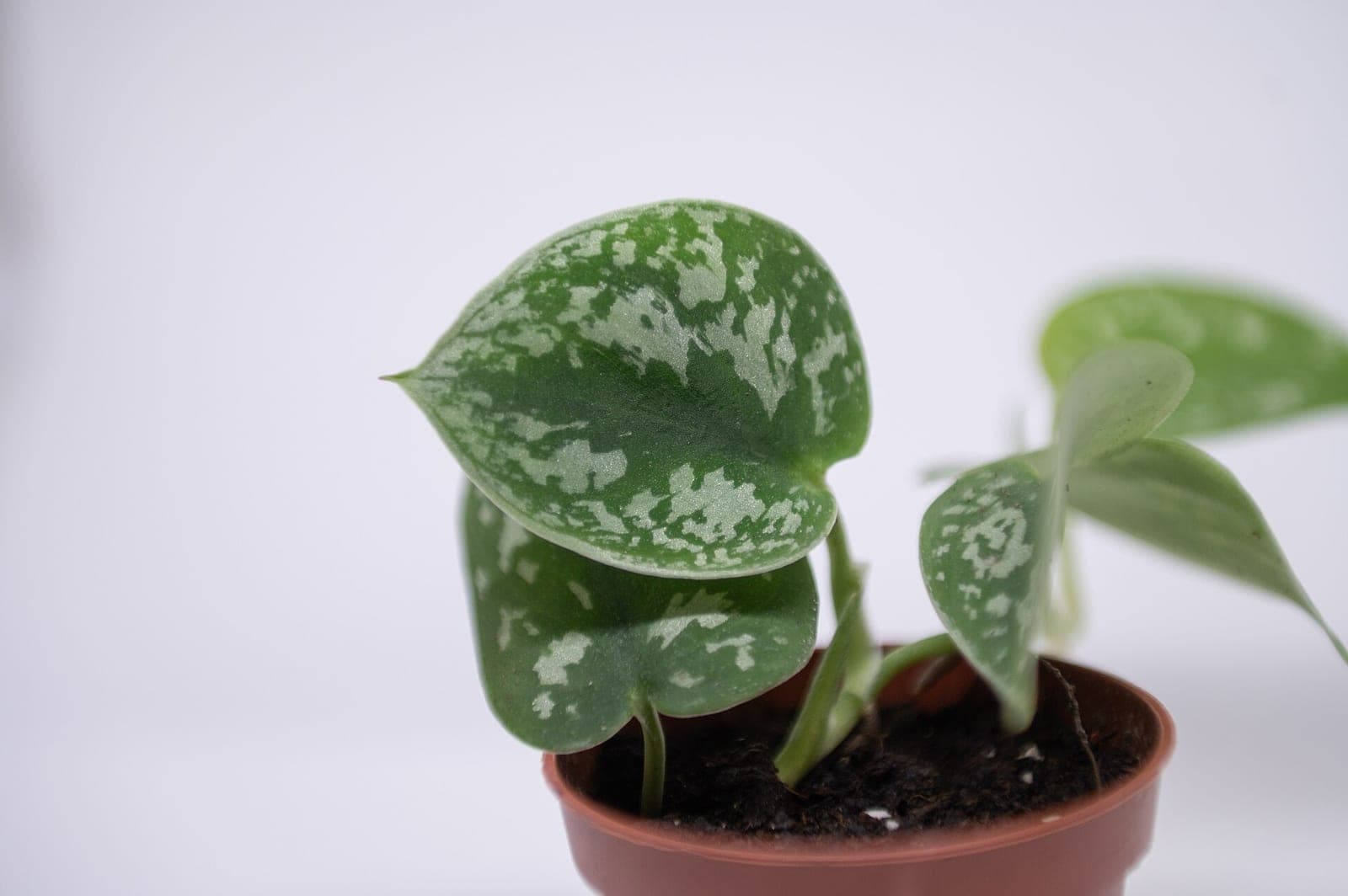
Satin pothos (Scindapsus pictus) is a tropical aroid native to a wide stretch of Southeast Asia, ranging from India and Bangladesh through Borneo, Sumatra, the Philippines, and into Taiwan and Thailand. Despite the common name, it is not a true pothos - it belongs to the genus Scindapsus rather than Epipremnum - but it earns the comparison through similar trailing growth and uncomplicated care. Its heart-shaped leaves have a matte, almost velvety surface and are splashed with irregular silver-gray markings, the quality behind both the name 'satin pothos' and the Latin epithet pictus, meaning 'painted.'
Indoors, satin pothos performs well in medium indirect light and tolerates ordinary household humidity without fuss. The most common mistake is overwatering: the plant handles brief dry spells far better than consistently wet soil, which quickly leads to root rot. Water only when the top inch or two of the potting mix has dried out, and always make sure the pot drains freely after each watering. During winter, be mindful of positioning near heat vents, where very dry air can cause leaf edges to turn crispy.
Satin pothos trails readily from a hanging basket or shelf, with vines capable of reaching several feet indoors over time. It propagates easily from stem cuttings, and variegation tends to be most vivid on plants receiving brighter indirect light - in low light, the silver markings fade and new leaves emerge smaller and greener than usual.
Medium light means bright indirect light a few feet back from a window, or near a window filtered by a sheer curtain. Too little light causes the silver variegation to dull and leaves to emerge smaller; direct sun can scorch the foliage and bleach out the markings.
Water once the top inch of soil is dry
Feed with a balanced houseplant fertiliser
Wipe the leaves to remove dust and check them over
Check leaf undersides for spider mites and mealybugs
Repot when roots crowd the pot
Trim long vines to encourage fuller growth; cuttings root in water