
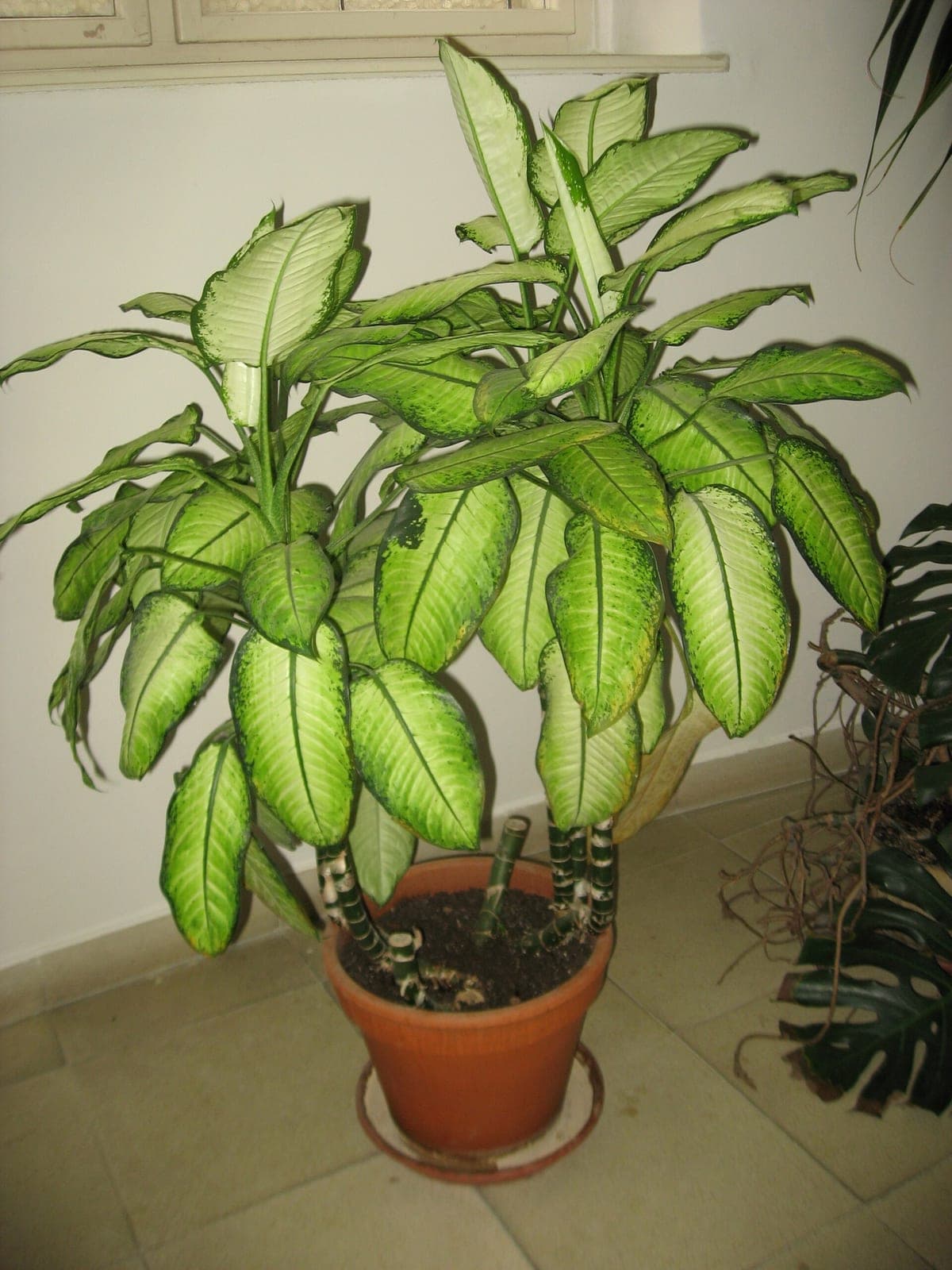
Dieffenbachia
Dieffenbachia seguine, widely known as dumbcane, is a tropical foliage plant native to the rainforests and humid lowlands of Central and South America and the Caribbean. Indoors it is grown almost entirely for its large, boldly patterned leaves, which combine deep green with cream, white, or pale yellow in patterns that vary considerably by cultivar. It is one of the more forgiving houseplants available, tolerating the reduced light and imperfect conditions typical of most homes without much complaint.
The plant does best in medium indirect light with a well-draining mix that is allowed to partially dry between waterings. The single most common mistake is overwatering: Dieffenbachia sitting in consistently wet soil develops root rot quickly, and the problem often goes undetected until stems turn soft and the plant collapses. Average indoor humidity is sufficient, and temperatures between 60 and 80°F keep it comfortable. Cold drafts and windowsill positions that drop below 55°F in winter cause leaf damage and stall growth.
Dieffenbachia grows upright and tends to become leggy over time as lower leaves drop naturally and the bare stem elongates. When the plant grows too tall and top-heavy, the crown can be cut off and rooted as a fresh plant, and the remaining cane will usually push new growth from dormant buds along the stem.
Medium light in practice means bright indirect light - filtered sun near a north- or east-facing window, or set back several feet from a south- or west-facing one. Too little light produces pale, undersized leaves and weak, reaching stems; direct sun bleaches the variegation and scorches leaf edges.
Water once the top inch of soil is dry
Feed with a balanced houseplant fertiliser
Wipe the leaves to remove dust and check them over
Check leaf undersides for spider mites and mealybugs
Repot when roots crowd the pot
Cut back leggy canes to a few inches above a node to restart bushy growth
Wear gloves when cutting: the sap irritates skin and mouth