
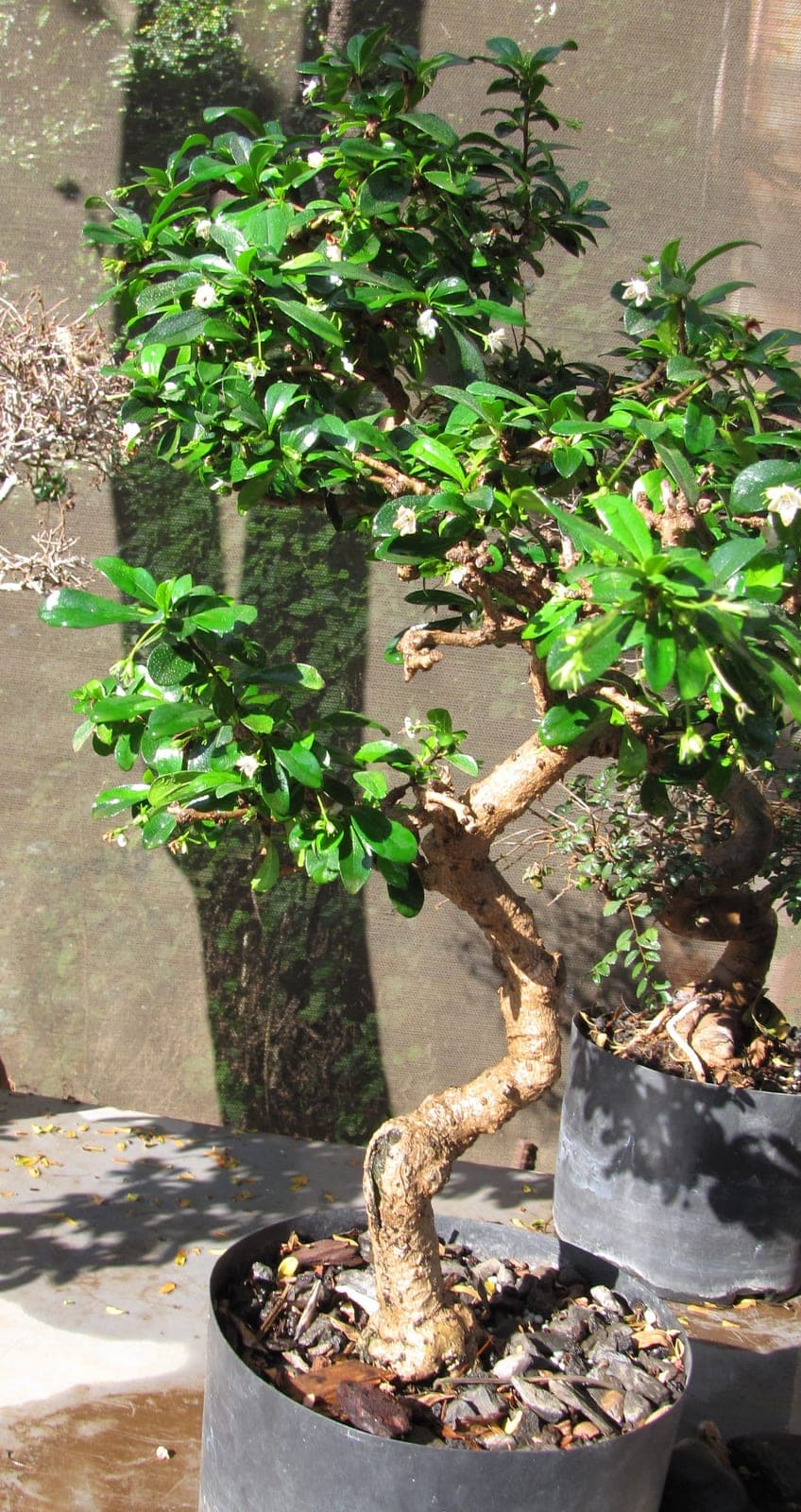
Fukien Tea Tree
Tiny white flowers most of the year in bright light, followed by small red berries.
Carmona retusa, also called the Fukien Tea Tree or Philippine Tea Tree, is a tropical woody shrub native to southern Asia. It produces small, glossy dark green leaves and, under stable indoor conditions, tiny white flowers followed by small berries that shift from green to red or black. It is grown almost exclusively as a bonsai specimen indoors and draws growers who want a genuine tree form rather than a foliage plant.
This plant is one of the more demanding species kept indoors. It needs consistent soil moisture without sitting in standing water, bright indirect light, and warm temperatures held steadily above 60°F. It has very little tolerance for cold drafts, heating vents, or being moved between light environments. Even a brief dry-out can trigger significant leaf drop, and most failures come down to inconsistent watering, insufficient light, or exposure to dry forced air from HVAC systems.
Carmona retusa grows slowly and responds well to regular pruning, which makes it well suited to bonsai training over time. New growers often underestimate how stable the environment needs to be; once the plant settles into a good spot with consistent care, it becomes easier to manage and can hold its form for many years.
Bright indirect light in practice means a position within two to three feet of a large, unobstructed window where the light is strong but direct sun does not strike the foliage for extended periods. Too little light accelerates leaf drop and weakens new growth; prolonged direct sun through glass can scorch the small leaves.
Water once the top inch of soil is dry; never let it fully dry out or sit soggy
Feed with a balanced houseplant fertiliser
Keep in consistent bright light and avoid moving it - sudden leaf drop is the usual response to a change in light or drafts
Check leaf undersides and stems for scale and spider mites
Pinch and prune new growth to maintain shape - a classic bonsai subject that tolerates regular trimming
Repot (or root-prune if kept as bonsai) into fresh, fast-draining mix