
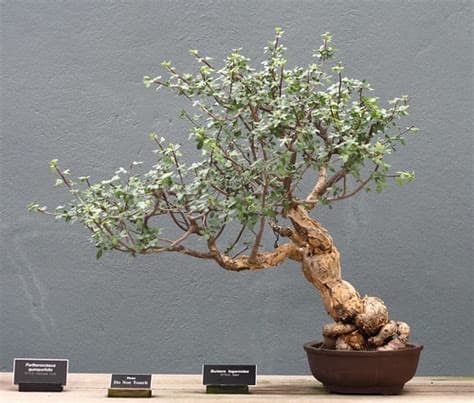
Elephant Tree
Bursera fagaroides, one of several Mexican species sold as elephant tree, is native to dry tropical forest and thorn scrub across Sonora, Baja California, and south into central Mexico. It's grown indoors almost entirely for its trunk: smooth, papery, coppery-gold bark that peels in curls over a swollen, water-storing caudex, with fine compound leaves held on wiry stems well above it. The scale stays manageable in a pot for decades, which has made it a popular bonsai and succulent-collection subject.
It is deciduous by nature, dropping its leaves in response to cold or the dry season and pushing new growth once conditions warm and water returns - bare stems in winter are normal dormancy, not a dying plant. The trunk is a drought reservoir, so the single most common way to lose one indoors is overwatering during that leafless rest: soggy, poorly drained soil rots the caudex from the base. Give it a gritty, fast-draining mix, water only once it's bone dry, and cut back hard on water once it drops its leaves for the season. Like the rest of the genus, cut or bruised stems release a resinous, citrusy scent - the same resin family that produces frankincense and myrrh, and one long used regionally as copal incense and in traditional remedies.
Wants several hours of direct sun from a south- or west-facing window; too little light produces thin, sparse growth and keeps the trunk from thickening into the swollen caudex the plant is grown for.
Water thoroughly, then let the soil dry out completely before watering again - cut back to almost nothing once it drops its leaves for winter dormancy
Feed lightly with a balanced houseplant fertiliser
Leaf drop in winter is normal dormancy, not distress - resume normal watering once new growth appears in spring
Check leaf axils and stems for scale and mealybugs
Repot into only a slightly larger pot - a snug pot encourages the caudex (trunk) to swell