
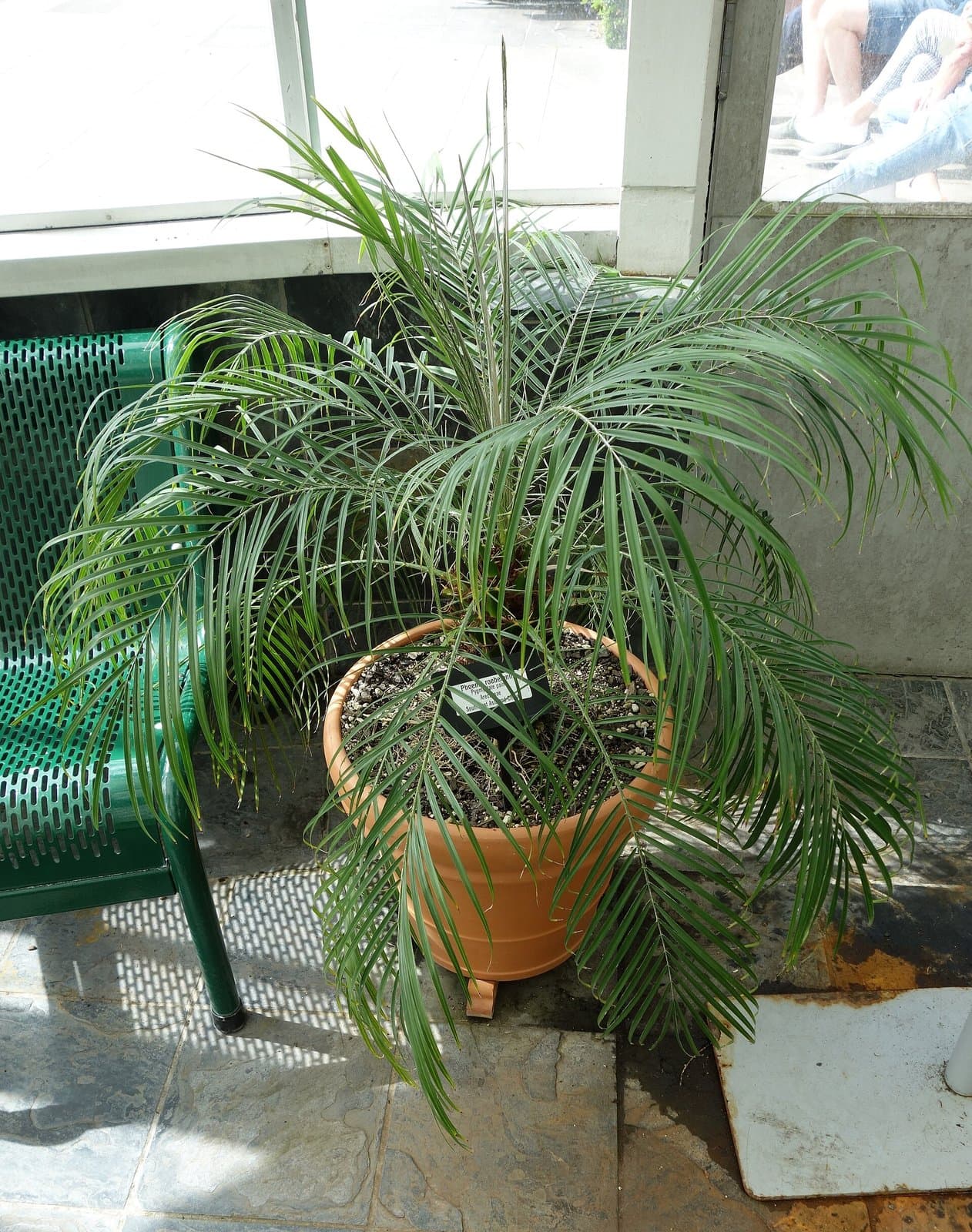
Phoenix roebelenii is a small-statured date palm native to the tropical forests of southwestern China, northern Laos, and northern Vietnam. Indoors it is grown for its graceful, arching fronds and unmistakably tropical silhouette. Its compact scale relative to other palms makes it one of the few true palms that fits inside a home or office for the long term without outgrowing the space.
The plant needs the brightest light a home can offer, ideally a south- or west-facing window where direct sun reaches the foliage for several hours each day. Well-draining soil and careful watering are the other pillars of success: the roots resent standing water, but the palm also suffers if the soil dries out completely and stays dry. The most common indoor mistake is placing the plant in insufficient light, which produces thin, pale fronds and a slow decline; chronic overwatering is a close second.
Growth is genuinely slow, and the trunk develops a fibrous, textured character as the plant matures. The base of each frond carries stiff, sharp spines capable of causing puncture injuries, so the plant should be handled with care and positioned away from high-traffic corridors or areas where children and pets move around freely.
Bright direct light in practice means a south- or west-facing window where the sun falls on the foliage for at least three to four hours daily. Insufficient light causes fronds to grow thin and pale; intense midday sun magnified through glass can scorch frond tips.
Water once the top inch or two of soil is dry
Feed with a balanced houseplant fertiliser
Wipe the fronds to remove dust, and rotate the pot
Check frond undersides for spider mites and scale
Repot when roots crowd the pot; palms dislike disturbance
Handle with care: the fronds have sharp spines at the base