
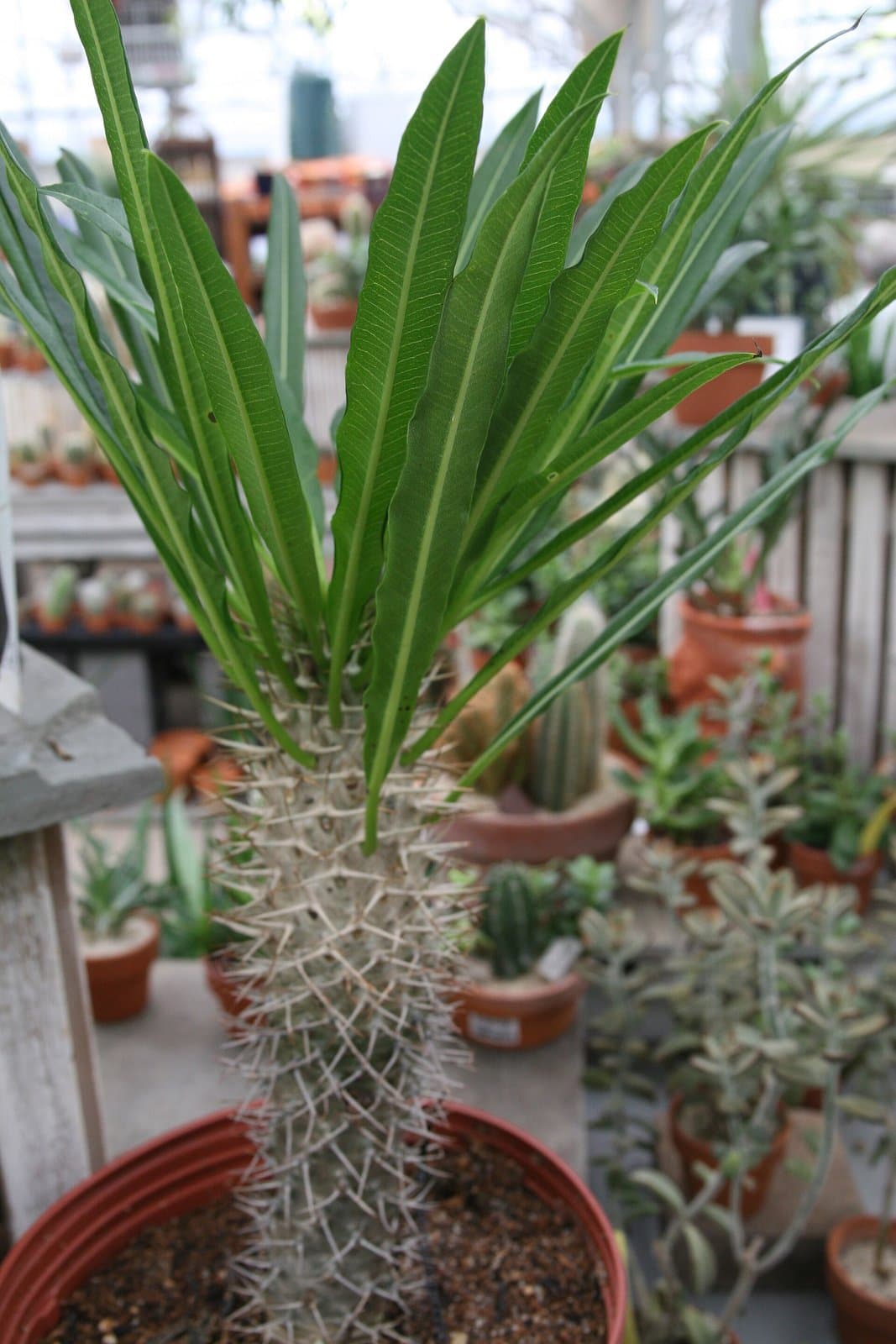
Pachypodium lamerei is a stem succulent native to the arid regions of Madagascar and a member of the Apocynaceae family, placing it closer to oleander than to any palm. Its common name comes from its silhouette: a thick, silver-gray trunk densely armed with sharp thorns, topped by a rosette of long, narrow leaves that gives it the look of a miniature tropical tree. People grow it indoors for that bold, architectural form, and it develops a slow-building character that few other succulents can match.
The key to keeping Madagascar Palm healthy indoors is intense direct light and restrained watering. Place it in the brightest window available, ideally south- or west-facing, where it receives several unobstructed hours of sun each day. During the growing season, water thoroughly and then allow the soil to dry out completely before watering again; in winter with lower light it may go a month or more without needing water at all. Overwatering is by far the most common way people lose this plant - trunk rot sets in quickly and is rarely reversible. Underwatering, by contrast, causes leaf drop and dormancy but is much easier to recover from once normal watering resumes.
Because the trunk itself handles most of the plant's photosynthesis, losing leaves in low light or cool temperatures is a normal survival response, not a death sentence. The plant propagates most reliably from seed, which germinates readily in warmth. Handle it with care at all times: the thorns will cause serious punctures, and the milky sap that oozes from cuts irritates skin and eyes.
Several hours of direct sun each day is a requirement, not a preference - a south- or west-facing window with no obstruction is the practical minimum. Too little light triggers leaf drop, halts growth, and makes the plant vulnerable to rot; no amount of careful watering compensates for insufficient sun.
Soak thoroughly, then wait until the soil is completely dry
Feed with a diluted cactus and succulent fertiliser
Water far less in winter; soggy soil rots the roots
Check for mealybugs in the leaf joints
Repot into gritty mix when it outgrows the pot
Water sparingly and let it go dormant in winter: it drops leaves then and rots if kept wet