
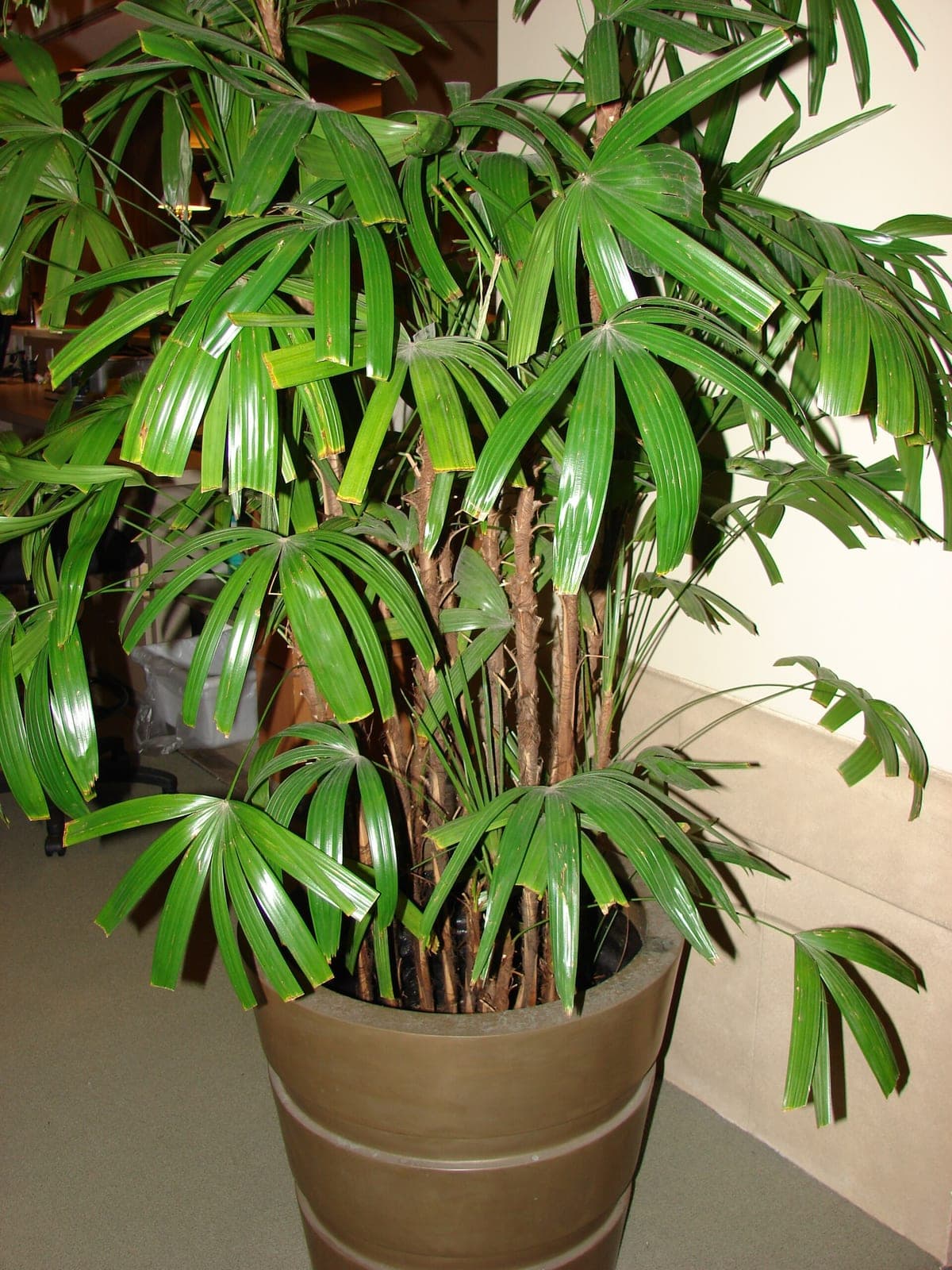
Rhapis excelsa is a clumping fan palm native to southern China and northern Vietnam. It grows as a multi-stemmed plant with dark green, deeply divided leaves carried on slender canes wrapped in coarse brown fiber, giving it a silhouette that reads as both tropical and architectural. People grow it indoors because it tolerates the lower light and average humidity of most homes better than almost any other palm, and it brings a clean, sculptural quality to a room without demanding much in return.
Lady Palm does best in bright indirect light but handles true medium light without complaint - the quality that separates it from finickier palms. Water when the top inch or two of soil has dried out, then water thoroughly and let the pot drain fully. The most common mistake is overwatering, which causes root rot before the grower realizes anything is wrong. The second most common issue is brown leaf tips caused by fluoride in treated tap water; switching to filtered or rainwater often solves this without any other change in care.
Growth is genuinely slow, which means a plant that fits its space today will stay proportionate for years before needing a larger pot. Because each stem is a long-term commitment, Lady Palm tends to cost more per inch at the nursery than faster-growing foliage plants. Buying small and letting it mature indoors is the practical approach. New plants are started by separating the basal offsets, called suckers, from an established clump.
Medium light in practice means a spot a few feet back from a bright window, or a room with good ambient daylight but no direct sun hitting the leaves. Lady Palm tolerates lower light better than almost any other palm, but growth slows further in deep shade and the foliage can lose its deep green; direct sun through glass will scorch the leaf segments.
Water once the top inch or two of soil is dry
Feed with a balanced houseplant fertiliser
Wipe the fronds to remove dust, and rotate the pot
Check frond undersides for spider mites and scale
Repot when roots crowd the pot; palms dislike disturbance