
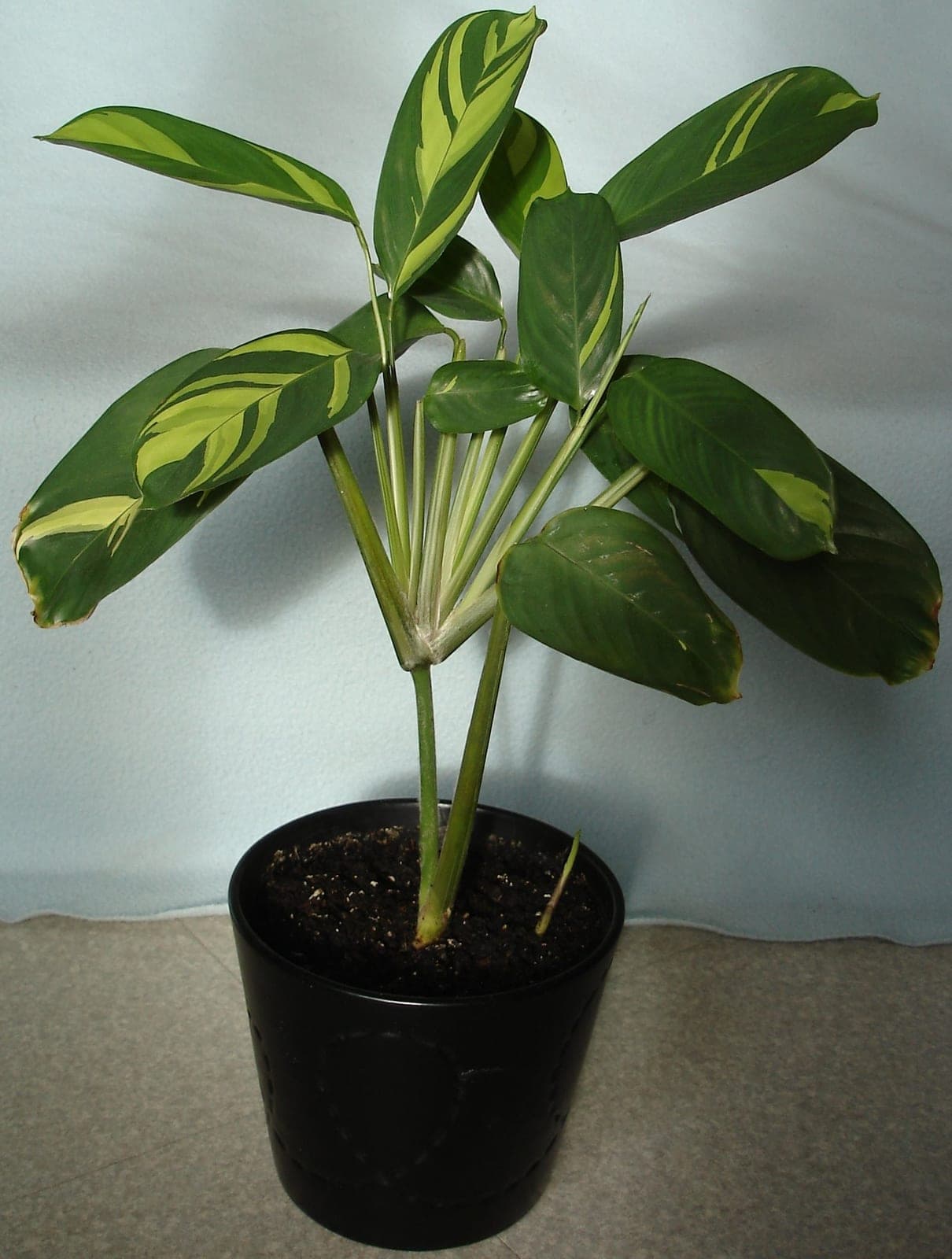
Ctenanthe
Ctenanthe burle-marxii is a compact, clumping perennial from the forest floors of Brazil, sold in the trade either under its genus name or as the fishbone prayer plant. Its oval, pale green leaves carry alternating dark stripes angled off the midrib - the pattern that gives it its common name - and like other members of the Marantaceae family, it folds its leaves upward at night in a movement called nyctinasty. The scientific name honors Roberto Burle Marx, the Brazilian landscape architect. Indoors it is grown almost entirely for its foliage, which is striking enough to anchor a shelf or tabletop display without any seasonal fuss.
The most common way people go wrong with Ctenanthe is underestimating its need for humidity. In the dry air of a centrally heated or air-conditioned home, the leaf edges turn brown and crisp within weeks. A room humidifier placed nearby is the most reliable solution; a pebble tray filled with water beneath the pot or grouping it with other moisture-loving plants also helps. Keep temperatures consistently between 65°F and 80°F and away from cold drafts, heating vents, and air conditioning registers. The soil should stay evenly moist but never soggy, and watering with filtered or room-temperature distilled water reduces the tip browning that fluoride and chlorine from tap water can cause.
This plant spreads slowly by underground rhizomes to form a dense, low mound rarely exceeding 18 inches indoors. It is sensitive to abrupt environmental changes - moving it frequently or letting it sit in a dry location for even a short period often triggers leaf curl before any other symptom appears. Repotting every two years in spring is sufficient, and that is the natural opportunity to divide and propagate it.
Medium light in practice means bright, indirect light from an east- or north-facing window, or set back a few feet from a south or west exposure with a sheer curtain in between. Direct sun bleaches the leaf markings and can scorch the foliage; light that is too low causes the pattern to fade and growth to slow noticeably.
Water when the top inch of soil is dry; never let it sit in water
Feed with a diluted balanced houseplant fertiliser
Raise the humidity with a pebble tray or humidifier, or group plants together
Check leaf undersides for spider mites and mealybugs
Repot when roots crowd the pot