
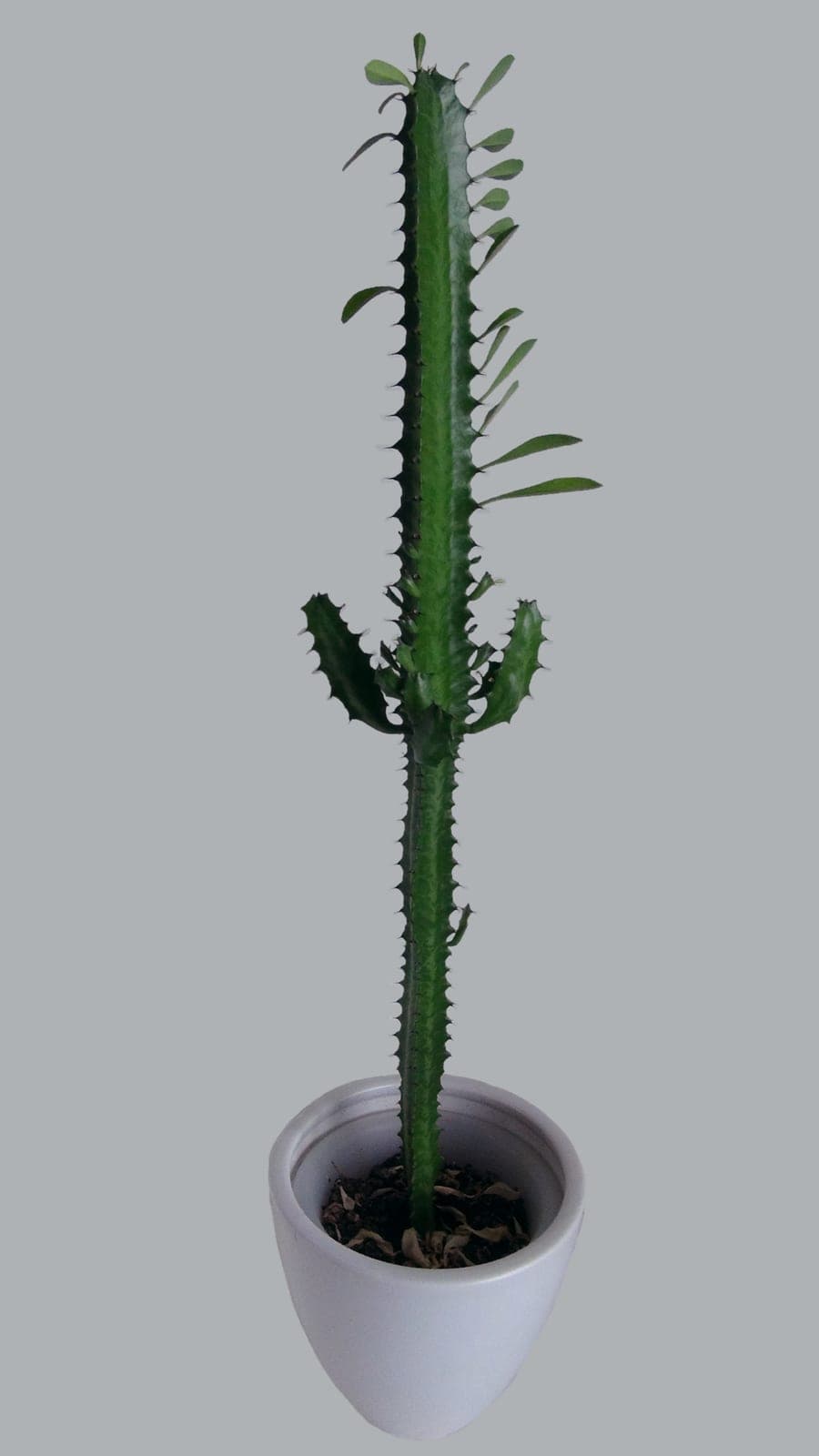
Euphorbia trigona is a succulent spurge native to Central Africa, where it evolved in arid conditions far removed from anything resembling a cactus family tree. Despite the resemblance, it belongs to the Euphorbiaceae family and earns its place indoors through sheer architectural presence: tall, three-angled green stems lined with small leaves along the ridges and flanked by pairs of short spines. It grows quickly and can fill a corner in a few seasons, which is the main reason people bring it home.
Bright, direct light is non-negotiable. A south- or west-facing window is the right address for this plant. The most common failure mode is treating it like a shade-tolerant tropical: dim light combined with even moderate watering causes root rot from the base up, often before the owner notices anything wrong. Water only when the soil has dried out completely, cut back further in winter, and keep it away from cold drafts. Low humidity is perfectly fine and mirrors its native habitat.
The plant offsets and branches freely as it matures, and stem cuttings root without much fuss. The one firm caution during propagation is the milky white latex that bleeds from any cut: it is a potent skin and eye irritant. Gloves and eye protection are not optional. A popular cultivar called 'Royal Red' carries the same easy-care profile but grows with striking burgundy-red stems.
This plant needs several hours of direct sun each day; a south- or west-facing window is the practical minimum. In too little light the stems etiolate rapidly, becoming thin, pale, and structurally weak, while overwatering in low light is the fastest path to losing the plant entirely.
Soak thoroughly, then wait until the soil is completely dry
Feed with a diluted cactus and succulent fertiliser
Water far less in winter; soggy soil rots the roots
Check for mealybugs in the leaf joints
Repot into gritty mix when it outgrows the pot
Wear gloves when handling or pruning: the milky sap irritates skin and eyes