
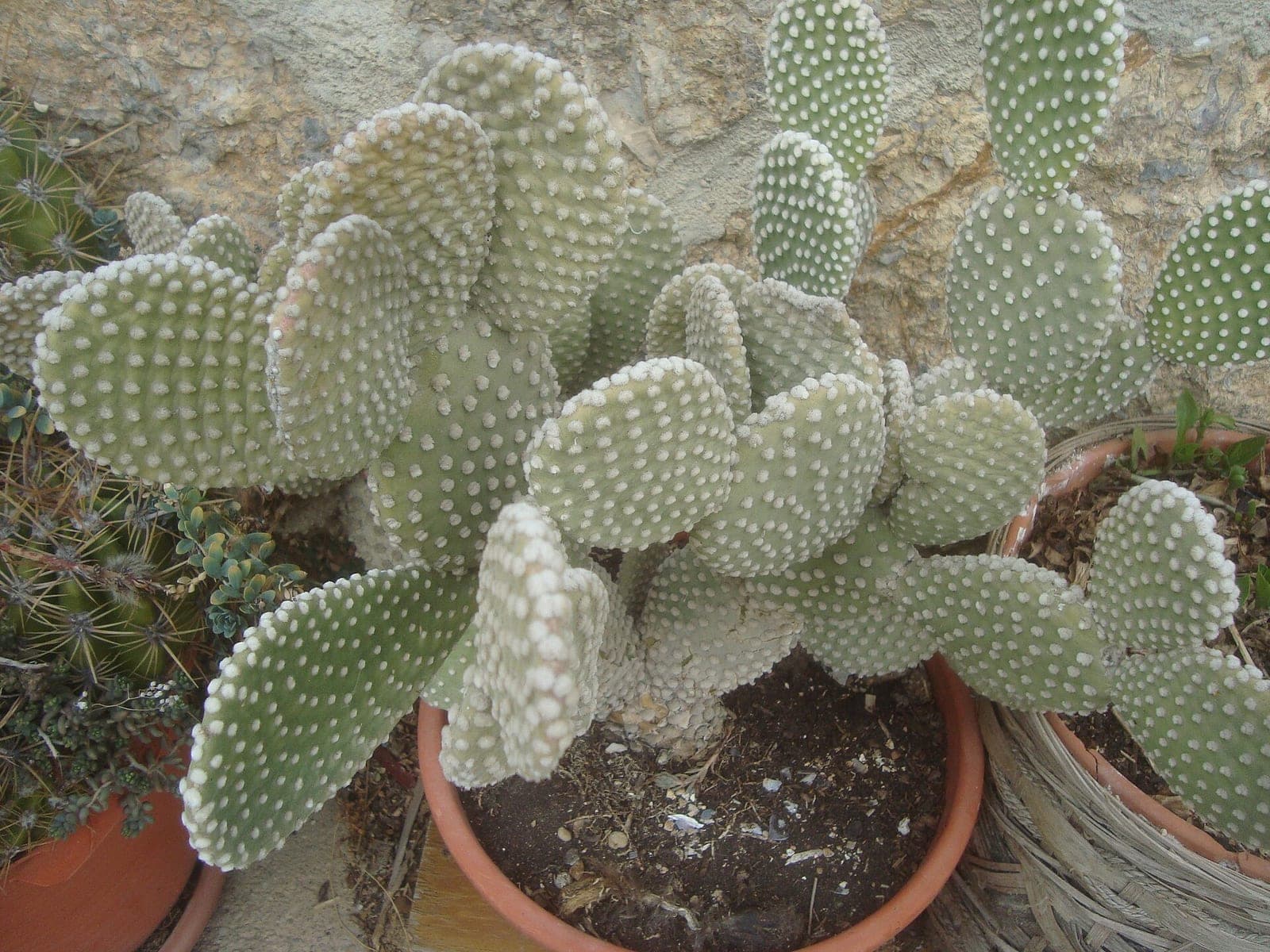
Opuntia microdasys is a pad-forming cactus native and endemic to central and northern Mexico. Its flat, oval pads grow in pairs at angles that resemble rabbit ears, and each pad is covered in dense clusters of glochids - tiny, barbed bristles - rather than the long spines most people associate with cacti. Glochids come in gold, white, or red-brown depending on the cultivar, giving the plant a soft, almost fuzzy appearance that is deceptive about how irritating those bristles are on contact. It is widely kept indoors for its sculptural form, slow-spreading clumping habit, and exceptional tolerance of dry air and infrequent attention.
This cactus asks for maximum light, minimal water, and fast-draining soil. A south-facing windowsill that delivers several hours of direct sun each day is the target placement. Water deeply but infrequently during spring and summer, allowing the soil to dry out completely between sessions, then reduce to once a month or less in winter when active growth slows. The most common mistake is overwatering: roots rot quickly in wet soil, and the damage is often invisible above ground until the pads begin to shrivel or collapse.
Opuntia microdasys spreads by producing new pads from the edges of existing ones, gradually forming a low, wide clump. Individual pads can be detached with tongs, left to callous for several days, then placed on dry cactus mix to root - one of the most straightforward propagation methods of any houseplant. Despite its innocent look, this plant should always be handled with thick gloves or tongs; glochids release from the pads on the lightest touch and are extremely difficult to remove from skin or clothing.
A south- or west-facing window that delivers several hours of direct sun daily is ideal; in lower light the pads etiolate, stretching thin and pale toward the source, which permanently distorts the plant's compact shape.
Soak thoroughly, then wait until the soil is completely dry
Feed with a diluted cactus fertiliser
Water only a few times over winter, and keep it cool and bright
Check for mealybugs and scale at the base and between spines
Repot into gritty cactus mix when it outgrows the pot
Handle with tongs or thick gloves: the tiny barbed glochids lodge in skin