
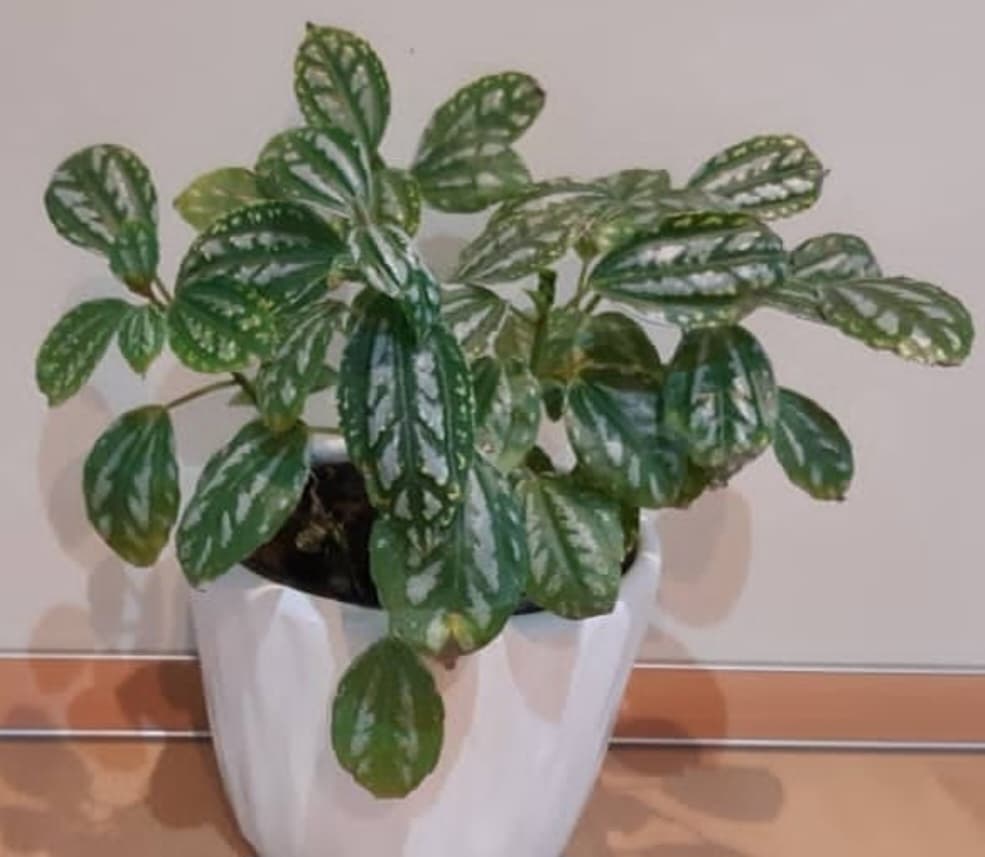
Pilea cadierei, commonly called the aluminum plant, is a compact foliage plant in the nettle family (Urticaceae), native to forests in Vietnam and the southern Chinese provinces of Guizhou and Yunnan. It is grown indoors for its striking quilted leaves, which are marked with raised, silvery patches that give the plant its common name. The contrast between the dark green leaf tissue and the metallic markings holds up year-round, making it a reliable ornamental even in rooms with moderate natural light.
The aluminum plant does well in medium, indirect light and prefers soil that stays consistently moist but never waterlogged. High humidity is the detail most often overlooked indoors - dry air causes browning leaf edges and a general loss of vitality. Grouping plants together, placing the pot on a pebble tray filled with water, or running a humidifier nearby all help. The most common mistake is overwatering; roots sitting in soggy soil rot quickly, so good drainage is essential.
Pilea cadierei grows in a clumping habit and tends to become leggy over time, particularly in lower light. Pinching back stem tips regularly keeps it compact and bushy. It earned the Royal Horticultural Society's Award of Garden Merit for its reliability as a houseplant, and it propagates easily from cuttings taken at almost any time of year.
Medium light means bright, indirect light - a spot a few feet back from a south- or west-facing window, or directly in front of a north- or east-facing one. Too little light washes out the silver markings and produces stretched, weak stems; direct sun bleaches and scorches the leaves.
Water when the top inch of soil is dry; never let it sit in water
Feed with a diluted balanced houseplant fertiliser
Raise the humidity with a pebble tray or humidifier, or group plants together
Check leaf undersides for spider mites and mealybugs
Repot when roots crowd the pot
Pinch back stems to keep it bushy