
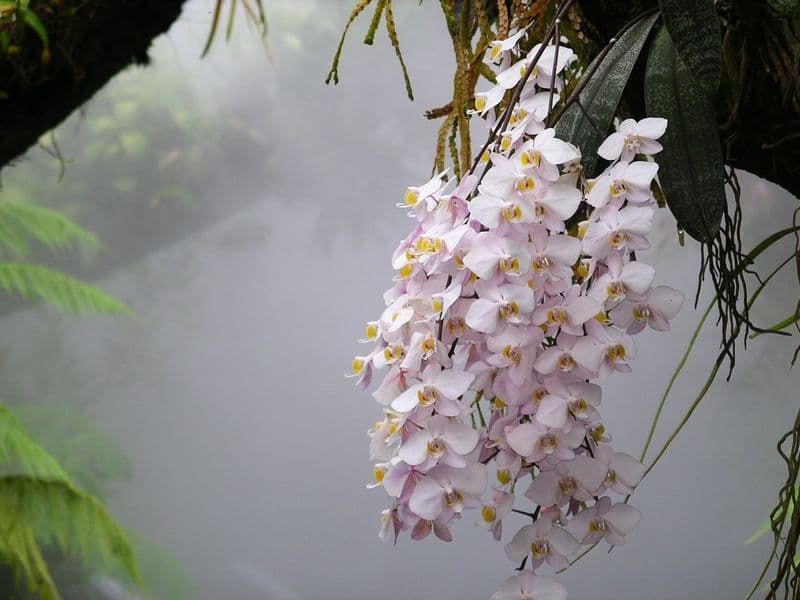
The moth orchid is the supermarket orchid everyone owns and half of us kill — almost always by kindness. It grows on bark, not in soil, and its thick roots want to breathe, so the fastest way to lose one is to keep it sitting wet in a decorative pot with no drainage.
Water by soaking the bark and letting it drain right through, roughly once the roots fade from green to silver. After the arching sprays of bloom finally drop, the plant isn't finished: cut the spent spike back to a node and, with good light and a slight night-time temperature dip, it will often push a new one. Green, healthy roots and mid-green leaves are the signs you've got the light and water right.
Bright indirect light, such as an east window; no direct midday sun on the leaves. Leaves should be a mid grass-green — dark green means too little light to rebloom.
Soak the bark thoroughly, let it drain completely, and never leave water sitting in the crown — skip the ice-cube method, which shocks tropical roots
Low — keep to a consistent rhythm and don't let it dry out hard.
Non-toxic to cats, dogs, and people — safe around pets.
Soak the bark when the roots turn silvery, then drain fully
Feed with a dilute orchid fertiliser — 'weakly, weekly'
After bloom, cut the spent spike back to a lower node to encourage a rebloom
Limp, hollow, or brown roots mean rot from staying too wet
Repot into fresh bark when it breaks down