
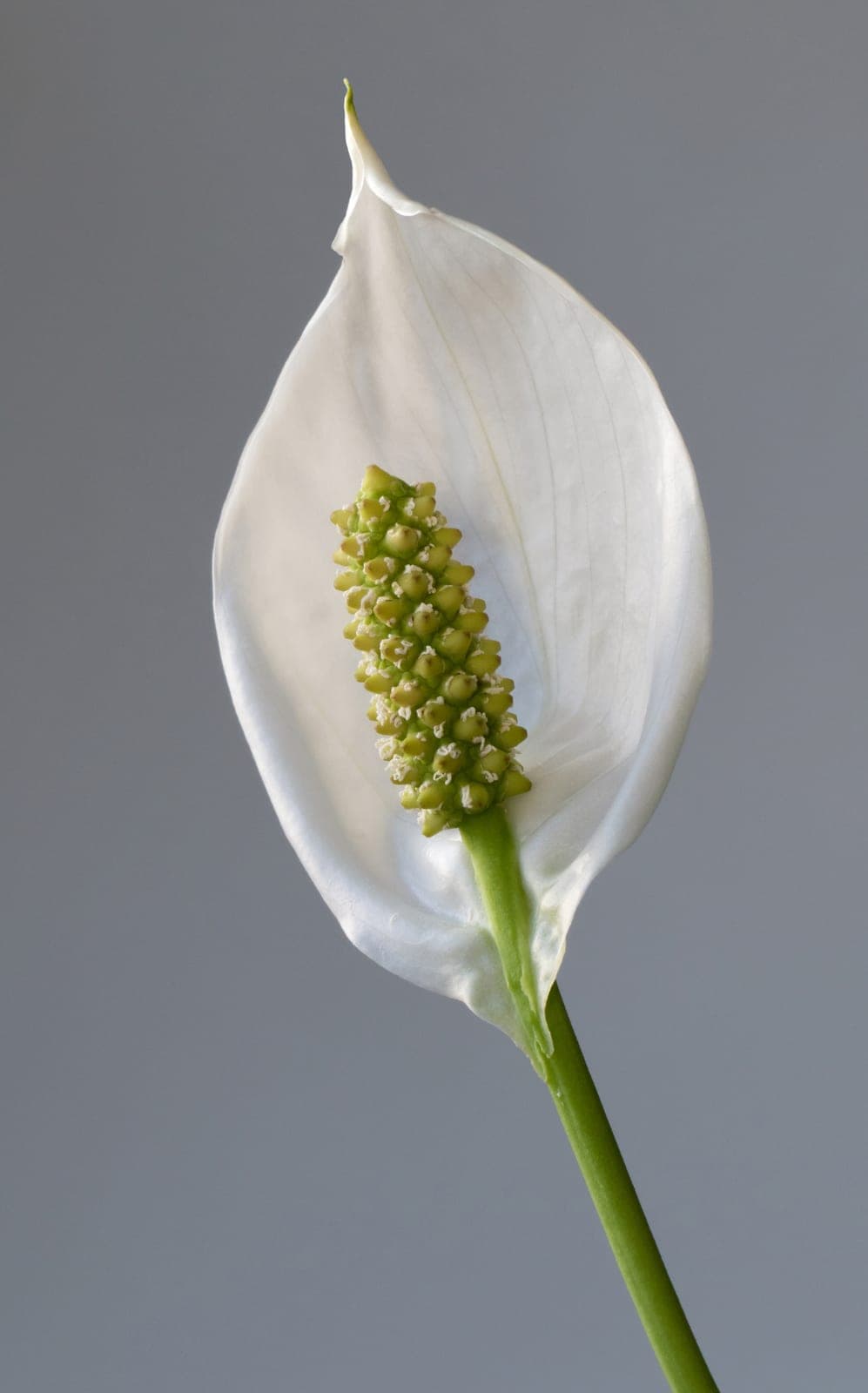
The peace lily is the plant that tells you exactly what it wants: when it is thirsty the whole plant wilts dramatically, and within hours of a drink it stands back up as if nothing happened. That honesty, plus a tolerance for low light most flowering plants can't match, makes it a genuine beginner's plant.
The white 'flowers' are actually spathes — modified leaves wrapped around a slender spike — and it produces them most freely in medium light with steady moisture and humidity. Brown leaf edges point to dry air, tap-water salts, or overfeeding. Give it a warm, draught-free spot and it will bloom on and off through the year.
Happy in low to medium indirect light — one of the few that flowers away from a bright window. Too much direct sun scorches the leaves; too little light and it simply stops blooming.
Water when the leaves just begin to droop, then drain fully — it recovers within hours of a drink
Low — keep to a consistent rhythm and don't let it dry out hard.
Contains insoluble calcium oxalates — mouth, throat, and stomach irritation if chewed. Keep away from pets and children.
Water when the leaves start to droop; it bounces back fast
Feed lightly with a balanced fertiliser
Wipe the broad leaves to keep them glossy
Brown leaf tips mean dry air, salts, or overfeeding
Divide and repot when the clump crowds the pot