
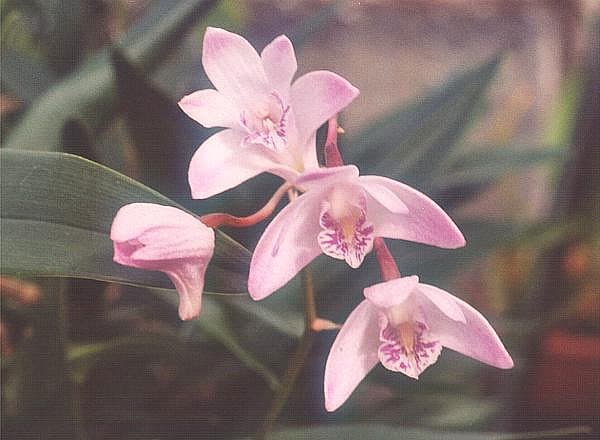
To encourage bloom: For the common nobile types, a cool (50 to 55°F), nearly dry rest through late autumn is what sets the buds along the canes.
Keep the old leafless canes; they still flower.
Dendrobium blooms in dense rows of flowers along tall canes instead of a single arching spike, and unlike a moth orchid it genuinely needs a winter rest to do it again. Cooler nights, less water, and a touch less light for several weeks is what actually sets the next flush of buds - skip that dip and you get healthy canes and no flowers.
The canes themselves are the plant's memory: don't cut old ones back after they finish blooming, since a mature cane can flower again in future years and keeps feeding the rest of the plant even once its own show is over. Shriveled canes mean the roots have dried out too far during active growth; firm, plump canes mean you've got the rhythm right.
Wants more light than a moth orchid - an unobstructed east window or a shaded south one; not enough light is the main reason it won't rebloom.
Soak and drain thoroughly through the growing season; ease off sharply once the resting period starts
Feed with a dilute orchid fertiliser - 'weakly, weekly'
A shriveled cane means the roots have dried out too far during active growth
Give it a genuine cooler, drier rest for several weeks - without it, the plant won't rebloom
Repot into fresh bark once it breaks down