
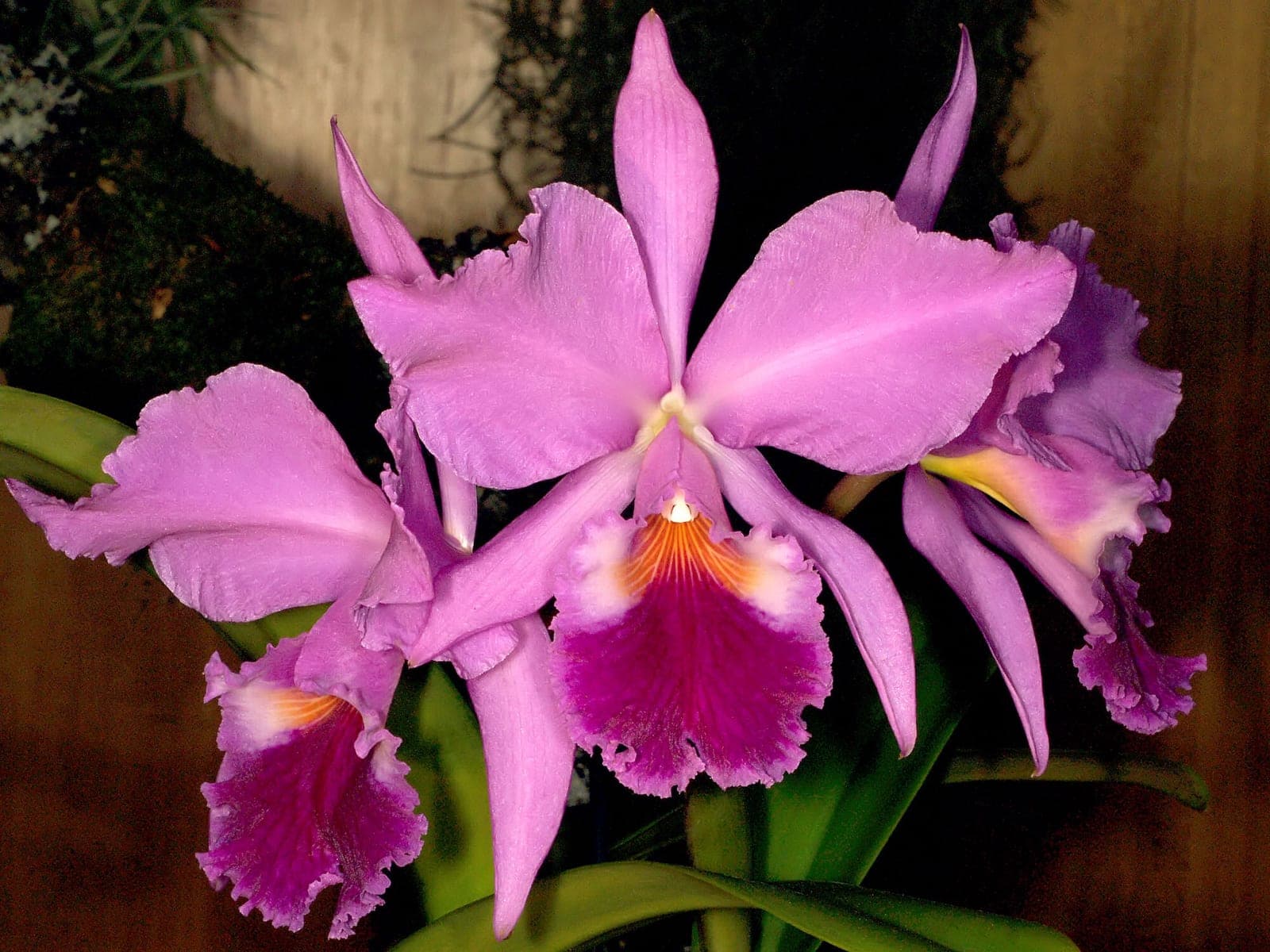
Each hybrid keeps its own season, most of them in the cooler months. It needs real light; leaves should be a light yellow-green, not deep green.
Cattleya is the classic large, fragrant corsage orchid - a single flower can be the size of a hand - and it wants real light to produce one, more than almost any other common orchid. Its swollen pseudobulbs store water and energy between blooms, which is exactly why the roots need to run dry between waterings; a Cattleya kept damp the way a moth orchid likes it will rot before it ever flowers.
Wrinkled or shriveled pseudobulbs are a sign of chronic underwatering or root loss, not a plant that simply needs more water right away - check the roots first. Given enough light, sharp drainage, and a dry stretch between soakings, it rewards the fuss with some of the showiest flowers in the whole family.
Wants the brightest light of the common orchids - an unfiltered south or west window. Leaves should be light apple-green; dark green means too little light to flower.
Soak and drain fully, then let the bark run almost dry before watering again
Feed with a dilute orchid fertiliser - 'weakly, weekly'
Wrinkled pseudobulbs mean chronic underwatering or lost roots - check the roots before watering more
Dark green leaves mean too little light to flower; move it somewhere brighter
Repot into fresh bark right after flowering