
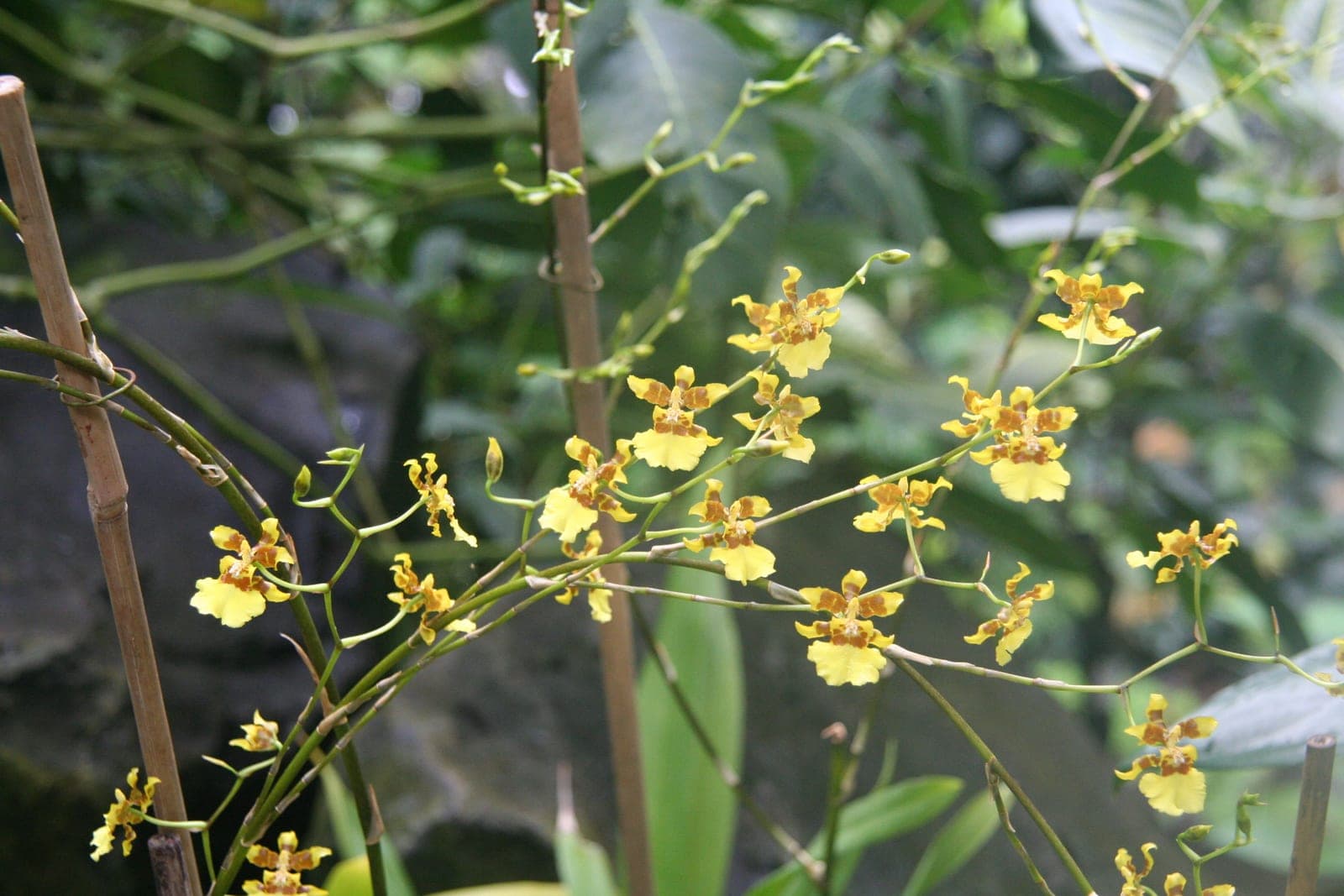
The sprays come on new pseudobulbs as they finish swelling, usually in autumn; a second flush in spring is common.
Named for the small flowers' resemblance to a ruffled dancing skirt, Oncidium throws tall, branching sprays that can carry dozens of blooms at once instead of the handful a Cattleya produces. Its roots are noticeably finer than other bark-grown orchids, which means it dries out faster and doesn't tolerate the same long dry stretch between waterings.
Keep the mix lightly moist rather than letting it run to bone dry, and watch for the same rot risk as any orchid if it's kept wet instead of just moist. A cut spray can be enjoyed indoors for weeks; leave the pseudobulb it grew from in place afterward.
Bright indirect light, similar to a moth orchid; a bit more light produces more of its branching flower sprays.
Water when just barely starting to dry - its fine roots don't tolerate a long dry stretch
Feed with a dilute orchid fertiliser - 'weakly, weekly'
Fine roots dry out faster than other orchids - don't apply a Cattleya's dry-down schedule to this one
Repot into fresh, slightly finer bark once it breaks down