
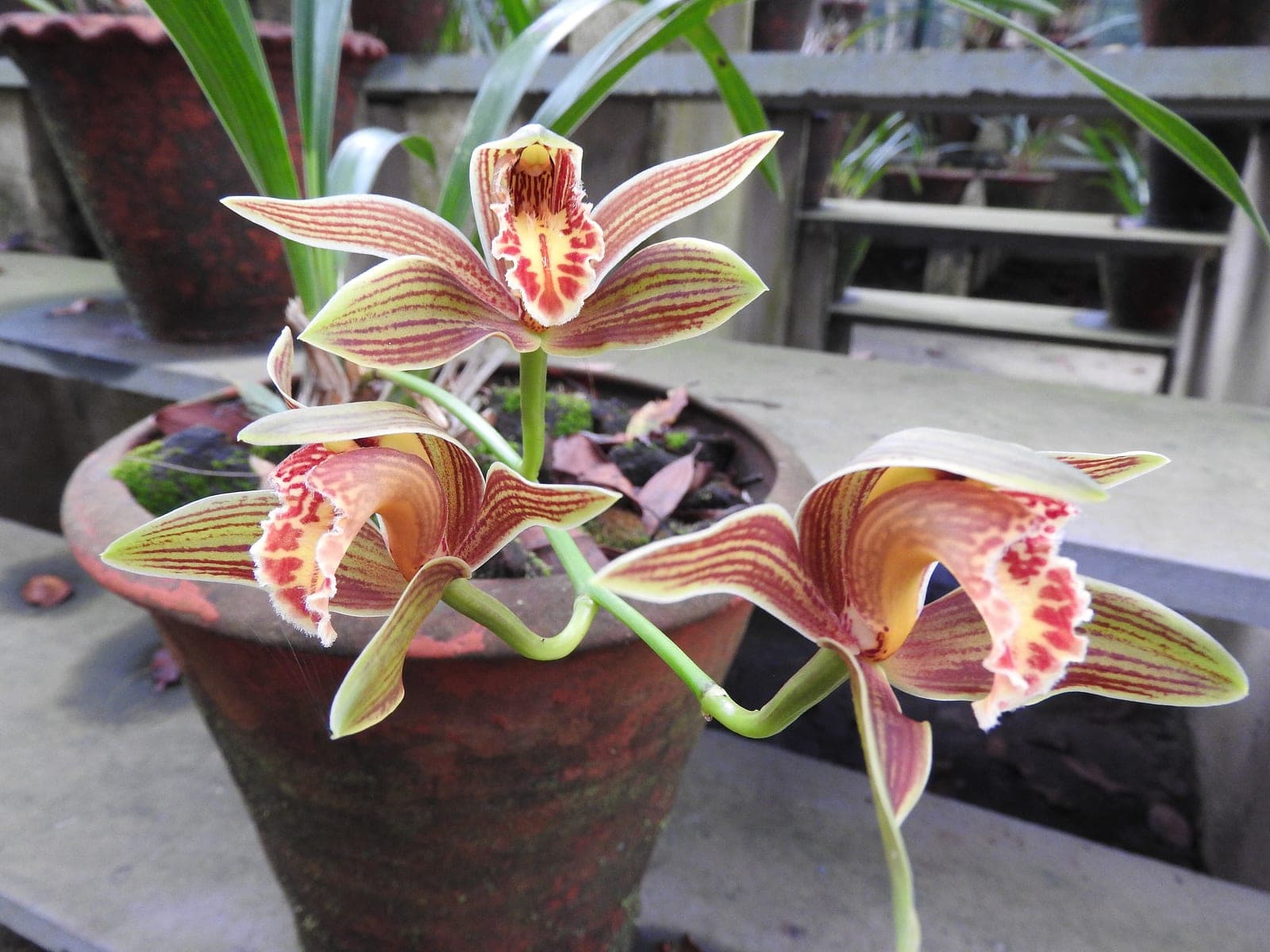
To encourage bloom: Nights that drop to 50 to 55°F from late summer into autumn, ideally outdoors until the cold arrives, set the spikes.
Bring it in before the first cold night and keep it cool while the spikes develop.
Cymbidium tolerates lower humidity and cooler temperatures than the other popular orchids, which is why it's often the one summered outdoors in a bright, sheltered spot rather than kept on a windowsill all year. That time outside matters: without a real autumn temperature drop, a mature plant frequently produces healthy leaves and no flower spike at all.
Its roots are thicker than a Phalaenopsis or Oncidium's and want a coarse, fast-draining bark mix. Bring it back indoors before the first frost, keep it evenly moist and bright through the following growing season, and the long arching sprays - some of the longest-lasting cut flowers of any orchid - follow the next cool season.
Wants the brightest light and coolest nights of the common orchids - a genuine cold snap in fall, down toward 50°F, is often what triggers the flower spike.
Keep evenly moist through spring and summer growth, easing back once flower spikes appear
Feed with a dilute orchid fertiliser - 'weakly, weekly'
No spike by late fall usually means it missed a real autumn temperature drop, not a feeding problem
Repot into fresh bark right after flowering