
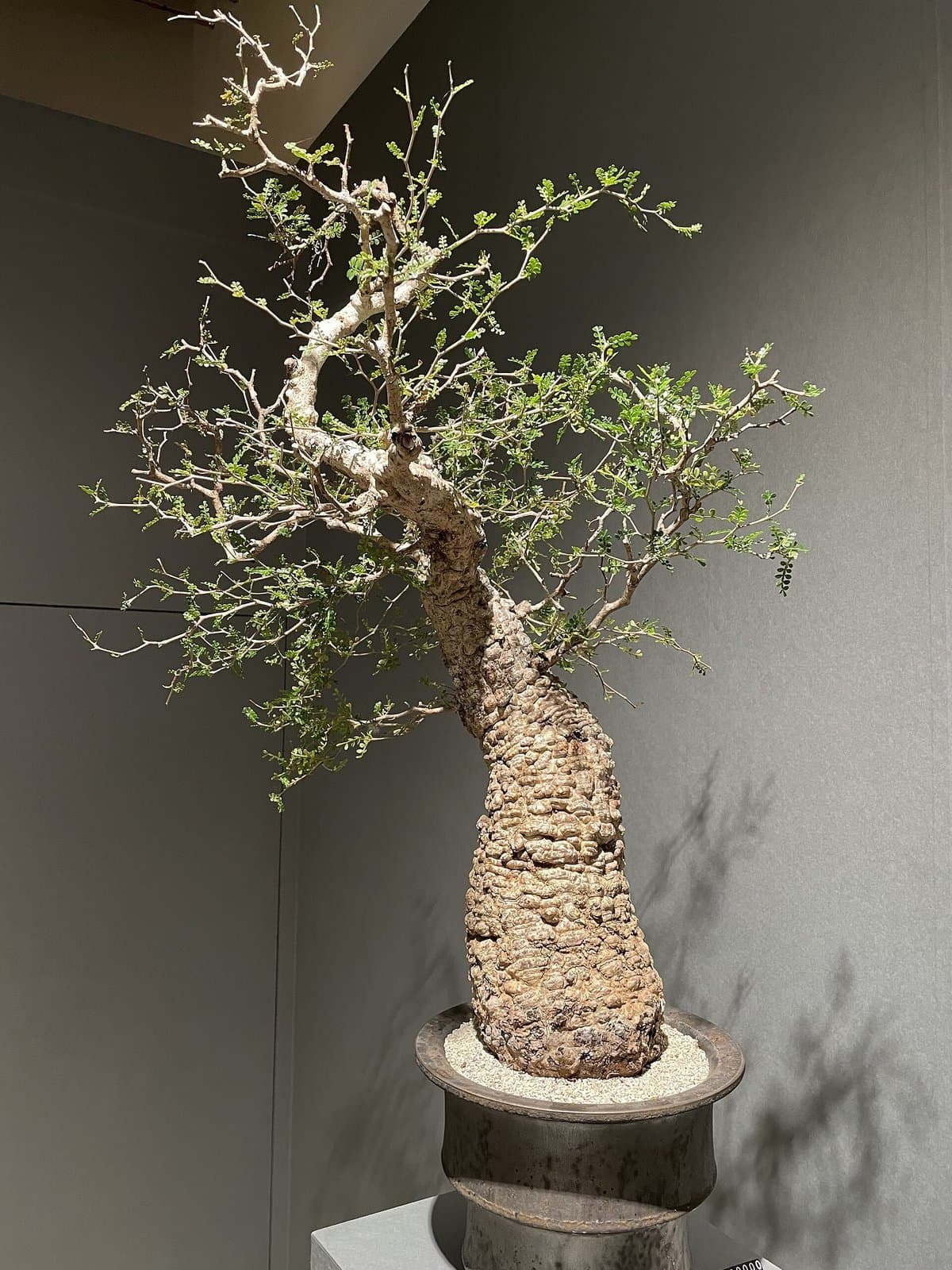
Operculicarya decaryi is a thick-stemmed succulent tree native to the arid regions of Madagascar, belonging to the same botanical family as cashews and mangoes (Anacardiaceae). Indoors, it is kept primarily for its sculptural caudex-a swollen, bottle-like base and trunk that stores water-and its small, pinnate leaves that give the plant the look of a miniature ancient tree. It is a popular bonsai subject and appeals to collectors drawn to slow-growing plants with strong structural character.
The single biggest indoor killer of this plant is overwatering. The caudex is built to survive drought, and roots sitting in wet soil will rot quickly. Water generously during active growth but allow the mix to dry out substantially before watering again, and cut back to very infrequent watering in winter when the plant may drop its leaves. Place it in the brightest spot available-a south- or west-facing window with some direct sun through the glass is ideal; in lower light the growth becomes weak and the trunk fails to thicken meaningfully over time.
Operculicarya decaryi is naturally deciduous and will shed its leaves in response to drought stress or cooler indoor temperatures, which alarms new owners but is normal behavior for the species. Growth is slow, so a well-shaped trunk takes years to develop, which also means that repotting can be done infrequently. Both stem cuttings and seeds are viable propagation methods at home, though seeds are the better route for developing a pronounced caudex from an early stage.
Bright indirect light is the minimum threshold, but this plant performs best with several hours of direct sun through a south- or west-facing window; without sufficient light the trunk stays thin and internodes stretch. Too little light, more than any other factor, prevents the caudex from developing its signature form indoors.
Water thoroughly, then let the soil dry out completely before watering again - cut back hard once it drops its leaves for winter dormancy
Feed lightly with a balanced houseplant fertiliser
Leaf drop in winter is normal dormancy, not distress - resume normal watering once new growth appears in spring
Check leaf axils and stems for scale and mealybugs
Repot into only a slightly larger pot - a snug pot encourages the caudex (trunk) to swell