
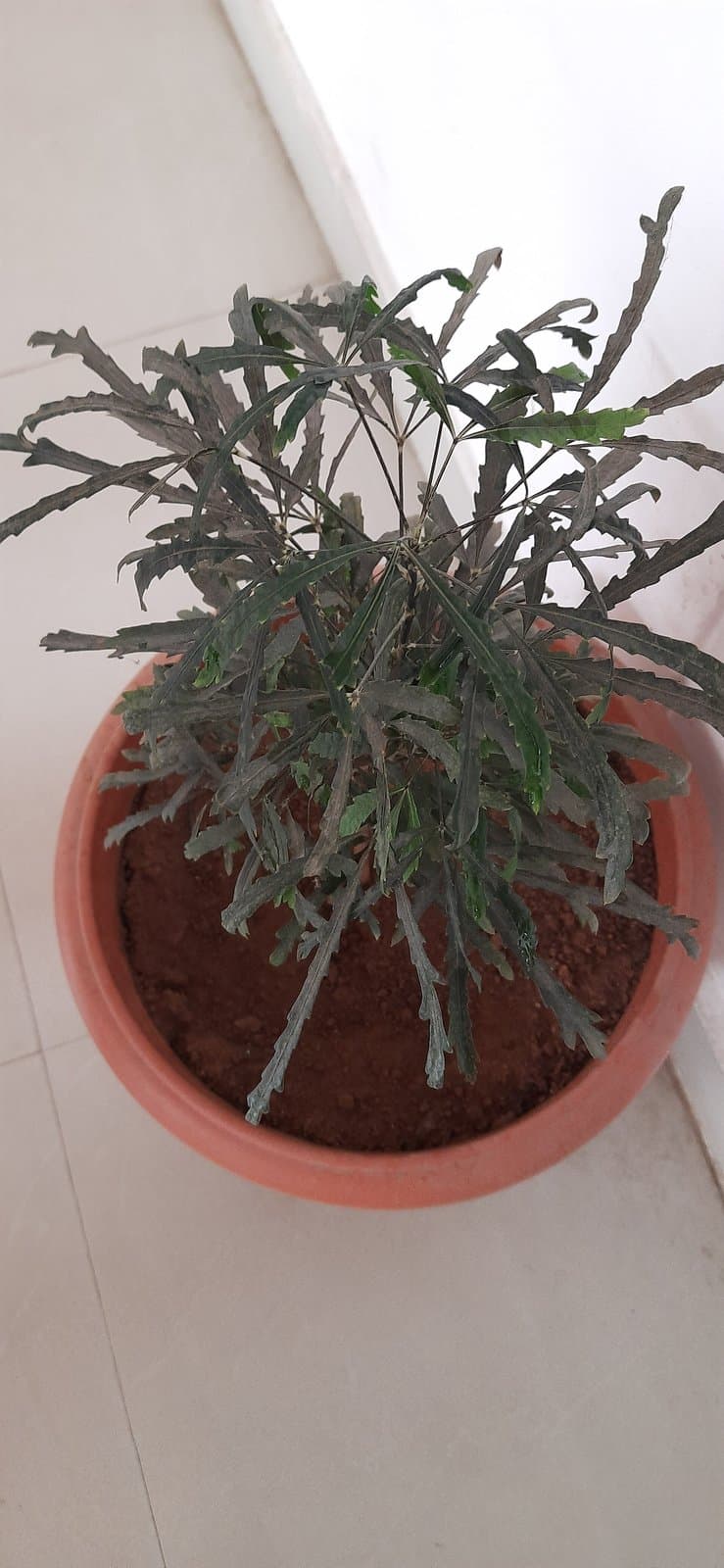
False Aralia
False Aralia (Plerandra elegantissima, long sold under the name Schefflera elegantissima) is native to New Caledonia and grown indoors for its striking, architectural foliage. Juvenile plants carry narrow, deeply serrated leaflets in dark copper-bronze tones that give the plant a feathery, almost spidery silhouette; as the plant matures, those leaflets broaden and deepen to near black-green. Few houseplants offer the same combination of strong vertical structure and fine-textured leaves in such a compact footprint.
Keeping false aralia content indoors demands consistency across every variable. It needs bright indirect light, temperatures that remain above 60°F year-round, and genuinely high ambient humidity - this last point is where most growers run into trouble. Central heating in winter strips moisture from the air, and the plant responds by dropping leaves, sometimes rapidly. A humidifier placed nearby or a pebble tray filled with water beneath the pot makes a real difference. Water when the top inch or two of soil has dried, then water thoroughly; both chronic overwatering and allowing the root ball to go fully dry will trigger defoliation. Cold drafts, sudden temperature swings, and being moved to a new location are equally common culprits for leaf drop.
False aralia is a slow grower that can eventually reach six feet or more indoors as a slender upright specimen. Young plants are often sold multi-stemmed for a fuller appearance, but individual stems become more distinct with age. Propagation by stem tip cuttings is possible but notoriously unreliable, so most growers treat this as a plant to buy rather than multiply at home.
Bright indirect light means positioning the plant within a few feet of a south- or east-facing window where no direct sun reaches the leaves; a sheer curtain on a south window works well. Too little light leads to slow decline and progressive leaf loss, while direct sun scorches the delicate, serrated leaflets.
Water once the top inch of soil is dry
Feed with a balanced houseplant fertiliser
Keep away from cold drafts and sudden moves - leaf drop is the usual response to a change in conditions
Check leaf undersides for spider mites, especially in dry winter air
Mist or wipe the finely divided leaflets to keep humidity up and dust off
Repot when roots crowd the pot