
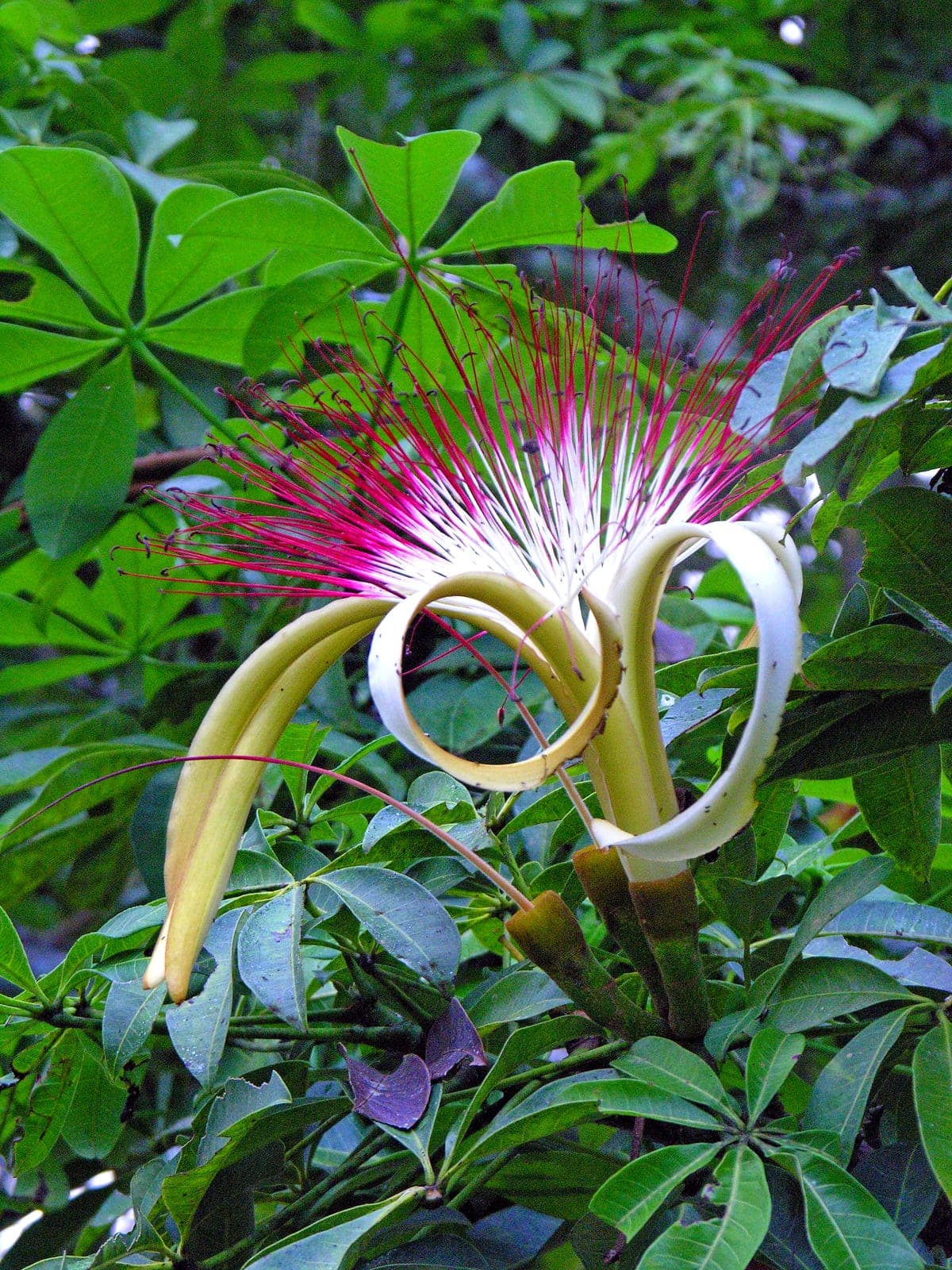
Pachira aquatica is a tropical tree native to the swamps and wetlands of Central and South America, where it grows into a substantial canopy tree. Indoors it is sold almost universally under the name money tree, typically with several young stems braided together into a single decorative trunk. It is grown for its glossy, palmate leaves, its manageable scale in a container, and the strong visual presence it brings to a room compared with most foliage houseplants.
Despite its origins in swampy terrain, the money tree does not want to sit in wet soil indoors. Overwatering is by far the most common way people kill it: roots rot quickly in soggy or compacted mix, and the symptoms-yellowing leaves, a soft or discolored base-often appear only after significant damage is already done. The plant does best in a fast-draining mix that is watered thoroughly but infrequently, and it handles average indoor humidity and typical household temperatures well. It dislikes cold drafts and tends to drop leaves when moved to a new location, but stabilizes once it adjusts to its spot.
Many plants sold commercially as Pachira aquatica are actually the closely related Pachira glabra; the two are nearly indistinguishable as houseplants and have identical care requirements. The braided trunk seen on most nursery specimens is created by weaving three to five young plants together while their stems are still pliable, and the braid sets permanently as the stems harden with age.
Bright indirect light means a position within a few feet of a large east- or west-facing window, or set back from a south-facing one. Too little light leads to slow growth, progressively smaller new leaves, and yellowing; direct afternoon sun can scorch the leaflets.
Water once the top inch or two of soil is dry
Feed with a balanced houseplant fertiliser
Wipe the leaves to keep them dust-free
Check leaf undersides for spider mites and scale
Repot when roots crowd the pot