
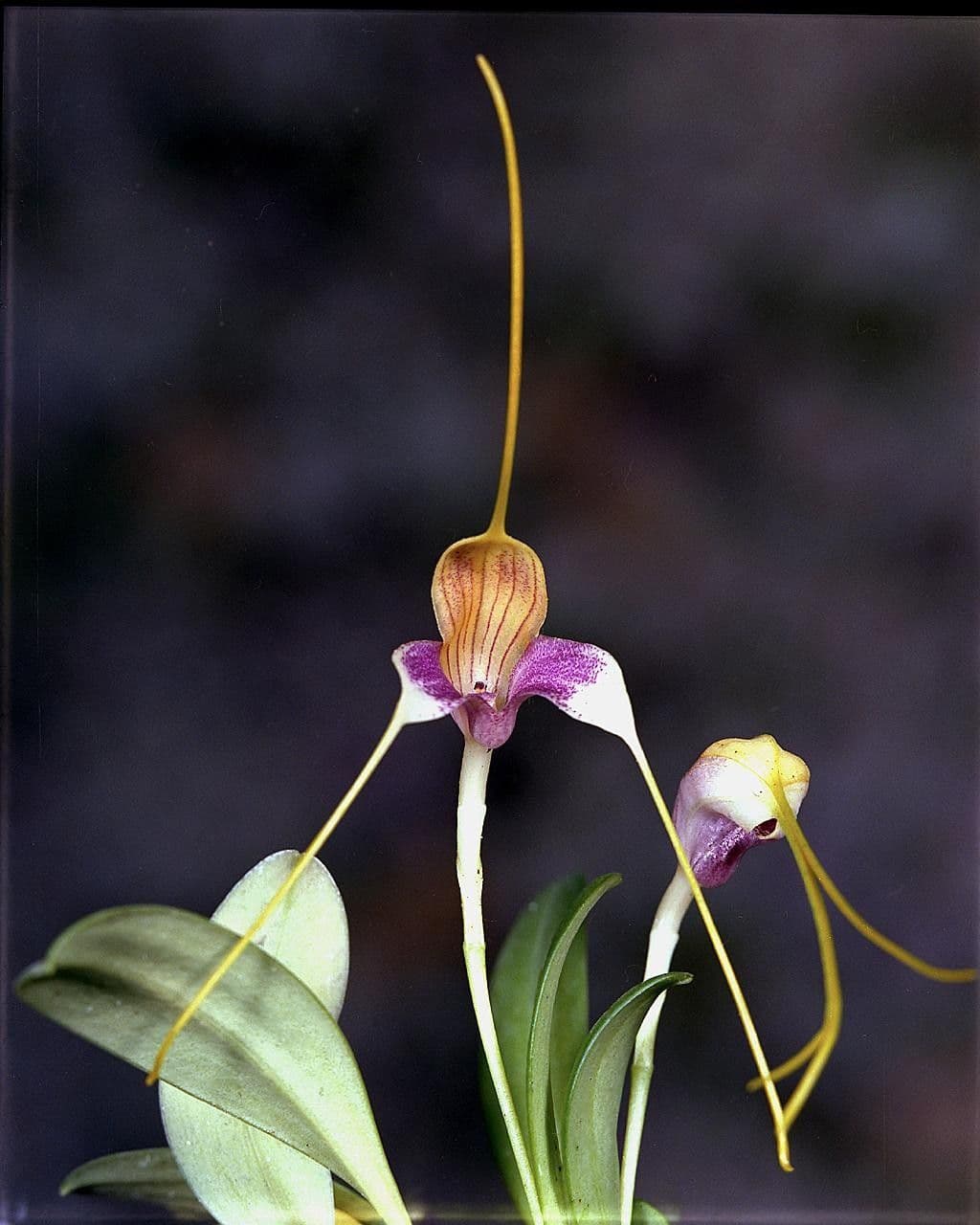
Masdevallia's triangular, kite-shaped flowers are unmistakable, and the plant behind them is genuinely cool-growing - it wants temperatures well below what most houseplant orchids tolerate, closer to a shaded porch than a warm windowsill. Unlike Cattleya or Dendrobium it has no pseudobulbs to store water, so a normal orchid dry-down that another genus shrugs off can set this one back badly.
It's a collector's orchid for exactly that reason: a heated home in summer is often the hardest season for it, not winter, and growers who succeed with it long-term usually give it a dedicated cool, humid spot - an enclosed case or an unheated bright room - rather than treating it like the rest of the collection.
Wants cooler, shadier conditions than most houseplant orchids - direct sun and a warm room stall it out. An unheated bright room or an enclosed cabinet suits it best.
Keep constantly moist; check every couple of days since it has no pseudobulbs to buffer a dry spell
Feed with a dilute orchid fertiliser at quarter strength
Struggles most in summer heat, not winter - keep it in the coolest bright spot available
Divide and repot congested clumps into fresh mix