
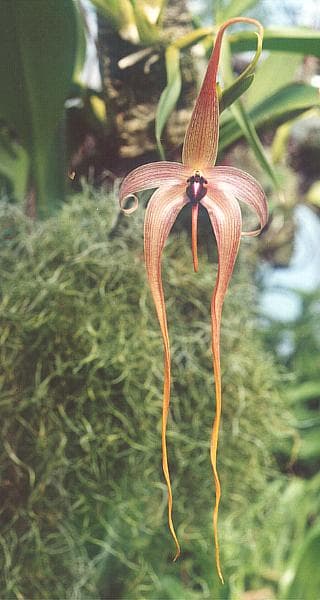
Bulbophyllum is the largest genus of orchids by far, and the flowers vary wildly across it - some are a fraction of an inch, others hang in long chains, and a number of species are pollinated by flies and smell accordingly, closer to carrion than a flower. What unites the genus is a creeping rhizome that spreads horizontally rather than clumping upward, which is why many species are grown mounted on cork or a slab instead of potted.
Mounted plants have no reservoir of medium around the roots, so they dry out faster than a potted orchid and need more frequent watering or misting to compensate. It's a genus for collectors chasing variety rather than a single easy houseplant - expect real range in vigor and difficulty from one species to the next.
Similar bright, indirect light to a moth orchid; strong pseudobulbs and good leaf color are the sign it's getting enough.
Soak and drain fully; mist mounted specimens more often since they hold no reservoir of medium
Feed with a dilute orchid fertiliser - 'weakly, weekly'
A carrion-like scent from certain species while in bloom is normal, not a sign of a problem
Remount or repot only once it has clearly outgrown its mount or pot