
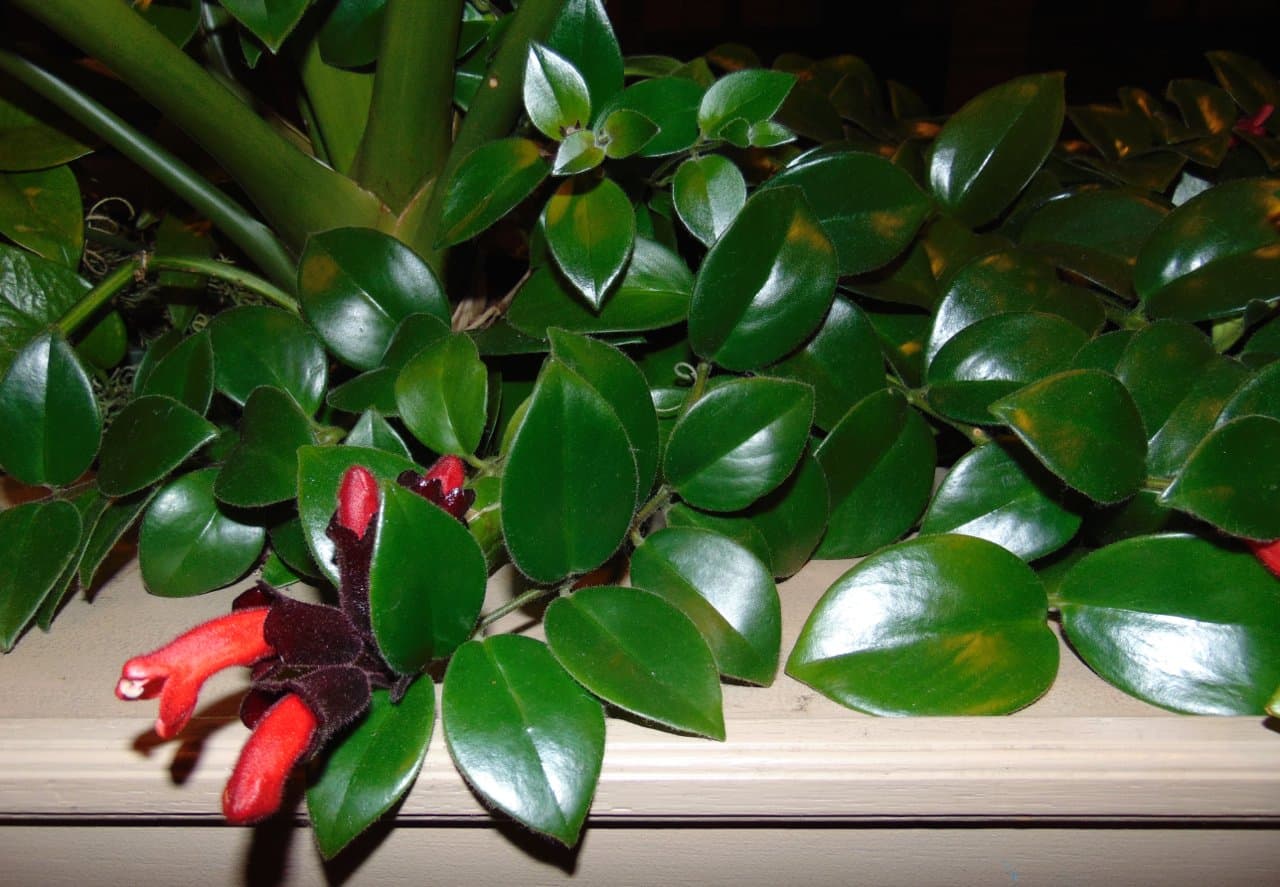
Keep it slightly root-bound and in bright light; a short dry spell often triggers the buds.
The Lipstick Plant (Aeschynanthus radicans) is a trailing tropical vine in the family Gesneriaceae, native to the humid forests of the Malay Peninsula south through Java, where it grows as an epiphyte on tree branches in dappled, filtered light. Indoors it is kept for two things: its tubular scarlet flowers that emerge from dark, waxy calyces in an arrangement that looks strikingly like a tube of lipstick being extended, and its cascading stems of glossy, dark green leaves that drape naturally from a hanging basket or a high shelf.
The two pillars of indoor success are adequate light and restrained watering. The plant needs genuinely bright, indirect light to flower; anything dimmer and it stays green but stops blooming. The most common mistake is overwatering - Aeschynanthus radicans has semi-succulent stems and is susceptible to root rot when the potting mix stays wet for long. Allow the top inch or two to dry before watering again and never let the pot sit in standing water. High humidity, above 50% ideally, is also important; dry indoor air leads to browning leaf tips and stalled bud development, so a humidifier or pebble tray makes a real difference.
The trailing stems can reach two to three feet in length and look best allowed to cascade freely. The plant roots readily from stem tip cuttings, making it easy to propagate or to replace an aging specimen that has become bare and leggy at the base.
Bright indirect light means strong ambient light without direct sun striking the leaves - a few feet back from a south- or east-facing window is a reliable position. Too little light stops flowering entirely; prolonged direct sun scorches the glossy foliage and dries the potting mix unevenly.
Water when the top inch of soil is dry; never let it sit in water
Feed with a diluted balanced houseplant fertiliser
Raise the humidity with a pebble tray or humidifier, or group plants together
Check leaf undersides for spider mites and mealybugs
Repot when roots crowd the pot
Trim after flowering to keep the trailing stems full