
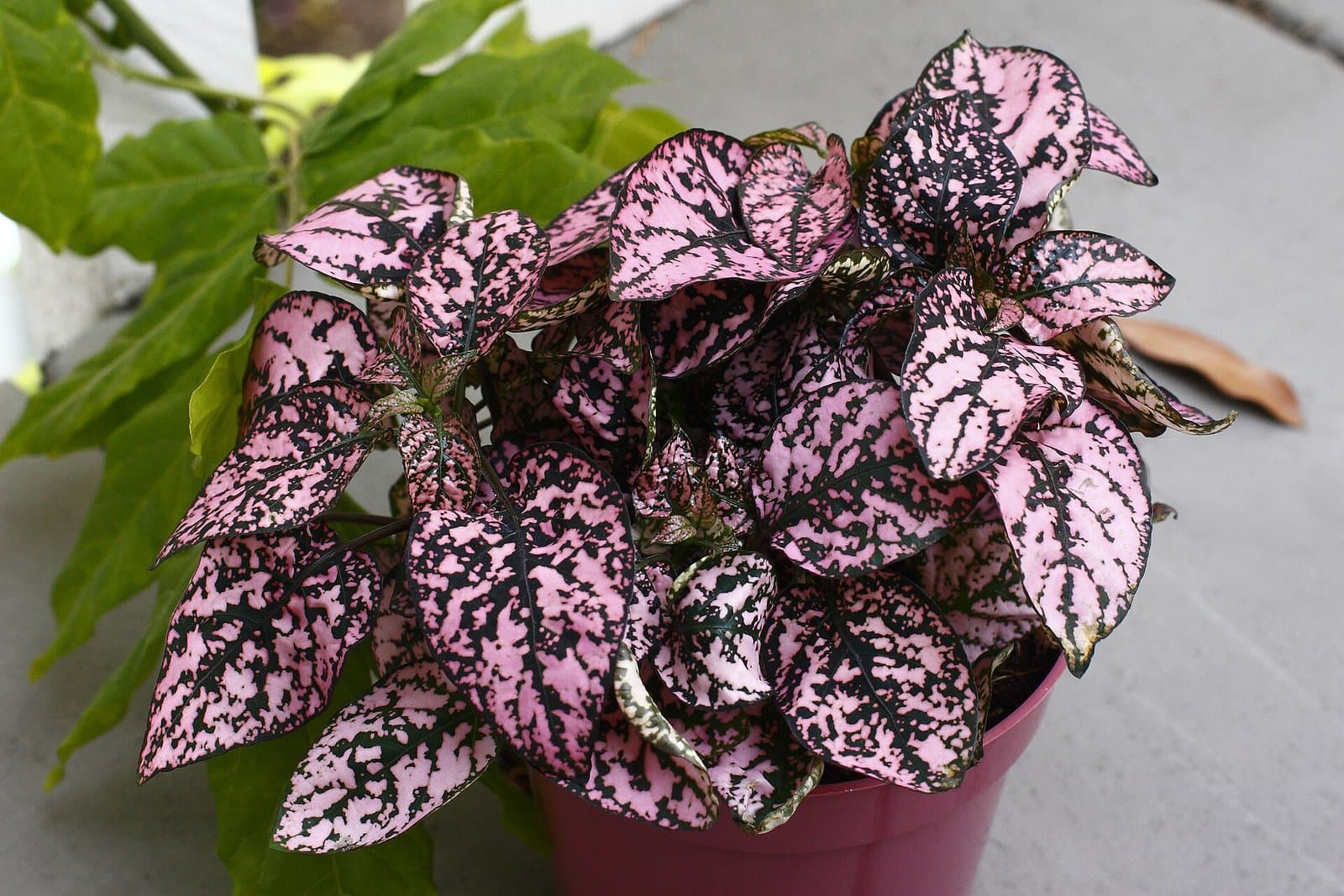
Polka Dot Plant
The polka dot plant (Hypoestes phyllostachya) is a small, clumping foliage plant native to South Africa, Madagascar, and parts of southeast Asia, belonging to the family Acanthaceae. It is grown indoors almost entirely for its leaves, which are splashed, spotted, or heavily mottled with pink, red, white, or magenta against a green base. In some cultivars the spots spread and merge until colored pigment dominates most of the leaf surface, which is where the variety in markings comes from.
Indoors, this plant needs bright indirect light to keep its markings vivid - move it too far from a window and the color fades to a dull, near-solid green within weeks. It also demands consistently high humidity; dry indoor air causes leaf edges to curl and brown. The most common mistake is letting it get leggy: without regular pinching of the growing tips, stems stretch quickly toward the light source and the plant loses its compact, bushy shape. Pinch back to a leaf node every few weeks to encourage dense, colorful new growth.
The polka dot plant is short-lived compared to most houseplants. After a year or two it typically flowers - producing small, unremarkable purple blooms - and then declines sharply. Many growers treat it as an annual or short-term accent plant, taking stem cuttings to keep fresh plants going before the parent deteriorates. Its clumping habit makes it well suited to mixed bowls or terrariums alongside other humidity-loving species.
Bright indirect light in practice means a position near a window where no direct sun hits the leaves - an east-facing sill or a few feet back from a south- or west-facing window works well. Too little light causes color markings to fade and stems to elongate rapidly; direct sun will scorch the leaf surface.
Water when the top inch of soil is dry; never let it sit in water
Feed with a diluted balanced houseplant fertiliser
Raise the humidity with a pebble tray or humidifier, or group plants together
Check leaf undersides for spider mites and mealybugs
Repot when roots crowd the pot
Pinch off flower spikes and tips to keep it compact and colorful